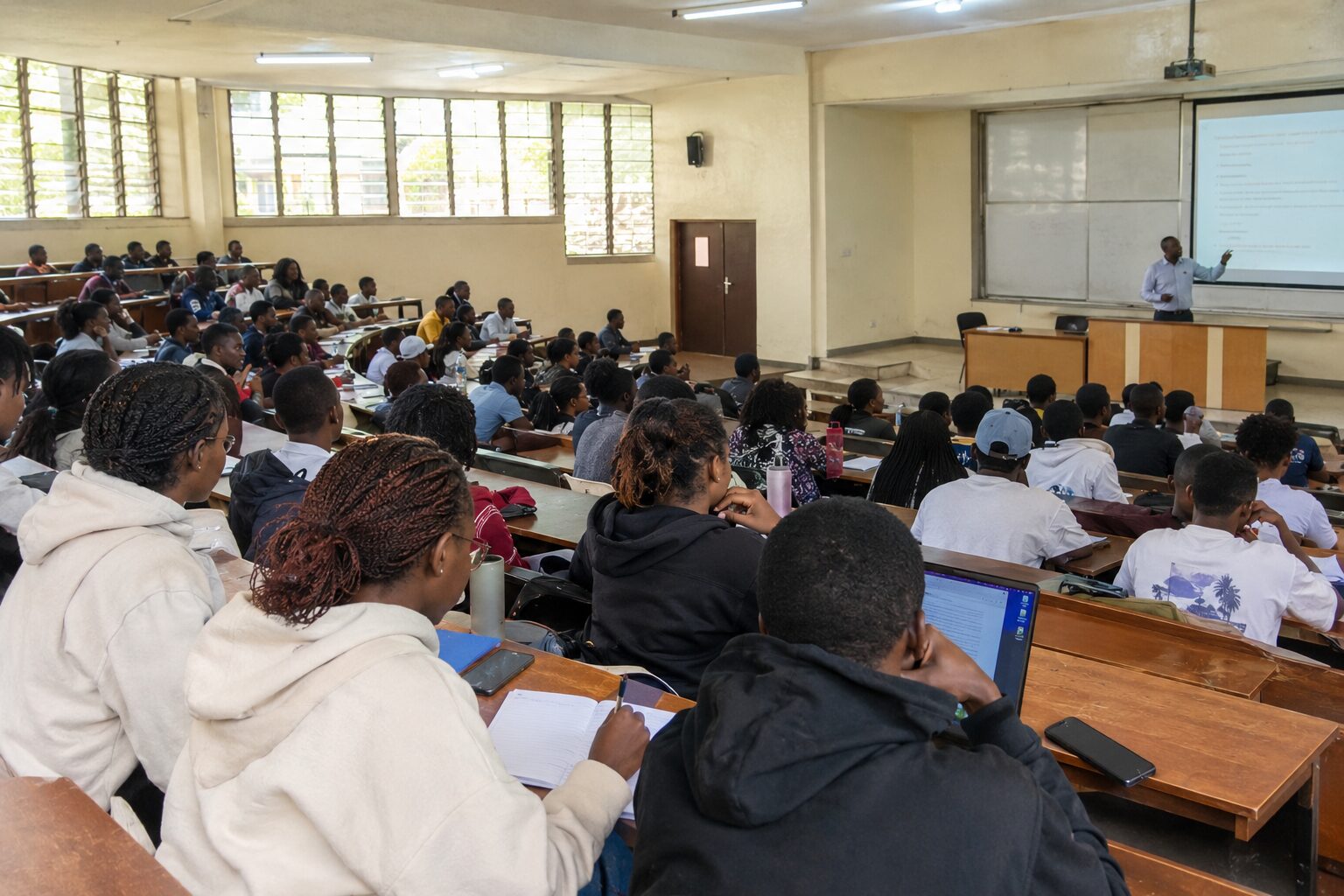
- CUE has recorded a 49.9 per cent surge in fifth-year university students, rising from 6,682 in 2024 to 10,015 in 2025, the steepest increase among all year-of-study categories.
- The commission has cautioned that the rise could reflect longer-duration programmes, delayed completion or better data capture, rather than a single clear cause.
- Academic staffing has grown more slowly than enrolment, rising just 6.4 per cent against a 12.5 per cent increase in student numbers
A near 50 per cent surge in the number of Kenyan university students entering their fifth year of study has prompted the Commission for University Education (CUE) to flag progression and completion as issues requiring closer scrutiny, according to the newly released University Statistics Report 2025.
The number of fifth-year students climbed from 6,682 in 2024 to 10,015 in 2025, an increase of 3,333 students, or 49.9 per cent, the steepest rise recorded across any year-of-study category in the report. The spike stands out sharply against overall university enrolment growth, which reached 707,150 students in 2025.
By comparison, first-year enrolment rose by 14.3 per cent, from 196,161 to 224,165, while second-year students grew by 9.1 per cent. Third-year enrolment increased by 16.2 per cent, from 103,593 to 120,389, and fourth-year numbers rose by 10.2 per cent, from 160,081 to 176,415. Against that backdrop, the near-50 per cent jump among fifth-year students represents an outsized anomaly rather than a simple extension of the broader enrolment growth trend.
CUE has been cautious about drawing firm conclusions from the figures, noting that the rise in fifth-year students could reflect “growth in long-duration programmes, delayed completion, or improved capture of advanced cohorts.” That caveat matters, since not every fifth-year student is necessarily behind schedule. Some may have deferred their studies due to prolonged illness or financial constraints, while certain degree programmes are structured to extend beyond four years by design.
Still, the scale of the increase has pushed the commission to call for closer review. “Programme durations and advanced-year cohorts should be closely reviewed to identify delayed completion or structural bottlenecks,” the report states.
ALSO READ: 1.5 million workers at centre of proposed PAYE overhaul as Treasury plans October talks
Missing marks have long been flagged as a chronic problem affecting several Kenyan universities, frequently causing students to miss or delay graduation. The issue cuts across both public and private institutions, forcing some students to retake units for lost grades, with a number of such cases having ended up in court over allegations of administrative negligence.
The concern is compounded by growing pressure on teaching capacity and infrastructure, particularly in large public universities. University academic staff numbers grew from 15,383 in 2024 to 16,434 in 2025, a rise of just 6.4 per cent, against a 12.5 per cent increase in total university enrolment, a mismatch that was especially pronounced in public institutions. A growing population of students in advanced years could therefore place additional strain on lecturers and academic support systems, particularly where students require supervision, unit repeats, research projects or other outstanding requirements before graduating.
The extended time to completion also carries cost implications. For students, additional years at university mean prolonged spending on fees, accommodation, food, transport and other living costs. For institutions, students who remain enrolled longer continue to require teaching, examinations, supervision, library access, laboratory use and other services, costs that also have public implications where universities receive state support tied to student numbers.
Kenya must end the cycle of university strikes
The report does not establish how many of the 10,015 fifth-year students are delayed graduates, how many are enrolled in programmes normally lasting longer than four years, or how many are repeating units.
Notably, that figure also excludes 4,466 students in their sixth and seventh years, who are included in the overall enrolment total but left out of the year-of-study breakdown, meaning the fifth-year figure captures only part of a larger population of students who have progressed beyond the standard four-year mark.
By Masaki Enock
Get more stories from our website: Education News
To write to us or offer feedback, you can reach us at editor@educationnews.co.ke
You can also follow our social media pages on Twitter: Education News KE and Facebook: Education News Newspaper for timely updates.
>> Click here to stay up-to-date with trending regional stories