For a long time, many students have grown up believing that mathematics and science are the hardest subjects in school. In classrooms across the country, phrases such as “math is for bright students” or “science is for boys” have quietly shaped attitudes among learners, especially girls, long before they make career choices.
For some learners, laboratories filled with unfamiliar apparatus only deepen the fear. Others never even get the opportunity to step into a science lab or interact with technology equipment at all.
But deep in the classrooms of Taita Taveta County, a quiet shift is beginning to take place.
At Mwanyambo Junior School in Voi, Grade 9 learner Wendy Kalega once imagined her future in social sciences. Science subjects appeared distant and difficult. Yet after spending a day interacting with trainers from the Centre for Mathematics, Science and Technology Education in Africa (CEMASTEA), her perspective changed dramatically.
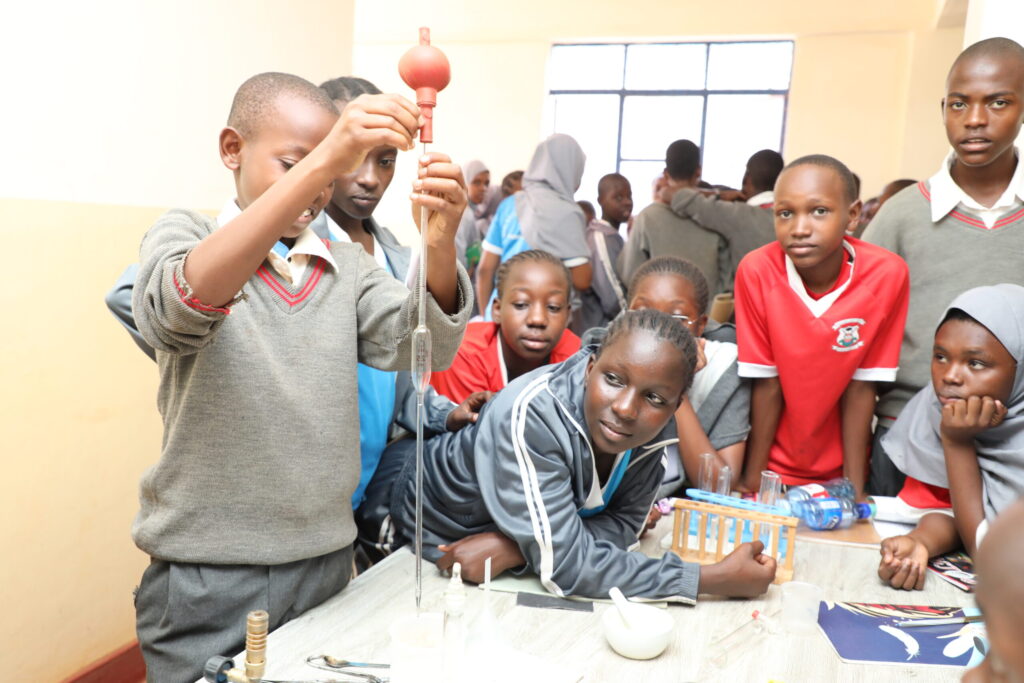
“Through CEMASTEA they have empowered me to choose STEM,” she said confidently. “I believe when I go to senior school, I will do well in STEM and I’m going to be a good and professional dentist.”
Her story mirrors that of many learners who recently interacted with CEMASTEA trainers during a countywide outreach program targeting junior schools in Taita Taveta.
CEMASTEA, a Ministry of Education institution, is mandated to strengthen the teaching and learning of mathematics and science through in-service training for teachers. However, through its Special Programme for Student Learning (SPSL), the institution has expanded its focus beyond teachers to learners themselves in a bid to cultivate interest in Science, Technology, Engineering and Mathematics (STEM).
According to Joseph Kuria, Coordinator, STEM mentorship and outreach from CEMASTEA, the program seeks to dismantle the fear and stereotypes that have surrounded science subjects for years.
ALSO READ:
Govt warns defilers as teenage pregnancies rise in Kajiado County
“Maybe the perception for quite some time has been that mathematics and science are difficult, but our intention is to show the learners that mathematics is not difficult, science is not difficult and it’s possible for them to excel,” Kuria said.
The program comes at a critical moment when Kenya’s Competency-Based Education (CBE) system is steering learners toward specialized pathways in senior school. The government expects at least 60 per cent of learners to transition into STEM pathways, a target education stakeholders say will be difficult to achieve if negative attitudes toward science persist.
For girls especially, societal perceptions have historically acted as invisible barriers. STEM careers such as engineering, aviation, physics and technology have often been viewed as male-dominated fields, discouraging many girls from pursuing them despite their potential.
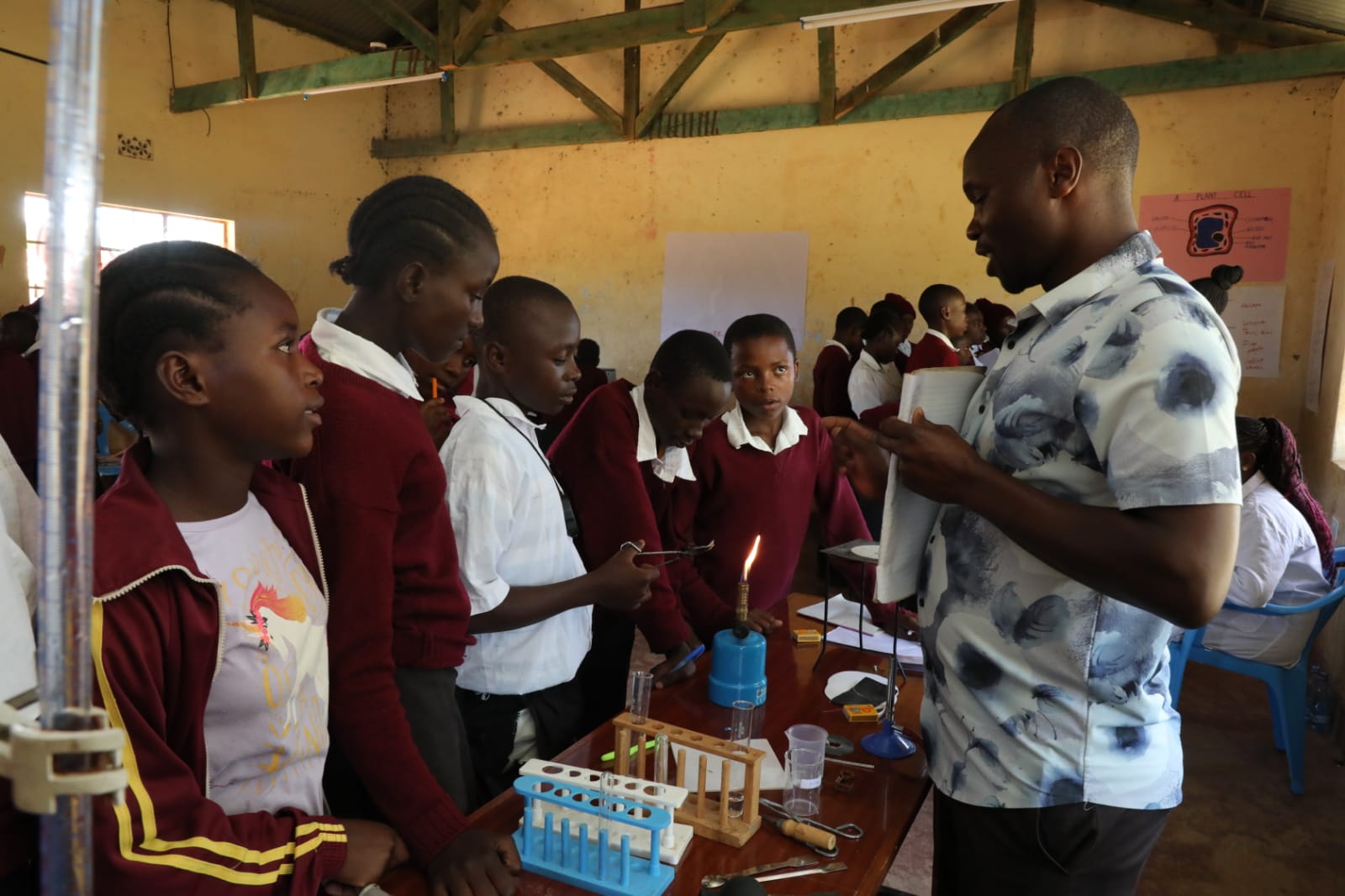
Yet during the sessions conducted in schools across the county, girls could be seen confidently handling laboratory apparatus, interacting with ICT gadgets and participating in scientific demonstrations alongside boys.
At Mwandala Junior School in Mwatate Subcounty, Grade 9 learner Damaris Ngereri said the experience exposed them to equipment they had only heard about in class.
“There was some equipment that we were not able to see and make use of during our practical but through CEMASTEA, we have been able to see and use them and now we understand how they work,” she said.
Her colleague Fatuma Swaleh shared similar sentiments, saying the program gave her a rare opportunity to interact with laboratory apparatus and understand computer components for the first time.
She added that the lessons also opened her eyes to environmental conservation and climate change saying, “Through CEMASTEA, I have been able to understand how human activities contribute to environmental degradation and how to curb the effects of climate change.”
In many rural and marginalized schools, limited resources continue to hinder practical learning. Several schools lack functional laboratories, adequate apparatus or modern ICT infrastructure, making science lessons heavily theoretical.
But CEMASTEA insists that the absence of laboratories should not stop schools from conducting practical lessons.
“The government has put a lot of effort to support learning in junior school, but unfortunately not all schools have laboratories,” Kuria said. “But we are not saying that since laboratories are not there, these experiments cannot be carried out.”
ALSO READ:
Sports helps improve discipline, talent and academic performance, says school principal
He stressed that teachers can still conduct experiments in classrooms using available materials and simple apparatus.
“That is the message we are sending to schools that despite the lack of science laboratories, the experiments can still be carried out in schools,” he added.
The initiative also seeks to bridge the gap between urban and rural learners. Schools located near Nairobi often have the advantage of visiting CEMASTEA’s headquarters to access laboratories and workshops. However, learners in distant counties rarely get such opportunities.
To address this imbalance, CEMASTEA has been taking the program directly to counties.
“This week we were in Taita Taveta County and we have been able to reach five schools. Those schools closer to Nairobi are able to bring students to our center, but we decided to expand to reach learners who are far from Nairobi,” Kuria said.
He noted that the long-term vision is to establish STEM centers within counties so learners can continuously interact with scientific materials and technology closer to home.
Beyond academics, the program is also nurturing critical competencies under the Competency-Based Curriculum, including digital literacy, creativity, collaboration and self-efficacy.
Learners were organized into rotational groups where they engaged in science experiments, mathematics activities and ICT sessions using interactive gadgets and learning aids.
Christine Mutati, a teacher at Monyambo Junior School, said the hands-on approach transformed how learners perceived STEM subjects.
“One of the challenges in STEM is attitude. Learners feel mathematics and science are only for clever students, but that’s not the case,” she explained.
She said the program helped learners realize that science can be practical, engaging and enjoyable.
“The learners were more open to the program and it was beautiful to watch,” she said.
Mutati also admitted that even teachers benefited from the sessions by learning new learner-centered teaching methods.
“Now I will tend to use more realia in my pre-technical lessons because I have seen that when learners interact with things hands-on, they feel more connected to what they are learning,” she said.
ALSO READ:
TVET colleges challenged to integrate industries, financial institutions into annual fairs
The impact of the program was equally evident among learners who are now beginning to imagine careers previously thought impossible.
At Mwanyambo Junior School, Grade 9 learner Reynold Mwambanga said the sessions inspired him to think about solving real-world problems using physics and innovation.
“They have given me courage in STEM. I want to learn how we can solve problems like loss of electricity in our area using physics.”
He hopes to become a successful entrepreneur by combining business and physics.
Teachers also acknowledged that the outreach exposed gaps in their own teaching approaches.
Calvin Ocharo, a mathematics teacher at Mwandala Junior School, said the experience challenged him to embrace practical learning more deliberately.
“As a teacher, I have seen where I can improve, for instance engaging learners using real objects in mathematics,” he said.
He added that many learners had interacted with laboratory apparatus for the first time during the sessions because of inadequate resources in their school.
The calls for more support from education stakeholders remains loud and urgent.
Mutati appealed to the government and partners to equip schools with laboratories, teaching aids and scientific apparatus to sustain practical learning.
ALSO READ: Taita Taveta bans term-opening exams to curb school fires
“Even if there will be no physical laboratory, these apparatus and learning aids should at least be in every school,” she said.
For CEMASTEA, the mission goes beyond improving examination performance. The institution sees STEM education as central to Kenya’s long-term economic ambitions under Vision 2030.
“For us to industrialize and become a middle-level economy, we must have the manpower,” Kuria said. “The best manpower to steer our economy are those in science-based courses like engineering, medicine, civil aviation and the marine industry.”
Back in the classrooms of Taita Taveta, however, the transformation begins with something simpler which is changing minds.
And perhaps for the young girls now dreaming of becoming dentists, engineers and scientists, the greatest lesson from the program is that mathematics and science were never reserved for boys or geniuses after all.
By Michael Oduor
You can also follow our social media pages on Twitter: Education News KE and Facebook: Education News Newspaper for timely updates.
>>> Click here to stay up-to-date with trending regional stories
>>> Click here to read more informed opinions on the country’s education landscape