- Baringo education officials have directed schools to release Digital Literacy Programme devices for use by Junior Secondary School teachers.
- The move is expected to support virtual laboratories and strengthen STEM learning under Competency-Based Education.
- Schools have also been urged to report faulty devices for repair through ICT interns deployed across the county.
Hundreds of Digital Literacy Programme (DLP) devices could soon return to classrooms after Baringo education officials directed school heads to release them for use by Junior Secondary School (JSS) teachers.
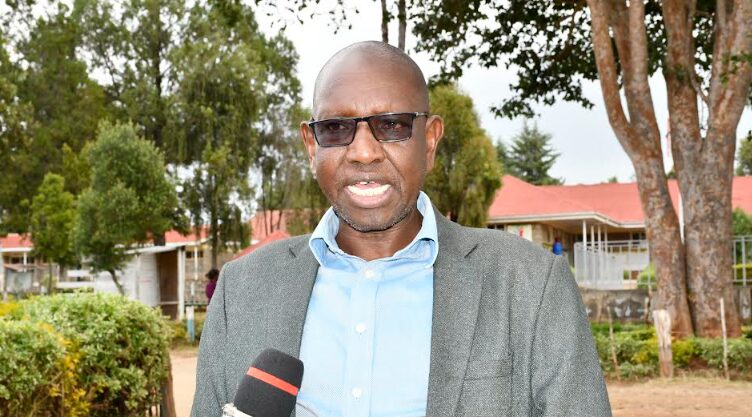
Baringo County Director of Education Dr. Kipruto Kosgei issued the directive while closing a three-day CEMASTEA Virtual Laboratory retooling workshop at Solian Girls High School in Eldama Ravine.
The move comes as the Ministry of Education rolls out virtual laboratories to strengthen the teaching of science and mathematics under Competency-Based Education (CBE).
Dr. Kosgei expressed concern that many government-issued laptops, projectors and routers remain locked away in school stores instead of supporting teaching and learning.
“Most of the laptops, projectors and routers are gathering dust in stores instead of being used to improve learning. These resources belong to learners and teachers and must be utilised,” he said.
To ensure compliance, the County Director announced that his office would issue a circular directing all primary school heads to release the devices to JSS teachers.
“I will be communicating officially with all heads of institutions to ensure that laptops, projectors and routers issued to schools are released for lesson preparation and delivery,” he said.
Dr. Kosgei assured schools experiencing technical challenges that assistance was available through ICT interns deployed across all sub-counties.
“If there are gadgets with technical issues, schools should report them to our offices because ICT interns are available to assist,” he added.
While encouraging schools to maximise available government equipment, he also urged teachers to acquire personal laptops to strengthen digital lesson delivery.
Teachers welcome the directive
Teachers attending the workshop welcomed the move, saying limited access to ICT devices has slowed the implementation of digital learning in Junior Secondary Schools.
Ruth Kochei of Ngubereti Junior Secondary School said improved access to digital devices would make science lessons more engaging and easier to understand.
“The gadgets are very important in modern education. If teachers and learners can access them, understanding and academic performance will improve significantly,” she said.
Cheburet Kiptoo of Kabel Junior Secondary School called on Boards of Management to invest in additional ICT equipment.
“We should also share the knowledge acquired during this training with other teachers so that every learner benefits from virtual laboratories,” he said.
CEMASTEA Coordinator for Partnerships and Linkages Dr. Mary Sichangi said the organisation had trained 240 teachers in Baringo County on the Virtual Laboratory platform to strengthen STEM education.
READ ALSO: Deep divide in Parliament as MPs clash over reintroducing caning to curb school unrest
“Although many schools still face challenges such as inadequate laboratory facilities, innovative solutions like virtual laboratories can bridge those gaps and improve learner participation in STEM subjects,” she said.
Dr. Sichangi added that CEMASTEA would continue improving the platform using feedback received from teachers and other education stakeholders.
By Kimutai Langat
You can also follow our social media pages on Twitter: Education News KE and Facebook: Education News Newspaper for timely updates.
>>> Click here to stay up-to-date with trending regional stories
>>> Click here to read more informed opinions on the country’s education landscape