- Hillary Muhalya examines America’s expanding efforts to strengthen protections for children and teenagers online.
- States are increasingly pursuing age verification, parental consent and restrictions on potentially harmful social-media features.
- The measures are also fuelling debate over privacy, free speech and how far governments should regulate young people’s digital lives.
By Hillary Muhalya
The United States is tightening restrictions around children’s access to parts of the internet, ushering in a new era in which being underage could increasingly mean facing barriers before accessing social-media platforms, adult websites and other online services.
Across the country, lawmakers and regulators are placing greater pressure on technology companies to establish stronger safeguards for children and teenagers. The push reflects growing concerns over children’s exposure to harmful content, addictive online features, excessive screen time, privacy risks and the wider impact of social media on young people.
Rather than introducing one blanket national ban covering the entire internet, the United States is developing a patchwork of state laws and regulations. Different states have adopted different approaches, including age verification, parental consent requirements, restrictions on certain social-media features and enhanced protections for minors.
A new digital age gate
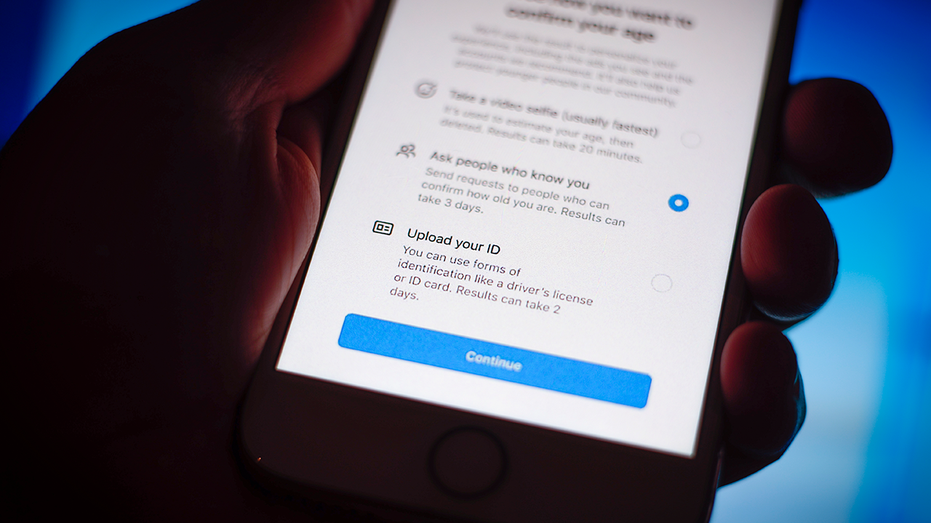
One of the most significant developments is the growing use of age-verification requirements.
Websites offering adult material have increasingly been required in some states to determine whether visitors are legally old enough to access their content. The objective is straightforward: prevent children from simply clicking through an age declaration and gaining unrestricted access to material intended for adults.
The approach has nevertheless generated controversy.
Privacy advocates have questioned how websites can verify a person’s age without collecting sensitive personal information. Others have warned that poorly designed age-verification systems could create new cybersecurity and privacy risks.
Supporters, however, argue that protecting children from explicit material justifies stronger controls and that technology companies should no longer be allowed to rely solely on users entering a date of birth.
The US Supreme Court strengthened the legal footing for such measures in June 2025 when it upheld a Texas law requiring covered adult-content websites to verify that users are at least 18. The court held that states have authority to protect minors from sexually explicit material while acknowledging the incidental burden imposed on adults.
Social media under growing pressure
The restrictions are not limited to adult-content websites.
Social-media platforms have become a major target of legislation designed to protect children. Policymakers are increasingly examining features such as algorithmically recommended content, endless scrolling, direct messaging, notifications and other mechanisms that can encourage prolonged use.
Some state laws have sought parental involvement before younger users can access certain services, while others impose obligations on platforms to provide stronger protections for minors.
The scale of legislative activity is considerable. According to the National Conference of State Legislatures, at least 40 states and Puerto Rico introduced more than 300 bills and resolutions addressing children and social media during the 2026 legislative session. The proposals include age verification, parental consent, age-appropriate design requirements and regulation of online features.
The debate has consequently shifted from whether children should use the internet to a more complicated question: How much responsibility should technology companies carry for what happens to children on their platforms?
Parents no longer expected to carry the entire burden
For years, parents were largely expected to police their children’s online activities themselves.
That model is now being challenged.
Lawmakers increasingly argue that parents cannot realistically monitor every website, application, message, video and recommendation encountered by a child. A young person can move between multiple platforms within minutes, often encountering material that parents may never see.
The emerging regulatory philosophy is therefore placing more responsibility on technology companies themselves.
Platforms are being pushed to design services with children in mind, provide parental controls and take reasonable steps to prevent minors from accessing inappropriate content.
Existing federal protections already impose particular obligations concerning younger children. Under the Children’s Online Privacy Protection Act, operators of child-directed websites and online services, as well as certain operators that knowingly collect information from children under 13, must obtain verifiable parental consent before collecting specified personal information.
The big privacy question
But the effort to protect children has created another difficult problem: How do websites know who is a child?
Age verification can require users to provide information capable of establishing their age. Depending on the system, this could involve identity documents, biometric checks, third-party verification services or other forms of personal data.
That has triggered concerns among privacy advocates who fear that an internet designed to protect children could inadvertently create a system in which adults must routinely identify themselves before accessing lawful content.
The challenge facing policymakers is therefore enormous.
They must protect children without creating unnecessary surveillance, while ensuring that age-verification systems do not become attractive targets for hackers or companies seeking to collect additional personal information.
The Federal Trade Commission has itself recognised the importance of this balance. In February 2026, it announced an enforcement policy intended to encourage age-verification technologies while requiring qualifying operators to use information collected for age checks only for that purpose, limit disclosure and delete it when it is no longer needed.
A battle between child protection and digital freedom
The American debate has also entered the courts.
Critics of some restrictions argue that broad online-access laws can raise constitutional concerns, particularly when they affect adults’ ability to access lawful speech and information.
Supporters counter that children deserve special protection and that the internet should not operate as though a 12-year-old and a 40-year-old are entitled to exactly the same digital experience.
The result is an increasingly complicated legal battle over where the line should be drawn.
The legal picture is not uniform. While the Supreme Court upheld Texas’s adult-content age-verification requirement in 2025, other state measures targeting minors’ access to social media have faced constitutional challenges. In July 2026, the Supreme Court declined to temporarily block a separate Texas law requiring app stores and developers to verify users’ ages and obtain parental consent for minors to download apps or make purchases while litigation over the law continues.
Technology companies face a new reality
For major technology companies, the changing regulatory environment could fundamentally alter how online services are designed.
Platforms that once focused primarily on attracting users and keeping them engaged are increasingly being asked to demonstrate that they can distinguish between adults and minors and provide different protections depending on age.
The consequences could extend well beyond social media.
Online gaming, video-sharing services, messaging platforms, search engines and other digital services could face increasing pressure to introduce stronger safeguards for younger users.
The direction of travel became particularly clear this week when Meta agreed to a major settlement with US states over allegations concerning harms to young users. The agreement requires significant changes to protections for teenagers using Facebook and Instagram, including usage restrictions, limits on notifications and stronger age-assurance measures. Meta has denied wrongdoing, and the settlement requires judicial approval.
TikTok has also faced federal enforcement. Earlier this month, it reached a $400 million settlement with the US Justice Department over allegations that it violated children’s privacy law by collecting information from users under 13 without appropriate parental consent.
America is sending a global signal
The American experiment is being closely watched beyond the United States.
Other countries are grappling with the same question: how can children participate in the digital world without being exposed to its most harmful features?
The American approach — allowing individual states to experiment with different restrictions — could eventually influence legislation elsewhere.
For parents, the message is becoming increasingly clear: the internet children grew up with may not be the internet their younger siblings experience.
The age of unrestricted digital access is gradually giving way to an internet where age matters.
Children may still have access to the enormous educational, social and entertainment opportunities offered online, but governments are increasingly insisting that access must come with stronger safeguards.
The emerging battle is no longer simply about whether children should be online.
It is about what they should be allowed to see, how platforms should treat them, who should verify their age and how much responsibility technology companies should bear for protecting them.
READ ALSO: Behind the excitement: The hidden anxiety facing university freshers
America’s tightening digital gate could therefore mark the beginning of a much larger transformation in the global internet — one in which childhood increasingly comes with a digital boundary.
By Hillary Muhalya
Get more stories from our website: Education News
To write to us or offer feedback, you can reach us at: editor@educationnews.co.ke
You can also follow our social media pages on Twitter: Education News KE and Facebook: Education News Newspaper for timely updates.
>>> Click here to stay up-to-date with trending regional stories