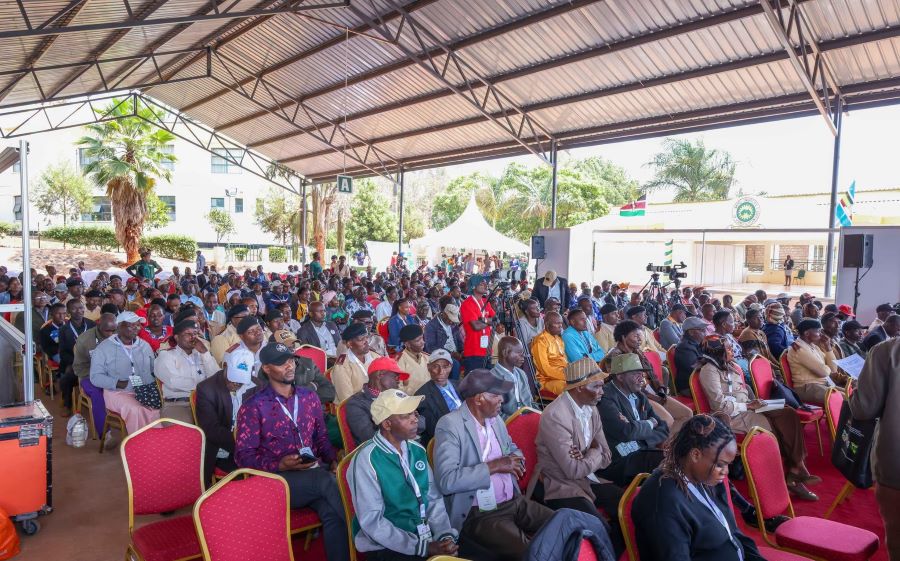
- Stakeholders are urging Kenyans to embrace bamboo growing for its economic, social and environmental benefits.
- KEFRI’s Nellie Oduor says bamboo offers farmers income opportunities through cultivation, processing and value addition.
- John Majau reports that stronger partnerships could unlock bamboo’s potential for livelihoods and sustainable development.
Kenyans have been challenged by stakeholders to embrace the planting of bamboo owing to its economic, social and environmental benefits to communities and the country.
Led by the Programme Director of the National Forest Products Research Programme at the Kenya Forestry Research Institute (KEFRI), Nellie Oduor, they revealed that bamboo has several uses across the world, with its potential going beyond environmental conservation. KEFRI identifies Oduor as a programme director, while its publications refer to the programme as the National Forest Products Research Programme.
Speaking at Meru University of Science and Technology during the Bamboo Expo and celebrations to mark World Bamboo Day, Oduor insisted bamboo is a source of income and a potential enterprise opportunity for Kenyans. The National Bamboo Expo was held at the university from September 16 to 18, 2026, with World Bamboo Day forming the final day’s programme.
“I urge Kenyans to embrace the planting of bamboo owing to its economic, social and environmental benefits to the community and country. This is because the tree is a source of income and a potential enterprise opportunity for Kenyans. It has several uses across the world, with its potential going beyond environmental conservation,” said Oduor.
The stakeholders also called for stronger collaboration between researchers, farmers, government agencies and the private sector to promote bamboo cultivation, value addition and access to markets.
“With the appropriate management of bamboo, market linkages and investment in value addition, the tree could contribute to household incomes while supporting environmental conservation and climate action.”
The event brought together researchers, environmentalists, farmers, innovators, government agencies and other stakeholders to showcase the environmental, economic and commercial potential of bamboo. The expo’s official programme focused on industrialisation, climate action, investment, jobs and value addition.
The celebrations were meant to create greater awareness of the importance of bamboo.
“In some Asian countries, bamboo is widely used in construction, while different parts of the plant are also utilised for food, charcoal production and the manufacture of various products. KEFRI has been promoting bamboo cultivation in Kenya because of its potential to support environmental conservation while creating economic opportunities for farmers and communities,” said Oduor.
The director said bamboo can be adopted for construction and other commercial purposes in Kenya, adding that increased production and value addition could help create employment and boost household incomes.
She said the Bamboo Expo provided an important platform for members of the public to learn more about the plant and see how bamboo can be processed and transformed into different products.
The event also provided an opportunity for innovators and entrepreneurs to showcase bamboo-based products and technologies, demonstrating the potential of the plant in supporting sustainable enterprises.
Bamboo’s economic potential
Oduor said bamboo is also part of the government’s tree-growing agenda, which seeks to increase the country’s forest cover and enhance environmental conservation.
She said increased bamboo production could create opportunities for farmers through value addition, processing and development of bamboo-based enterprises.
However, Oduor said one of the major challenges facing KEFRI is the limited dissemination of information on the benefits and potential of bamboo to communities across the country.
She said there is a need for increased public awareness to help farmers understand the economic value of bamboo and encourage them to incorporate it into their tree-growing activities.
The stakeholders are now calling for stronger collaboration between researchers, farmers, government agencies and the private sector to promote bamboo cultivation, value addition and access to markets.
They said with appropriate management, market linkages and investment in value addition, bamboo could contribute to household incomes while supporting environmental conservation and climate action.
Stakeholders are now urging Kenyans to change their perception of bamboo and view it not only as a plant for conservation, but also as a resource capable of supporting livelihoods, innovation and sustainable economic development.
READ ALSO: Five conditions Kenyan students must meet to secure permanent residence in Germany
During the event, the Bamboo Expo featured various bamboo products, innovations and technologies, with stakeholders expressing optimism that the knowledge and awareness generated during the event will encourage more Kenyans to embrace bamboo growing. Meru University similarly reported that the expo showcased bamboo-based products and innovations while exploring opportunities across the value chain.
By John Majau
Get more stories from our website: Education News
To write to us or offer feedback, you can reach us at: editor@educationnews.co.ke
You can also follow our social media pages on Twitter: Education News KE and Facebook: Education News Newspaper for timely updates.
>> Click here to stay up-to-date with trending regional stories