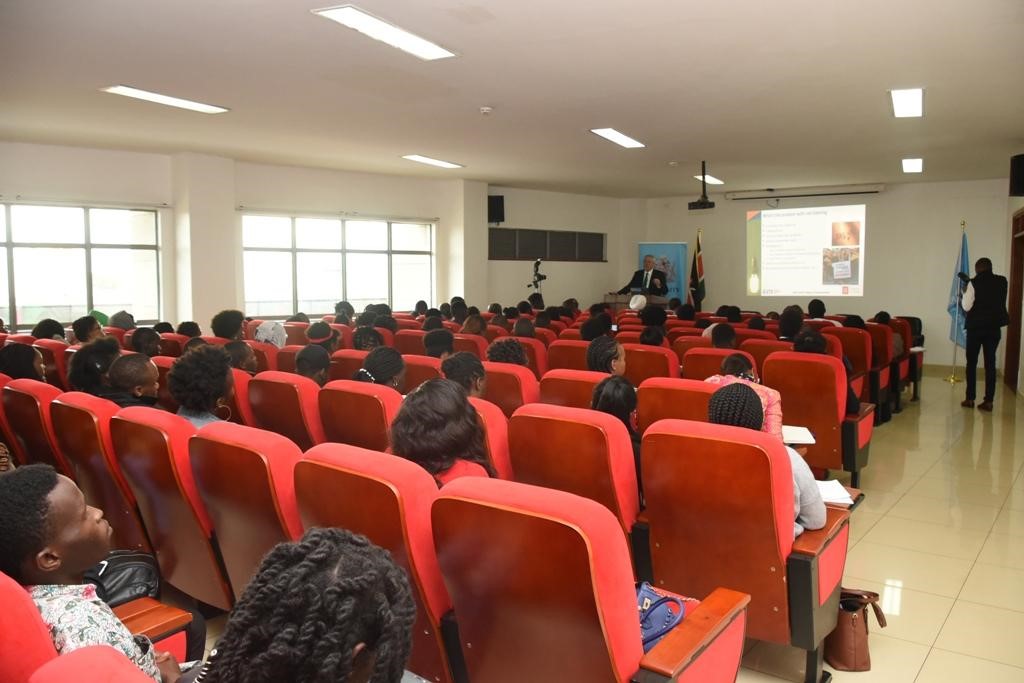
- University enrolment is expanding rapidly, but Yabesh Onwonga argues academic staffing is failing to keep pace.
- He warns that widening access without matching teaching capacity risks undermining the quality of university education.
- Onwonga calls for staffing thresholds, stronger accountability and a national plan linking expansion to measurable outcomes.
Kenya likes to celebrate rising university enrolment as evidence of progress.
The numbers certainly look impressive. University enrolment increased from 628,431 in 2024 to 707,150 in 2025 — a 12.5 per cent jump in a single year. Over three years, enrolment has grown by 26.4 per cent.
But there is another number that should worry every parent, student, lecturer and policymaker.
Academic staffing grew by only 6.4 per cent over the same period.
That is not expansion. It is overcrowding disguised as access.
The situation is even more uncomfortable in public chartered universities, which carry most of the country’s students. Academic staff declined from 10,555 in 2024 to 10,466 in 2025, even as student numbers continued rising.
The result? The student-to-academic-staff ratio jumped from 44.36 to 51.12.
In constituent colleges, it reached a staggering 76.77 students per academic staff member.
What exactly are we building?
A university system where one lecturer is expected to teach enormous classes, mark mountains of scripts, supervise students, conduct research, publish, attend meetings, mentor young people and somehow maintain professional standards?
That is not a sustainable education model.
And the consequences will not appear neatly in one government report. They will appear in poorly supervised dissertations, delayed feedback, exhausted lecturers, overcrowded lecture halls, weaker research output and graduates who leave university carrying certificates but insufficient practical preparation.
Access must be matched by quality
The Government’s own education strategy has already acknowledged staffing shortages in universities, particularly in specialised fields such as engineering, medicine and law. It also identifies the need for qualified staff, better infrastructure, digital capacity, research funding and stronger quality assurance.
So this is not a problem Kenya has just discovered.
It is a problem Kenya has known about and failed to solve at the required speed.
The first response must be brutally simple: stop measuring university success primarily by how many students we admit.
Access matters. But access without quality can become a national confidence trick.
The Government should establish minimum staffing thresholds tied to enrolment and discipline. Universities exceeding agreed student-to-academic-staff ratios should be required to publish recovery plans, with timelines for recruitment and evidence of implementation.
Secondly, funding must follow students — but funding must also protect teaching capacity.
Kenya cannot expand access indefinitely while universities accumulate financial obligations and struggle to recruit lecturers. The Government has previously acknowledged significant funding pressures across higher education, while public universities have carried substantial pending bills.
The answer cannot simply be to admit more students and hope universities somehow cope.
Third, Kenya needs a national academic workforce plan.
Recruitment should prioritise areas where the economy and students need capacity most: medicine, engineering, ICT, agriculture, education, science and other specialised disciplines. Universities should be given incentives to attract and retain experienced academics, including younger researchers capable of strengthening the next generation of scholarship.
Fourth, Kenya should stop treating digital learning as a magic substitute for lecturers.
Technology can expand access, improve course delivery and reduce pressure on physical infrastructure. But a recorded lecture cannot supervise a thesis. An automated platform cannot replace every academic mentor. Artificial intelligence can assist learning, but it cannot become an excuse for underinvestment in human expertise.
Universities must face accountability mirror
Fifth, universities themselves must face the accountability mirror.
Expansion should not automatically mean new buildings, new campuses and new administrative structures. Every institution should demonstrate that available resources are producing teaching, research and employable skills.
The 2023 Presidential Working Party on Education Reform also identified longstanding concerns about staffing structures and governance within universities, including imbalances between teaching and non-teaching personnel.
That debate must now move from reports to action.
Universities should publish annual institutional scorecards showing student numbers, academic staffing, student-to-staff ratios, graduation rates, research output, graduate employment indicators, infrastructure capacity and outstanding financial obligations.
Parents deserve to know what they are paying for.
Students deserve to know whether the institution they are joining has enough lecturers to teach them.
And taxpayers deserve to know whether public investment is producing educational value.
There is also a bigger question.
What kind of graduate does Kenya actually want?
The Government has said employers increasingly want graduates who can solve problems, innovate and adapt rather than simply memorise content.
Then the university system must be designed around that ambition.
More students alone will not create a knowledge economy.
More graduates alone will not create jobs.
More campuses alone will not produce research breakthroughs.
Kenya needs universities that can teach deeply, supervise properly, research seriously and connect learning to the economy.
From enrolment numbers to outcomes
The country should therefore establish a five-year University Capacity Compact bringing together Government, universities, lecturers, students, employers and regulators.
Its targets should be painfully specific: recruit the lecturers needed to bring staffing ratios down; clear verified university debts; expand laboratories and libraries; strengthen digital infrastructure; increase competitive research funding; and publish annual performance results.
No slogans. No inflated promises.
Just numbers, deadlines and consequences.
Kenya should be proud that more young people are reaching university.
But we should be equally honest about what happens after they enter the gate.
A university place is not the achievement.
If enrolment is rising twice as fast as academic capacity, the country is not merely facing a staffing problem.
It is facing a quality-control emergency.
And the worst response would be to congratulate ourselves on the number of students while ignoring the conditions under which they are being taught.
READ ALSO: TSC seeks lifting of court orders suspending teachers’ social media directive
Kenya cannot afford universities that produce mass graduation ceremonies but insufficient learning.
We must stop counting heads and start counting outcomes.
By Yabesh Onwonga
Yabesh is a history and language analyst.
Get more stories from our website: Education News
To write to us or offer feedback, you can reach us at: editor@educationnews.co.ke
You can also follow our social media pages on Twitter: Education News KE and Facebook: Education News Newspaper for timely updates.
>> Click here to stay up-to-date with trending regional stories