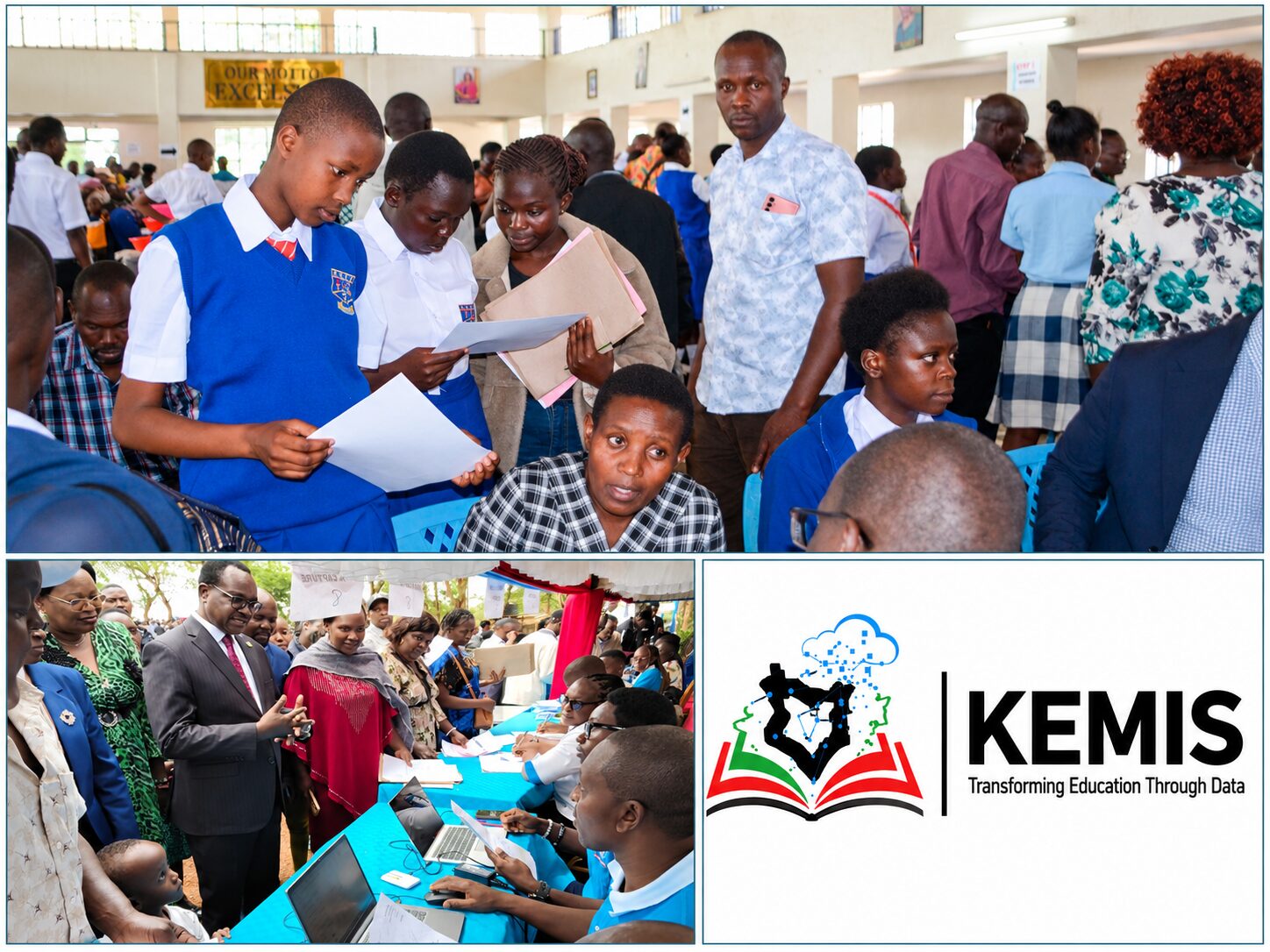
- Technical problems on KEMIS have disrupted Grade 10 school selections ahead of the September deadline.
- Schools report failed logins, unsaved submissions and incomplete school or subject information on the portal.
- The disruption has renewed calls to ensure no learner is disadvantaged by failures beyond their control.
Kenya’s Grade 9 learners are facing a critical Senior School selection exercise after technical problems on the Kenya Education Management Information System (KEMIS) disrupted the process, leaving schools, parents and learners racing against a deadline they said did not adequately reflect the time lost to system failures.
The exercise, which opened on August 24, 2026, was initially scheduled to run until September 11. It involves Grade 9 learners preparing to transition to Grade 10 under the Competency-Based Education (CBE) system. The process requires learners to identify their preferred pathway, subject combination and Senior School choices.
But the ambitious digital exercise was quickly tested by technology.
Schools reported difficulties logging into the platform, submitting choices, saving information and accessing accurate learner records. There were also reports of schools or subject combinations not appearing correctly on the system, raising concerns that learners could be disadvantaged by problems beyond their control.
The Ministry acknowledged technical challenges affecting the Grade 10 Selection and Placement portal, including failed logins, unsaved submissions and outdated learner records.
The disruption is particularly significant because the selection exercise is not simply an administrative registration exercise. It is the gateway through which learners begin determining the academic and career direction they will pursue in Senior School.
Under CBE, learners choose among three broad pathways — Science, Technology, Engineering and Mathematics (STEM), Social Sciences, and Arts and Sports Science.
The choices are expected to reflect a learner’s abilities, interests, talents and aspirations rather than simply the prestige of a particular school.
That makes reliability of the selection platform a matter of educational equity, not merely ICT performance.
A learner who cannot access the system, whose preferred school is missing, or whose subject combination fails to appear correctly should not be placed at a disadvantage because of a technical failure.
The pressure became more intense as the September 11 deadline approached.
The Standard reported that parents and school heads were seeking additional time, with complaints ranging from difficulties accessing the portal to problems with institution and subject information. The National Parents Association also called for an extension to prevent learners from being locked out.
With the system being stabilised, schools need adequate time to complete outstanding selections without forcing administrators into hurried or inaccurate submissions.
The eight-school choice
One of the notable changes in the 2026 exercise is the reduction in the number of Senior School choices from the previous 12 to eight.
The Standard confirms that learners in the current exercise are required to choose eight schools, down from 12 previously.
The reduction makes every choice more consequential.
Parents therefore need to resist the temptation to treat the exercise as a race for the most famous schools.
A school may have an excellent reputation but still be unsuitable if it does not offer the learner’s preferred pathway or the required subject combination.
The more important question should be whether the school can support the learner’s abilities, interests and intended career direction.
For example, a learner interested in engineering needs to examine whether the preferred school offers the relevant STEM combination.
Similarly, learners interested in creative disciplines, sports or social sciences need to confirm that the selected institution actually offers the appropriate pathway and subjects.
The technical problems have also highlighted the increasing administrative burden placed on Heads of Institutions.
Schools are expected to guide learners and parents through pathway choices, subject combinations and school selection while simultaneously ensuring that learner information is accurate.
Where records contain errors, administrators must ensure that corrections are made through the appropriate channels before final submission.
The process also requires careful documentation.
Once selections have been completed, schools should retain the necessary learner records and confirmation documents so that there is a clear audit trail showing what was selected and approved.
This is particularly important in a relatively new system whose national rollout is bound to expose weaknesses that may not have been visible during testing.
The Ministry must therefore treat the current disruption not simply as a crisis to be contained but as a diagnostic test of the country’s education data infrastructure.
No learner should pay for a system failure
The most important principle emerging from the crisis is simple: learners should not lose an opportunity because of a technological failure.
Where a school administrator attempted to complete a learner’s selection but could not do so because of portal instability, the system should retain evidence of the attempted transaction wherever possible.
Technical failures should also be distinguished from administrative negligence.
A school that ignored the process despite having access to the system should not receive the same treatment as a school that made repeated attempts but was locked out by system failure.
This calls for a transparent exception-management mechanism in which schools can report unresolved cases and the Ministry can verify them before the placement process is closed.
The KEMIS experience offers an important lesson for the wider implementation of CBE.
Digital transformation can simplify education administration, but only if the infrastructure is sufficiently resilient to handle national-scale demand.
The Government should undertake a post-exercise review of the Grade 10 selection platform, including server capacity, data synchronisation, user authentication, school information, subject-combination databases and mechanisms for recovering failed submissions.
The review should not be about assigning blame. It should be about ensuring that the next major CBE digital exercise does not reproduce the same weaknesses.
The Grade 10 transition is too important to be compromised by avoidable technological failures.
Kenya is attempting something bigger than merely moving learners from Grade 9 to Grade 10. It is testing whether an education system built around pathways, competencies, learner interests and career aspirations can work at national scale.
That experiment deserves digital infrastructure capable of matching its ambition.
For now, the priority should be to give every affected school enough time to complete legitimate selections, provide rapid technical support to administrators still facing problems, protect learners whose submissions were interrupted by system failures and ensure that no child is disadvantaged because a government portal could not perform when required.
READ ALSO: Governor Otuoma joins mourners in emotional send-off of MMUST lecturer Dr Regina Nabwire
The lesson from the KEMIS disruption should be clear: technology must serve the learner, not become another barrier standing between the learner and education.
By Hillary Muhalya
Get more stories from our website: Education News
To write to us or offer feedback, you can reach us at: editor@educationnews.co.ke
You can also follow our social media pages on Twitter: Education News KE and Facebook: Education News Newspaper for timely updates.
>> Click here to stay up-to-date with trending regional stories