- Parents should prepare university, college and TVET students for independent living, not just meet their financial needs.
- Cooking, budgeting, shopping and hygiene are basic skills that can make the transition from home easier.
- Giving young people responsibility before they leave home can prepare them to make sound decisions independently.
You can pay your child’s university fees, furnish their hostel room and send them enough pocket money — but if you never taught them how to live independently, you may have prepared them for campus without preparing them for life.
The first shock for many young people leaving home is not the lecture hall.
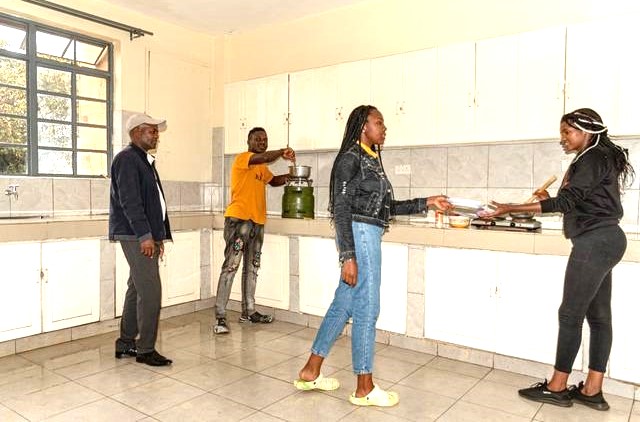
It is the kitchen.
For the first time, nobody is asking whether they have eaten. Nobody is preparing breakfast. Nobody is reminding them to wash their clothes, clean their room, budget their money or plan what they will eat tomorrow.
Suddenly, a young person who has spent years concentrating on examinations is expected to become a cook, shopper, cleaner, budget manager and decision-maker overnight.
That is why parents preparing children for university, college or TVET should think beyond fees, accommodation, shopping and pocket money.
The real preparation for campus begins at home.
A suitcase can carry clothes. A parent can provide money. But independence has to be taught.
A student does not need to become a professional chef. But they should be able to prepare several simple, nutritious meals without calling home for instructions.
Teach them how to cook eggs, rice, potatoes, pasta, vegetables, beans, lentils, ugali and simple stews.
The objective is not culinary sophistication. It is confidence.
Eggs can become breakfast, sandwiches or a quick dinner. Beans and lentils can be served with rice, chapati, ugali or vegetables. Tomatoes and onions can transform simple ingredients into a proper meal.
A young person who can make several meals from affordable ingredients is less dependent on expensive takeaways, fast food and snacks.
Cooking is therefore not just a household skill. It is a financial skill.
Teach them how to shop
Many students do not necessarily run out of money because their allowances are too small. Some simply have never been taught how to manage money.
Before leaving home, a student should know how to make a shopping list, compare prices, distinguish needs from wants and buy food in sensible quantities.
Basic staples such as rice, beans, lentils, potatoes, vegetables, eggs and unga can form the foundation of affordable meals.
Parents can even turn shopping into practical training. Give the child a fixed amount and ask them to plan meals for several days.
That single exercise can teach budgeting more effectively than a long lecture about financial discipline.
Students should also learn to explore markets, supermarkets and other reasonably priced outlets rather than relying exclusively on the nearest shop or takeaway.
Independent living also means taking responsibility for personal health.
Students should know how to clean cooking surfaces and utensils properly, handle raw and cooked food safely, store suitable leftovers correctly and recognise when food should no longer be eaten.
They should also learn to keep bedrooms, bathrooms and shared kitchens clean.
This becomes particularly important in hostels and shared accommodation, where several people may use the same facilities.
Parents should teach these habits while the child is still at home.
Do not wait for a university hostel to become the classroom for basic hygiene.
Build a simple student kitchen
A young person does not need to carry an entire household to campus.
A basic kitchen kit could include a saucepan, frying pan, cooking pot, kitchen knife, chopping board, cooking spoon, spatula, peeler, grater and food-storage containers.
Where appropriate and permitted by the accommodation, simple appliances can make cooking easier.
If several students share a house, they can agree on which larger items to buy collectively rather than duplicating everything.
The purpose is not to create a luxury kitchen.
It is to remove excuses for not cooking.
Student life can be hectic.
Lectures, assignments, examinations, group work and social activities can make cooking feel like a burden.
That is where meal planning and batch cooking can help.
Students can prepare suitable foods in reasonable quantities and store portions safely for later. This saves both time and money and reduces the temptation to order food whenever they are hungry.
A little planning can turn a chaotic week into a manageable one.
Teach them what to do when money gets tight
Every student should understand that an allowance is not an unlimited supply of money.
Parents should help them divide money between essential expenses, food, transport, academic needs and emergencies.
They should also understand that emergency money is different from spending money.
If the allowance is delayed, a phone is lost or an unexpected expense arises, the student should have a basic plan instead of immediately panicking.
Financial independence begins with knowing where the money goes.
Perhaps the biggest challenge of leaving home is not cooking or cleaning.
It is making decisions.
University and college expose young people to new friends, new freedoms, social pressure and new financial demands.
A young person who has always had every decision made for them may struggle when suddenly given complete freedom.
Parents should therefore begin giving their children age-appropriate responsibility before they leave.
Let them plan a meal.
Let them manage part of the household shopping.
Let them budget.
Let them make mistakes.
Let them experience the consequences of small decisions while you are still close enough to guide them.
The importance of such skills extends beyond campus life. Kenyan TVET research, for example, identifies problem-solving, decision-making and personal responsibility among the life and transferable skills that help young people navigate everyday challenges and eventually the workplace.
Independence is the real campus preparation
Parents often spend weeks preparing what their children will physically carry to university.
But the most important things cannot be packed into a suitcase.
Discipline cannot be packed.
Financial wisdom cannot be packed.
Cooking skills cannot be packed.
Personal responsibility cannot be packed.
They have to be developed before departure.
The goal should not be to raise a student who constantly calls home asking, “How do I cook this?” or “What should I do now?”
The goal is to raise a young adult who can solve ordinary problems independently while knowing when to seek help.
Academic qualifications may determine where a young person starts their career.
But the ability to cook a meal, manage money, maintain a clean home, make sound decisions and take responsibility for oneself will shape how confidently they navigate adulthood.
So, as another generation prepares to leave home for universities, colleges and TVETs, parents should ask themselves one final question:
Have I prepared my child only to study — or have I prepared them to live?
Because university is not simply the first step into higher education.
For many young people, it is their first real test of independence.
READ ALSO: ICT Authority steps up protection of Govt systems, critical information infrastructure
And the best preparation for that test starts at home.
By Hillary Muhalya
Get more stories from our website: Education News
To write to us or offer feedback, you can reach us at: editor@educationnews.co.ke
You can also follow our social media pages on Twitter: Education News KE and Facebook: Education News Newspaper for timely updates.
>> Click here to stay up-to-date with trending regional stories