- Kenya has recorded 1,298 confirmed Mpox cases and 19 deaths across 40 counties.
- Mombasa leads with 452 cases, followed by Nairobi with 320 and Busia with 115.
- Health authorities are emphasising surveillance, vaccination, public awareness and stronger hygiene and prevention measures.
Kenya is stepping up its public-health response after 1,298 confirmed Mpox cases and 19 deaths were reported across 40 counties, with the Ministry of Health calling on Kenyans to strengthen hygiene, prevention and early reporting measures.
The latest figures, recorded as of September 6, 2026, show that Mpox remains a significant health concern, with Mombasa accounting for the highest number of confirmed cases at 452.
Nairobi follows with 320 cases, while Busia has reported 115 cases, placing the three counties among the areas requiring sustained vigilance and coordinated intervention.
Public Health and Professional Standards Principal Secretary Mary Muthoni has identified seven counties — Mombasa, Nairobi, Busia, Makueni, Kiambu, Kilifi and Nakuru — as being at highest risk, particularly because of their location along major transport corridors.
The spread across 40 of Kenya’s 47 counties also underlines the need for communities outside the counties with the highest case numbers to remain alert and adopt preventive measures.
The Ministry has urged the public not to wait for an outbreak to reach their immediate neighbourhoods before taking precautions, stressing the importance of hygiene, awareness and prompt action when symptoms appear.
Kenyans are being encouraged to familiarise themselves with the symptoms of Mpox so that suspected cases can be identified and assessed early.
Mpox can cause fever, severe headache, muscle and body aches, backache, tiredness and swollen lymph nodes. Some people may also experience a sore throat or other symptoms.
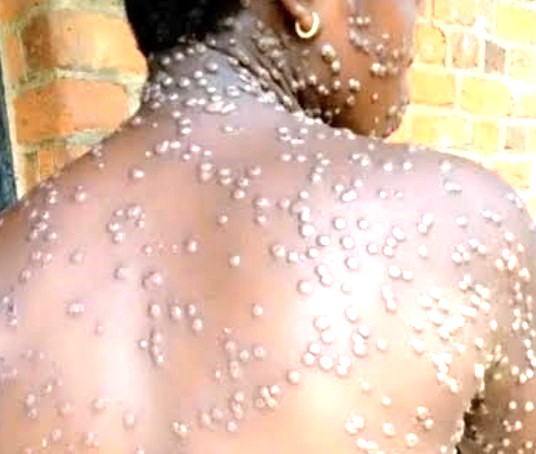
One of the most recognisable signs is a rash or skin lesions. These may begin as spots or raised bumps before developing into fluid-filled blisters and eventually scabs.
The lesions can occur on different parts of the body, including the face, hands, feet, mouth and genital or anal areas. Their appearance and severity can vary from one person to another.
Some infected people may develop only a few lesions, while others may experience widespread and painful lesions.
Anyone who develops an unexplained rash or skin lesions, particularly when accompanied by fever or swollen lymph nodes, should seek medical assessment. People with suspected symptoms should also avoid close physical contact with others until they have received appropriate medical advice.
Recognising symptoms early can help individuals seek appropriate care and reduce the risk of transmission within households and communities.
Ministry strengthens surveillance
The latest Mpox situation featured prominently during a senior management meeting at the Ministry of Health, where officials emphasised the importance of sustained surveillance, vaccination, public awareness and coordinated action as Kenya continues responding to disease outbreaks.
Surveillance remains critical because early detection allows health authorities to identify emerging transmission patterns and respond before outbreaks become more difficult to contain.
Public awareness is equally important because communities are often the first line of defence against infectious diseases. Understanding symptoms, knowing when to seek medical attention and following prevention guidance can help reduce transmission.
The meeting also reviewed implementation of commitments made during the Kenya Health Summit, with health-sector leadership seeking to translate policy commitments into practical results.
Agencies, directorates and divisions were urged to strengthen coordination, assume clear responsibility for their respective mandates and deliver measurable results.
The call for accountability comes as Kenya seeks to strengthen its capacity to respond to both existing and emerging health threats.
KEPHIC 2026 to focus on prevention
The management meeting further reviewed preparations for KEPHIC 2026, scheduled for October 26–29, 2026, in Nairobi.
The conference will focus on prevention, primary healthcare, health promotion and community action.
Its focus is particularly relevant as Kenya continues to confront infectious disease outbreaks while seeking to strengthen a healthcare system that places greater emphasis on prevention and early intervention.
The conference is expected to provide an important platform for stakeholders to examine ways of strengthening primary healthcare and empowering communities to become active participants in protecting public health.
Health officials also reviewed preparedness for anticipated El Niño-related health risks, adding another dimension to Kenya’s ongoing public-health planning.
Adverse weather conditions can create additional challenges for health systems and communities, making early preparedness, surveillance and coordination essential.
The meeting brought together CEOs of State Corporations and Regulatory Bodies, Heads of Directorates and Divisions, and members of the Senior Management Team.
With Mpox cases now confirmed in 40 counties, the Ministry’s message is that disease prevention cannot be left to health workers and government agencies alone.
The public has a crucial role to play by maintaining good hygiene, remaining alert to symptoms, avoiding unnecessary close contact with suspected cases, seeking medical attention promptly and following official health guidance.
For further information and registration for KEPHIC 2026, members of the public and stakeholders can contact kephic@health.go.ke.
Vigilance remains critical
With infections now reported across most of the country, continued surveillance and public adherence to prevention measures will be critical to limiting further transmission.
For Kenyans, the immediate message is to recognise possible symptoms, minimise exposure to suspected cases and seek medical attention promptly.
READ ALSO:
For health authorities, the challenge is to sustain surveillance, vaccination, public awareness and coordination as the outbreak evolves.
By Hillary Muhalya
Get more stories from our website: Education News
To write to us or offer feedback, you can reach us at: editor@educationnews.co.ke
You can also follow our social media pages on Twitter: Education News KE and Facebook: Education News Newspaper for timely updates.
>> Click here to stay up-to-date with trending regional stories