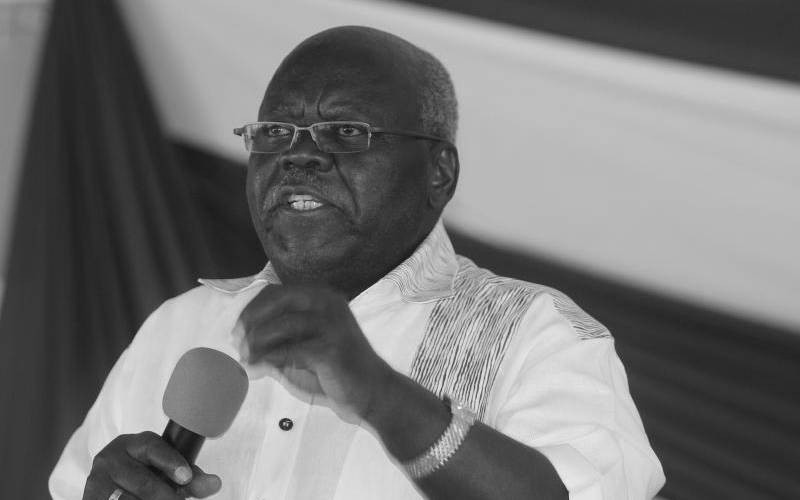
- Peter Oloo Aringo steered Kenya’s transition from the 7-4-2-3 system to the 8-4-4 education structure in the 1980s.
- Aringo is credited with contributing to the establishment of the Parliamentary Service Commission and the concept behind the Constituency Development Fund.
- Aringo served as Alego Usonga MP across two separate periods before his death on November 1, 2024, at the age of 83.
Peter Castro Oloo Aringo remains one of the most influential figures in the history of Kenya’s education sector, remembered for his role in overseeing the country’s transition from the 7-4-2-3 education structure to the 8-4-4 system. Born on May 19, 1941, in Alego, Siaya District, Aringo began his education at Mbaga Primary School before joining St. Mary’s School, Yala. He later trained as a teacher at Siriba Teachers College, now part of Maseno University, between 1961 and 1962. His early career was firmly rooted in education, teaching at St. Mary’s Yala and Kapsabet Secondary School, where he also served as acting headmaster.
Aringo later pursued higher education at the University of Nairobi, graduating in 1969 with First Class Honours in history, economics and politics. His academic achievement earned him a Commonwealth scholarship to the University of Toronto in Canada, where he obtained a master’s degree. Upon returning to Kenya, he continued serving in the education sector, working at institutions including Aquinas High School and Upper Hill School, before being appointed Vice Principal of Kenya Polytechnic in 1973. His transition from education administration to national politics came in 1974, when he resigned from Kenya Polytechnic and successfully contested the Alego Usonga parliamentary seat.
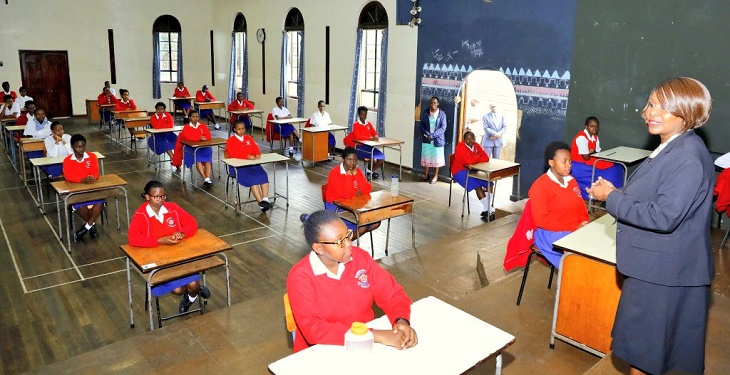
Aringo’s most enduring contribution to education came during his tenure as Minister for Education. It was under his leadership that Kenya implemented the transition from the inherited 7-4-2-3 education structure to the 8-4-4 system in the 1980s. The new model introduced eight years of primary education, four years of secondary education and four years of university education, designed to give learners a broader and more practical education with greater emphasis on technical, vocational and applied skills. The reforms affected millions of Kenyan learners and shaped the education experiences of generations that followed. During the period, Kenya also expanded technical and teacher-training institutions, strengthening the country’s capacity to produce teachers and technical manpower, with institutions such as Kenya Technical Trainers College and Kenya Science Teachers College among those associated with the expansion of technical and teacher education during the era.
ALSO READ:
Ogamba: Africa’s tech future depends on giving girls equal space to innovate
Although Kenya eventually moved away from 8-4-4 and adopted the Competency-Based Curriculum, Aringo’s role in the history of the system remains significant.
Aringo’s influence extended beyond curriculum reforms. He was an advocate for stronger parliamentary institutions and was involved in efforts that contributed to the establishment of the Parliamentary Service Commission, intended to enhance Parliament’s administrative and institutional independence. He later served as the Commission’s Vice Chairman and participated in reforms aimed at strengthening parliamentary administration and financial capacity. He was also associated with efforts to find more sustainable ways of financing development at the constituency level. According to accounts from his longtime personal assistant, Mathews Obwolo, Aringo believed that development should not depend solely on politicians raising money through harambees, and supported a system where government resources could be channelled directly to constituencies for development. His efforts, alongside other legislators including engineer Muriuki Karue, contributed to discussions that helped shape the Constituency Development Fund concept, which later became a major vehicle for constituency-level development financing.
KNEC should adopt a balanced, needs-based system for sourcing exam personnel
Aringo served as Alego Usonga MP during two separate periods, from 1974 to 1988 and again from 1997 to 2002. He served in government under both President Jomo Kenyatta and President Daniel arap Moi, holding various assistant ministerial and Cabinet positions. During the Moi era, Aringo became known for his colourful political language; at a University of Nairobi graduation ceremony, he famously described Moi as the “Prince of Peace,” a phrase that entered Kenya’s political lexicon, with accounts of the incident indicating that Moi reportedly cautioned Aringo against elevating him to a status comparable to Jesus Christ.
ALSO READ: KUPPET threatens strike over alleged intimidation of newly posted Principal by clergy
Aringo was initially associated with KANU and eventually rose to become the party’s National Chairman. Following the repeal of Section 2A of the Constitution and the return to multiparty politics, however, his political fortunes changed. He lost his parliamentary seat in the 1992 elections to journalist Otieno Mak’Onyango, before making a comeback in 1997. His final parliamentary term ended in 2002 after he lost the Alego Usonga seat to Sammy Arthur Weya.
Known to his supporters by the Luo nickname “Ochok wang’e Dongo,” Aringo was remembered as a powerful debater, educationist and politician who played a significant role in shaping Kenya’s institutions. His greatest legacy, however, remains closely linked to education. The 8-4-4 system became one of the most consequential education reforms in Kenya’s post-independence history, and while it has since been replaced by the Competency-Based Curriculum, its impact continues to be felt among millions of Kenyans who passed through its classrooms. Peter Oloo Aringo died on November 1, 2024, aged 83, while receiving treatment at Aga Khan Hospital in Nairobi. More than two decades after leaving active politics, and decades after Kenya introduced 8-4-4, his name remains part of the country’s education history, a reminder of the policymakers and educators whose decisions shaped generations of Kenyan learners.
By Jeff Kirui
Get more stories from our website: Education News
To write to us or offer feedback, you can reach us at: editor@educationnews.co.ke
You can also follow our social media pages on Twitter: Education News KE and Facebook: Education News Newspaper for timely updates.
>> Click here to stay up-to-date with trending regional stories