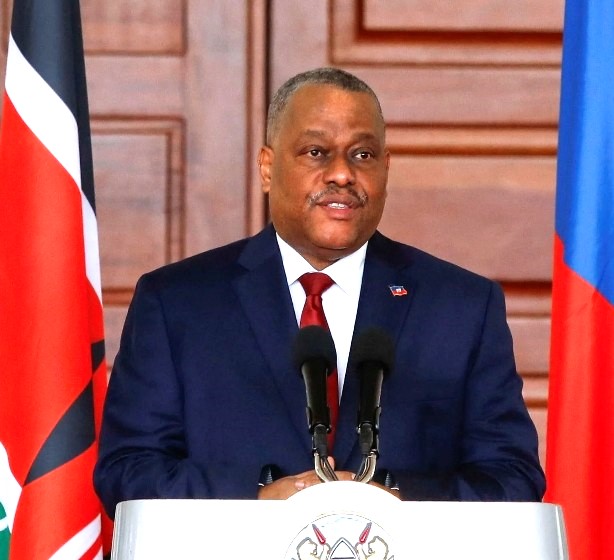
- United Nations Resident Coordinator in Kenya, Garry Conille, has described youth unemployment as one of the country’s biggest security threats.
- He warns that the gap between job seekers and available opportunities is becoming increasingly dangerous.
- Experts say Kenya must rethink its education, economic and employment policies to turn its youthful population into an asset rather than a liability.
Kenya is producing young people for a labour market that is simply not creating opportunities fast enough.
That is the uncomfortable reality laid bare by United Nations Resident Coordinator in Kenya, Garry Conille, who has warned that the country produces about one million people for the job market every year but creates only about 200,000 jobs.
The warning, made on September 2, 2026, should not be treated as another statistic to be quoted, debated and forgotten. It should trigger a fundamental rethink of Kenya’s economic, education and employment policies.
Because behind the numbers are millions of young Kenyans leaving schools, colleges and universities with expectations of employment, financial independence and a better life — only to encounter an economy that cannot absorb them.
And that gap is becoming increasingly dangerous.
Conille described the youth employment challenge as one of Kenya’s biggest security threats, asking a question that should now dominate national policy discussions: What do we do with all these young people getting ready for work?
That is the question Kenya can no longer afford to postpone.
The country cannot continue expanding access to education while failing to expand the economic opportunities awaiting those who complete that education.
For years, Kenya has understandably concentrated on getting more children into classrooms, expanding infrastructure, recruiting teachers and increasing access to universities and technical institutions. These investments are important.
But education cannot operate in isolation from the economy.
A young person may successfully progress from primary school to secondary school, complete university or technical training and emerge highly qualified — only to discover that the economy has no place for the skills acquired.
That creates frustration, underemployment and dependency.
It also raises fundamental questions about whether Kenya’s education system is sufficiently aligned with the country’s economic ambitions.
Education must prepare for employment and enterprise
The shift towards Competency-Based Education (CBE) provides an opportunity to confront this problem at its roots.
CBE should not merely produce learners who can pass assessments. It should produce young people who can solve problems, create products, start enterprises, use technology, communicate effectively and adapt to changing labour markets.
The country therefore needs to move beyond the traditional mentality that success means securing a formal job after graduation.
Kenya needs an education system that prepares learners for employment and enterprise.
That means giving practical skills, digital competencies, financial literacy, creativity, innovation and entrepreneurship much greater prominence.
But education reform alone will not solve the problem.
The economy must also change.
If Kenya produces one million potential workers annually and creates only a fraction of the jobs they need, the government must ask a harder question: Where will the remaining young people find meaningful livelihoods?
There is no sustainable answer in telling every graduate to “create a job” without creating an economic environment in which businesses can actually survive and grow.
Small and medium-sized enterprises must become central to Kenya’s employment strategy.
These businesses employ millions of people, yet many struggle with taxation, expensive credit, regulatory burdens, unreliable infrastructure and limited access to markets.
A deliberate national strategy to help small enterprises graduate into larger, productive employers could generate far more employment than programmes that simply distribute short-term financial assistance.
Kenya must also stop treating manufacturing as an old-fashioned economic ambition.
A country of more than 50 million people cannot sustainably depend on importing manufactured goods while exporting young people in search of employment.
Industrialisation must return to the centre of economic planning.
Agriculture, too, must be transformed from subsistence activity into a modern commercial sector capable of creating jobs across production, processing, logistics, storage, technology and marketing.
The same applies to the blue economy, construction, renewable energy, healthcare, aviation, ICT, creative industries and the digital economy.
The opportunity is not necessarily that every young Kenyan will obtain a traditional nine-to-five job.
The opportunity is to build an economy capable of generating many different forms of productive work.
That requires policy consistency.
Investors cannot create thousands of jobs if the cost of doing business remains prohibitive. Entrepreneurs cannot employ large numbers of people if access to affordable financing remains difficult. Manufacturers cannot expand if energy, logistics and taxation make production uncompetitive.
Job creation is an economy-wide responsibility
Kenya therefore needs to stop viewing employment as merely a function of the Ministry of Labour.
Job creation is an economy-wide responsibility.
The Ministries responsible for education, finance, industry, agriculture, ICT, labour, trade and youth affairs must work from one integrated employment strategy.
The Teachers Service Commission, universities, TVET institutions and other training providers also have a critical role.
Training institutions should be constantly asking: What skills will Kenya need five, 10 or 20 years from now?
There is little value in producing thousands of graduates for occupations where opportunities are shrinking while emerging sectors struggle to find appropriately skilled workers.
Career guidance must consequently begin much earlier.
Young people should understand the changing labour market before choosing courses and careers.
TVET must also be elevated from being perceived as an alternative for students who have failed academically. Technical and vocational education should instead be presented as a first-class pathway into a modern economy.
Kenya needs technicians, artisans, engineers, programmers, healthcare workers, aircraft specialists, builders, agricultural technologists, electricians, mechanics, designers and countless other skilled professionals.
The dignity of work must be restored across all these professions.
At the same time, the government must confront the uncomfortable reality of graduate unemployment.
A university degree should not become a certificate of waiting.
Universities must strengthen links with industry, expand internships and apprenticeships, encourage innovation and ensure courses respond to real economic demand.
Young people also need access to credible information about opportunities beyond Kenya.
International labour markets can absorb some of Kenya’s skilled workforce, particularly in healthcare, education, technology and technical professions. But labour export should complement domestic job creation — not become a substitute for it.
Most importantly, Kenya must recognise that youth unemployment is not simply an economic problem.
It is a social and national-security challenge.
A young person without employment, income or hope can become vulnerable to crime, drugs, political manipulation, extremism and other forms of exploitation.
A generation that spends years looking for work may eventually lose faith in institutions that promised education would lead to a better life.
That is where the real danger lies.
Kenya’s youth are not a problem to be managed. They are the country’s greatest economic resource.
They represent energy, creativity, technology, ambition and innovation.
But human capital becomes an asset only when the economy provides opportunities for it to flourish.
Youth must be turned from liability into dividend
The government therefore needs to recalibrate its priorities.
Instead of measuring progress primarily through the number of people trained, classrooms constructed or institutions established, Kenya should increasingly ask another question:
How many productive livelihoods has the economy created?
That should become one of the most important measures of national progress.
The country needs an aggressive national jobs compact bringing together government, employers, universities, TVET institutions, investors, county governments and young people.
Every major public investment should be assessed partly on its employment potential.
Every education reform should consider employability.
Every economic policy should ask how it affects enterprise and job creation.
Every county should identify sectors in which it has a competitive advantage and build local employment ecosystems around them.
And every young Kenyan should be given a realistic pathway from education to skills, from skills to opportunity, and from opportunity to economic independence.
The warning from Conille should therefore be regarded as a wake-up call, not a political talking point.
Producing one million job seekers while creating only about 200,000 jobs is an economic imbalance that cannot continue indefinitely.
Kenya cannot educate young people for opportunities that do not exist.
It cannot keep telling graduates to be patient.
It cannot keep postponing the difficult reforms required to make businesses more productive, industries more competitive and education more responsive to the economy.
The demographic pressure is already here.
The question is whether Kenya will turn its youthful population into its greatest economic advantage — or allow unemployment, frustration and hopelessness to turn that demographic dividend into a national liability.
READ ALSO: Kapchesewes children’s home adopts family-based care model in Elgeyo Marakwet
The time for another jobs summit, another strategy document and another promise is over. Kenya needs jobs, enterprise, skills and economic opportunities — and it needs them at scale.
By Hillary Muhalya
Get more stories from our website: Education News
To write to us or offer feedback, you can reach us at: editor@educationnews.co.ke
You can also follow our social media pages on Twitter: Education News KE and Facebook: Education News Newspaper for timely updates.
>>> Click here to stay up-to-date with trending regional stories