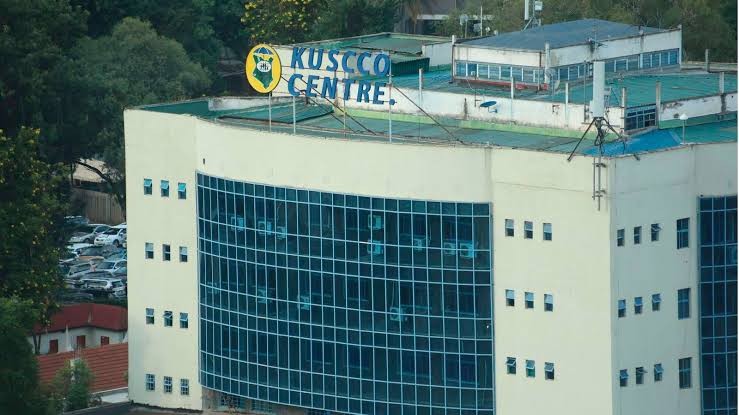
- Teachers should not assume their SACCO savings have been affected by KUSCCO’s liquidation, since KUSCCO is a separate umbrella body being wound up, not the teachers’ individual SACCOs.
- Teachers should ask their SACCO management about its financial exposure to KUSCCO, including whether it is a creditor or debtor, before concluding their savings, loans or expected dividends.
The collapse of the Kenya Union of Savings and Credit Co-operative Organisations (KUSCCO) has sent a strong warning through Kenya’s co-operative movement, but for teachers, one distinction is crucial: KUSCCO is being liquidated; teachers’ SACCOs are not.
The development follows a decision by KUSCCO shareholders to wind up the financially distressed umbrella organisation after years of financial difficulties left it unable to meet its obligations. The decision was reached at a Special General Meeting held in Nairobi on August 28, 2026, convened by Commissioner for Co-operative Development David K. Obonyo. Representatives of about 250 affiliated SACCOs attended the meeting and unanimously approved liquidation. The Commissioner subsequently formally moved the process forward through a Gazette Notice cancelling KUSCCO’s registration and ordering its liquidation under the Co-operative Societies Act, making Obonyo the key government official responsible for formally setting the liquidation process in motion, although the decision itself followed a resolution by KUSCCO’s shareholder SACCOs.
KUSCCO is not a SACCO where ordinary Kenyans directly hold personal savings accounts. Its members are SACCO societies, which collectively formed the umbrella organisation to represent their interests and access various services. Among its membership are SACCOs serving different groups of workers and communities, including teachers and other public-sector employees. This is why the KUSCCO crisis can potentially reach individual teachers even though teachers are not direct KUSCCO members. A teacher normally belongs to a SACCO, and that SACCO may, in turn, have had financial dealings with KUSCCO. The potential chain of exposure runs from teacher to teachers’ SACCO to KUSCCO, a distinction that is critical when assessing what happens next.
ALSO READ:
Why some teachers don’t want to be called “mwalimu” outside the school compound
The organisation was found to be in severe financial distress. A government-commissioned audit found KUSCCO insolvent, with liabilities of approximately Sh17 billion against an asset base of about Sh5.4 billion. The audit also raised serious concerns about the organisation’s financial records, including the absence of a proper asset register and inadequate support for its loan book. KUSCCO was also facing an enormous legal burden, with its lawyers saying the organisation was dealing with nearly 300 court cases brought by SACCOs seeking repayment of more than Sh16 billion invested in KUSCCO over the years. The financial gap is therefore enormous: if KUSCCO has liabilities of roughly Sh17 billion but known assets of only Sh5.4 billion, there is a potential shortfall of approximately Sh11.6 billion. That does not automatically mean Sh11.6 billion will be lost forever, since the liquidation process is precisely intended to identify, recover and realise assets and determine the legitimate claims against KUSCCO, but it demonstrates why the situation is so serious.
Liquidation does not simply mean that KUSCCO has closed its offices. It means the organisation enters a formal winding-up process in which its affairs are brought to an orderly conclusion. The liquidator’s work will include identifying KUSCCO’s assets, recovering money owed to it, verifying claims made by creditors, realising assets where necessary and distributing available funds to legitimate claimants according to applicable legal priorities. The process is essentially about answering four questions: what KUSCCO owns, what it owes, who has a legitimate claim, and how much can actually be recovered and distributed. This is particularly important because KUSCCO’s current asset position is substantially below its reported liabilities.
For teachers, the most important message is simple: KUSCCO’s liquidation does not automatically wipe out teachers’ SACCO savings. A teacher’s savings, shares, deposits and loans are ordinarily held with the teacher’s own SACCO, not directly with KUSCCO, so teachers should not interpret the KUSCCO liquidation as meaning their personal SACCO accounts have been liquidated. The potential problem arises if a teachers’ SACCO had money, investments, deposits, shares or other financial exposure to KUSCCO. If that SACCO is owed money by KUSCCO, it becomes a creditor and may have to pursue its claim through the liquidation process, with the amount eventually recovered depending on the value of KUSCCO’s assets, successful recovery of debts and the legal priority assigned to different claims.
Teachers could not automatically lose their SACCO savings. The correct question is not whether KUSCCO has been liquidated, but how exposed a particular SACCO is to KUSCCO. A teacher whose SACCO has little or no exposure may see little or no direct effect, but if a teacher’s SACCO has a substantial amount of members’ resources tied up in KUSCCO and cannot recover the full amount, the loss could affect the SACCO’s financial position and eventually have consequences for members.
ALSO READ: Panic at Nyakorere Secondary in Kisii as contractor threatens to evict students over unpaid dues
One possible consequence is pressure on dividends. If a SACCO suffers a significant loss arising from its KUSCCO exposure, it may need to strengthen its financial position, make provisions for losses or rebuild reserves, which could reduce the amount available for distribution to members depending on the size of the exposure. Teachers should therefore watch their SACCOs’ financial statements and annual reports rather than assume every teacher will suffer the same impact.
Teachers’ loans could potentially be affected, though only indirectly. SACCOs are important sources of affordable credit for teachers, and if a SACCO loses a significant amount of money through KUSCCO, its liquidity and lending capacity could come under pressure, affecting the pace at which new loans are approved, the amount members can borrow, or the SACCO’s ability to finance new products. However, KUSCCO’s liquidation does not cancel teachers’ existing SACCO loans, nor does it automatically make them due immediately. Teachers should continue servicing their loans according to their SACCO agreements unless their SACCO formally communicates otherwise.
The relationship between KUSCCO and SACCOs is not one-directional. While some SACCOs are seeking to recover money from KUSCCO, some SACCOs and other borrowers also owe KUSCCO money. The liquidation process can therefore involve both recovering money from debtors and paying money to legitimate creditors, since liquidation does not automatically erase valid debts owed to KUSCCO. This means the liquidator will have to pursue recoverable debts while simultaneously determining the claims of SACCOs and other creditors, which could become one of the most complicated aspects of the process.
The biggest danger now is misinformation. A headline saying “KUSCCO liquidated” can easily be interpreted by a teacher as “my SACCO has collapsed.” That is incorrect. KUSCCO is the umbrella organisation being wound up; individual SACCOs remain separate legal entities and continue to operate subject to their own regulatory requirements. Teachers should therefore avoid rushing to withdraw savings, terminate memberships or make financial decisions based solely on social-media reports. Instead, every teacher should ask their SACCO management for clear information on its financial exposure to KUSCCO, the amount, if any, held or invested in KUSCCO, whether it is a creditor or debtor, whether it has lodged a claim in the liquidation process, the expected amount recoverable, whether provisions have been made for possible losses, and whether the situation is expected to affect dividends or lending.
ALSO READ: Study findings ignite debate on review of mother tongue instruction policy in schools
The KUSCCO crisis goes beyond one organisation. It raises fundamental questions about governance, financial reporting, risk management, oversight and the protection of members’ money within Kenya’s co-operative sector. The government-commissioned audit found severe financial weaknesses, while KUSCCO’s legal representatives reported hundreds of cases involving SACCOs seeking repayment of their money. The liquidation therefore becomes an opportunity for the co-operative sector to rethink how umbrella institutions are governed and how SACCOs assess the institutions to which they entrust members’ funds. The decision to wind up KUSCCO was presented as a way of preventing further losses and preserving whatever assets can still be recovered, and shareholders also backed the creation of a new national umbrella body to take over functions such as advocacy, training and research.
For teachers, the immediate priority is much narrower: establish the exact exposure of their individual SACCOs before concluding their savings. KUSCCO’s liquidation is serious. It could create losses for SACCOs that have money tied up in the troubled union, and those losses could eventually affect members through dividends, liquidity and access to credit. But it would be wrong to tell millions of SACCO members that their savings have automatically disappeared. The liquidation process must now establish the assets, liabilities and legitimate claims, recover as much as possible and distribute available resources according to the law. The fate of KUSCCO may be sealed, but the financial consequences for its member SACCOs, and indirectly for teachers and other ordinary savers, will depend largely on what can still be recovered.
By Hillary Muhalya
Get more stories from our website: Education News
To write to us or offer feedback, you can reach us at: editor@educationnews.co.ke
You can also follow our social media pages on Twitter: Education News KE and Facebook: Education News Newspaper for timely updates.
>>> Click here to stay up-to-date with trending regional stories