- HELB has opened a training loan facility offering eligible teachers and civil servants up to KSh500,000 through the Civil Servants Training Revolving Fund, at 4 per cent annual interest repayable over up to 72 months.
- The facility could help teachers and public servants overcome cost barriers to pursuing further qualifications amid changes such as CBE and digital transformation.
- Teachers are cautioned against unnecessary borrowing and urged to assess actual programme costs and the effect of monthly deductions before taking the maximum loan amount.
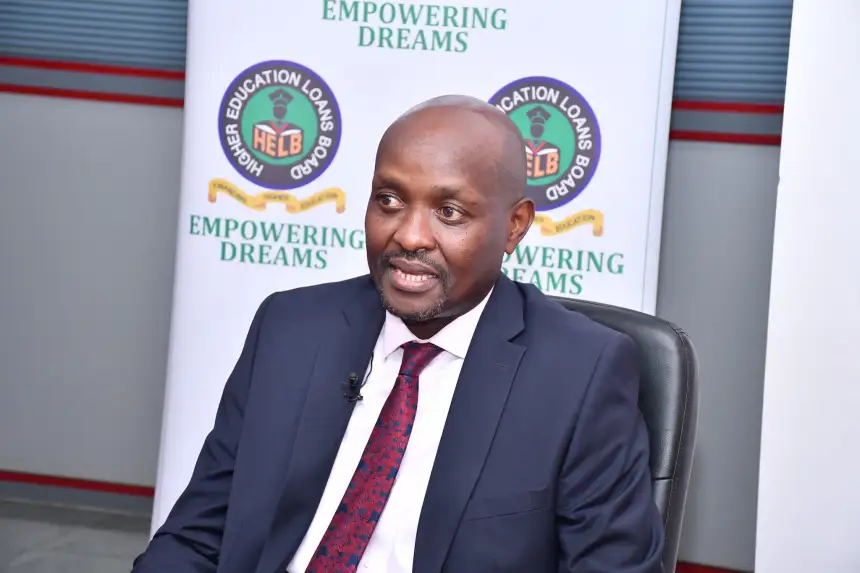
The Higher Education Loans Board (HELB), under Chief Executive Officer Geoffrey Monari, has opened a potentially transformative financial window for civil servants seeking to advance their education, with eligible employees able to access training loans of up to KSh500,000.
The facility comes at an important moment for Kenya’s public service, where continuous professional development is increasingly becoming a necessity rather than an option. As technology changes, professional requirements evolve, and government services become more specialised, employees must continually upgrade their knowledge and skills to remain effective. For teachers, the opportunity carries particular significance, given that Kenya’s education system is undergoing profound changes, including the implementation of Competency-Based Education (CBE), growing use of digital technology, evolving assessment methods and increasing demand for specialised teaching skills — developments that require teachers to remain lifelong learners and continuously adapt to new approaches.
The Civil Servants Training Revolving Fund provides an avenue for eligible public servants to finance such advancement, with loans ranging from KSh30,000 to KSh500,000, an annual interest rate of 4 per cent, and repayment through payroll deductions over a period of up to 72 months, or six years. The facility can support approved training expenses, including tuition, examination, research, library and computer-related costs.
Its importance goes beyond the amount of money available. For many public servants, the greatest obstacle to further education is not lack of ambition but the cost involved. University tuition, examination charges, research expenses, learning materials and other requirements can place considerable pressure on monthly incomes, particularly for employees who also have families and other financial responsibilities. A structured education loan can therefore provide a bridge between professional ambition and financial reality, offering teachers who have postponed further education because of financial constraints a second chance to pursue higher qualifications, professional training or other approved programmes.
RELATED:
This matters because teacher education should not end when an individual completes initial training and enters the classroom. The education sector is changing too rapidly for teachers to rely entirely on knowledge acquired many years earlier, and new technologies, changing learner needs, emerging teaching methodologies and evolving approaches to assessment require continuous professional development. A teacher who undertakes additional training can acquire new competencies that may improve classroom practice, learner support, leadership capacity and the ability to implement education reforms — benefits that can extend far beyond the individual teacher, since a teacher serves many learners over the course of a career, and a more knowledgeable, professionally competent teacher can potentially benefit thousands of learners over time. This invests in teacher education a strategic national investment rather than merely an employee benefit.
The same principle applies across the wider public service. Kenya requires a workforce capable of responding to technological transformation, changing economic conditions, emerging professional standards and increasingly sophisticated citizen expectations. Government employees are responsible for implementing policies, managing public resources and delivering essential services, and their knowledge and competence directly influence the quality of services citizens receive. Continuous training can therefore strengthen not only individual careers but also institutional performance, particularly as digital transformation changes how many public institutions operate, communicate and deliver services — skills that were adequate a decade ago may no longer be sufficient today, and employees who continually upgrade themselves are better positioned to adapt and contribute to institutional innovation.
For teachers specifically, the connection between training and career development is equally important. Educators increasingly need knowledge beyond traditional classroom instruction — school leadership, digital learning, learner assessment, curriculum implementation, special needs education and specialised subjects all require different competencies. Further training can help teachers prepare for changing responsibilities and, where applicable under prevailing professional and employment rules, position themselves for future career opportunities.
Mr President, please create time and meet retired teachers as well
However, the availability of a KSh500,000 loan should not encourage unnecessary borrowing. A training loan remains a financial obligation, and public servants should determine the actual cost of their programme, confirm that the course is eligible for financing, and carefully assess the effect of monthly deductions on their take-home salaries. The wisest borrower will not necessarily be the person who takes the maximum amount, but the person who borrows only what is necessary for a meaningful and relevant programme. There is also a responsibility on employers and public institutions to ensure training translates into better performance — where employees acquire new qualifications and competencies, institutions should, where applicable, create opportunities for them to utilise those skills, and for teachers, additional training should translate into better learning experiences, improved classroom practices, stronger learner support and more effective implementation of education reforms.
The programme also raises a broader question about how Kenya approaches human-capital development. For years, education financing has largely been associated with young people entering universities and colleges, yet employees already in the workforce also need opportunities to upgrade their skills. A public servant may enter employment with one qualification but spend 20, 30 or even 40 years serving the country, during which professional knowledge will inevitably change. Providing affordable opportunities for continuous education is therefore an investment in the entire working life of an employee, and under Monari, HELB’s financing opportunities for working public servants demonstrate the importance of broadening the concept of education financing beyond initial university entry.
PS Muoria calls on TVET institutions to embrace innovation, production and industry-driven training
The real value of the programme, however, should not be measured simply by the number of loans disbursed or the amount of money released. Its success should ultimately be judged by outcomes: are teachers becoming more effective, are public officers becoming more productive, are institutions acquiring new capabilities, and are citizens receiving better services? These are the questions that will determine whether the facility achieves its wider purpose. For Kenya’s teachers, the opportunity comes at a particularly important time, as the education sector needs professionals who understand modern pedagogy, digital tools, evolving curriculum requirements and the diverse needs of today’s learners, while for other civil servants, the same opportunity can help build a more skilled and adaptable public workforce.
Ultimately, the KSh500,000 HELB training loan should be viewed not simply as a loan but as an opportunity to invest in people. A better-trained teacher can influence generations of learners, a better-trained public officer can improve institutional performance, and a better-skilled workforce can strengthen national productivity. The facility is a reminder that education should not end when employment begins — learning must remain a lifelong process, particularly in a country seeking to modernise its public institutions and prepare its workforce for the demands of the future. If responsibly accessed, carefully targeted and effectively utilised, HELB’s training loan could become an important instrument for career advancement, professional renewal and improved public service delivery. For thousands of teachers and civil servants who have been held back by the cost of further education, the message is clear: professional growth may now have a more accessible financial pathway.
By Hillary Muhalya
Get more stories from our website: Education News
To write to us or offer feedback, you can reach us at: editor@educationnews.co.ke
You can also follow our social media pages on Twitter: Education News KE and Facebook: Education News Newspaper for timely updates.
>>> Click here to stay up-to-date with trending regional stories