- The writer has proposed that TSC introduce a structured teacher-sharing model to address staffing gaps across schools.
- TSC has acknowledged that some schools have excess teachers while others have staffing shortages, prompting the Commission to consider new solutions.
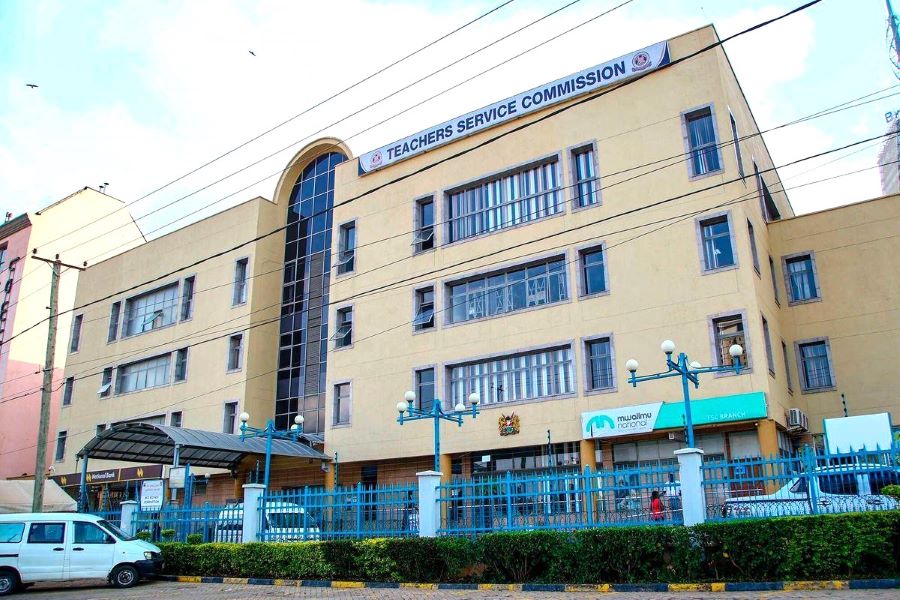
Kenya’s education system is facing a staffing paradox: some schools have teachers who are not fully utilised in particular subjects, while other schools are struggling to provide learners with the teachers they need. Instead of treating every school as an isolated staffing unit, the Teachers Service Commission (TSC) should consider introducing a structured teacher-sharing model, in which teachers can serve two or more neighbouring schools where there are staffing gaps.
This would not be an entirely new concept internationally. Several education systems have experimented with school clusters, shared staffing, temporary assignments and teachers working across more than one school.
In Australia, for example, the state of Victoria has formal guidance on “shared staffing” arrangements. Schools can share teachers and other staff when they face workforce challenges, allowing expertise to be deployed across multiple locations. The Victorian education authorities say such arrangements can expand subject offerings, match teacher expertise to student needs and improve efficiency.
The Organisation for Economic Co-operation and Development (OECD) has also documented school-cluster approaches in which schools located relatively close to one another collaborate and, where practical, teaching staff can be assigned to more than one school. Uruguay provides another example: the OECD reports that a substantial proportion of secondary teachers work in more than one school.
The international policy direction is therefore worth examining. The OECD’s Education Policy Outlook 2024 notes that education systems are increasingly considering flexible approaches such as temporary assignments, shared teaching roles and rotational positions as part of efforts to address teacher shortages.
Africa Has a Teacher-Distribution Problem
The issue is particularly relevant to Africa. UNESCO’s International Institute for Educational Planning has repeatedly highlighted the difficulty African education systems face in distributing teachers equitably among schools.
A study covering 31 countries in sub-Saharan Africa found significant disparities in pupil-teacher ratios and concluded that only a small number of countries were allocating teachers equitably across schools. Countries including Rwanda, Mozambique, Uganda and Cameroon were reported to have much higher pupil-teacher ratios than Seychelles, Mauritius and Cape Verde.
ALSO READ: MPs flag financial and procurement lapses in TVET institutions
UNESCO has subsequently brought African countries together to share experiences on teacher allocation and management. Participants have included Kenya, Tanzania, Rwanda, Uganda, Malawi, Zimbabwe, Lesotho, Senegal, Ghana and other African countries.
Ghana is another useful case. A 2026 UNICEF study on Ghana’s teacher deployment found continuing inequalities in the distribution of teachers between regions and schools, particularly between well-served and underserved areas. The study argues for stronger systems for equitable teacher deployment.
These African experiences point to an important lesson: the problem is not always simply the number of teachers in a country; it is also where those teachers are located and how effectively their expertise is utilised.
Uganda MPs visit Kenya to benchmark on curriculum reforms, teacher remuneration and public funding
Kenya’s Current Situation Makes the Proposal Timely. Our own circumstances make such a discussion particularly urgent.
The 2023 Presidential Working Party on Education Reform reported a substantial shortage of teachers at secondary level, with 123,985 teachers against a curriculum-based establishment of 182,566 — a gap of 58,581 teachers at that time.
More recently, TSC has continued to identify significant staffing gaps. In February 2026, the Commission sought funding to recruit 16,000 additional teachers and said it was working to reduce a teacher shortage estimated at 116,000.
By Kaptich Tarus
Get more stories from our website: Education News
To write to us or offer feedback, you can reach us at: editor@educationnews.co.ke
You can also follow our social media pages on Twitter: Education News KE and Facebook: Education News Newspaper for timely updates.
>>> Click here to stay up-to-date with trending regional stories