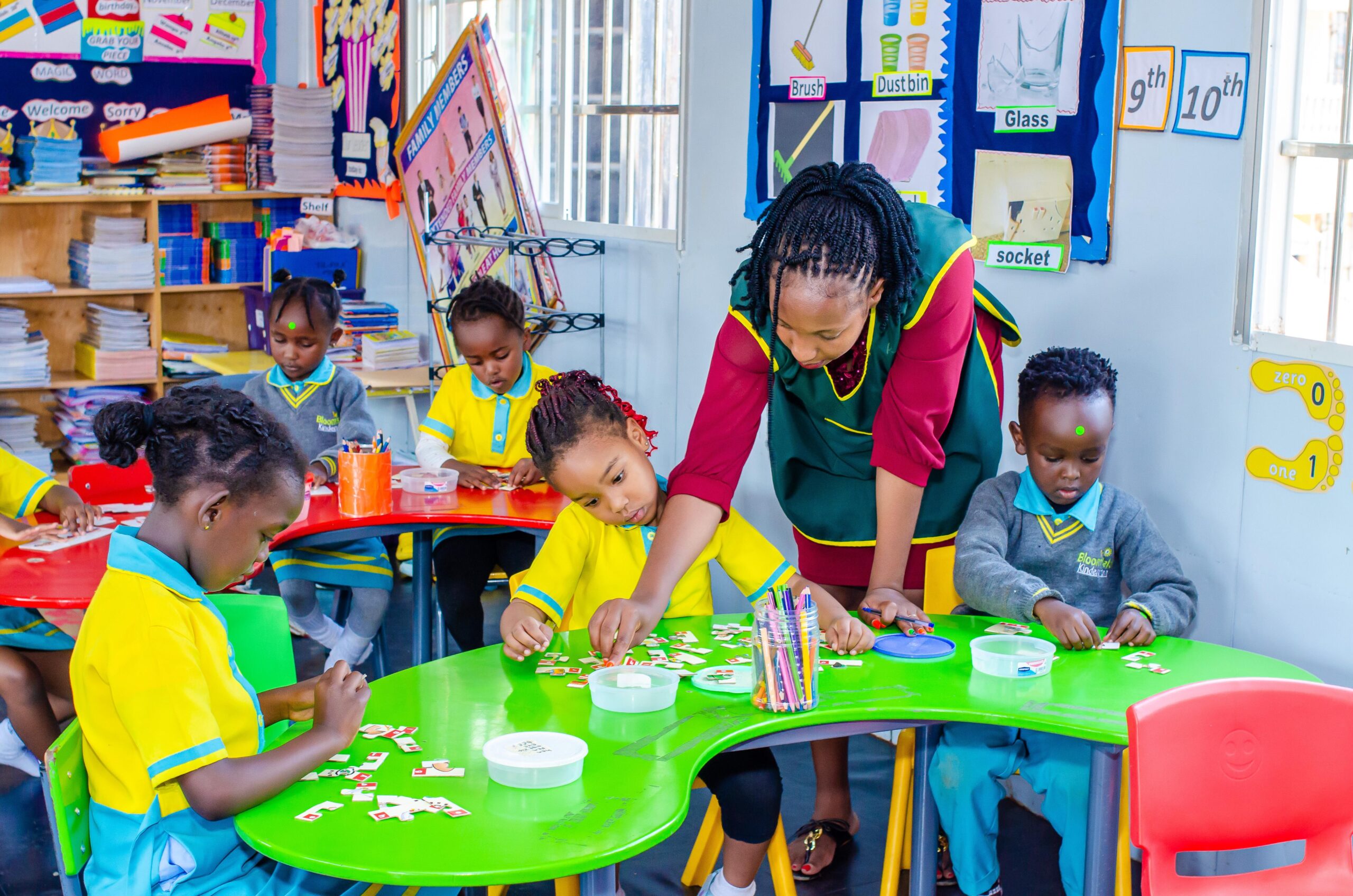
- Games, songs, movement and storytelling can help young learners connect sounds with letters and words.
- Teachers can turn classrooms and playgrounds into active literacy spaces using simple, locally available materials.
- Parents can reinforce foundational reading at home through everyday conversations, stories and sound-recognition activities.
A child who runs excitedly towards a learning activity demonstrates something that educators and parents should never underestimate: children learn more effectively when they are interested, engaged and enjoying the experience.
This is the powerful idea behind the growing emphasis on play-based approaches to early literacy, including the teaching of phonics.
Phonics is often associated with children sitting quietly, repeating letter sounds after the teacher and writing them repeatedly in exercise books. While repetition and systematic instruction remain essential, phonics does not have to be delivered in a rigid or monotonous manner.
It can be taught through games, songs, movement, stories, objects, role-play, puzzles and everyday experiences.
For Kenya, where the education system continues to place greater emphasis on competencies, participation and practical learning, integrating structured phonics with purposeful play could make early literacy more engaging while strengthening children’s foundational reading skills.
At its simplest, phonics helps children understand the relationship between letters and sounds.
A child learning the letter m, for example, learns that it represents the /m/ sound. The learner can then begin connecting that sound to words such as mat, man, milk and moon.
The next step is to help the child understand that individual sounds can be blended to form words.
For example:
m – a – t = mat
s – a – t = sat
c – a – t = cat
This process of identifying sounds, linking them to letters and eventually blending them into words is fundamental to early reading.
The challenge lies in making this process sufficiently engaging for young learners.
That is where play becomes essential.
The classroom can become a sound hunt
Imagine a teacher introducing the sound /b/.
Instead of simply writing the letter b on the chalkboard and asking children to repeat its sound, the teacher could transform the classroom into a sound-hunting environment.
The teacher tells the learners:
“Today we are going on a /b/ hunt.”
Children are asked to look around the classroom for items whose names begin with the /b/ sound.
They may identify:
book, bag, bottle, ball, box and basket.
The teacher then picks up each object, pronounces the word slowly and emphasises the initial sound.
“B-b-b-book.”
“B-b-b-ball.”
The children repeat the sounds while moving around the classroom.
The activity is playful, but it has a clear literacy objective: recognising initial sounds in words.
A teacher can extend the same idea by organising a phonics treasure hunt.
Letter cards can be placed around the classroom or playground.
If the target sound of the day is /s/, children search for the letter s and identify pictures or objects associated with that sound.
A learner who finds an s card could be asked to name a word beginning with the sound.
“Sun.”
“Snake.”
“Spoon.”
“School.”
The teacher then guides the class in pronouncing the initial sound together.
This approach turns phonics into movement and discovery.
Instead of keeping children seated throughout the lesson, the teacher provides opportunities to move, search, speak, listen and think.
Letters can become a game
Another simple activity involves letter cards.
The teacher places several cards on the floor, including m, s, t, p and a.
The teacher calls out a sound.
“Find /m/!”
Children quickly identify the m card.
The activity can then be made progressively more challenging.
The teacher says:
“Find the letter that makes /s/.”
The children identify s.
Later, the teacher can place two or three letters together and ask learners to blend them.
For example:
s – a – t
The teacher sounds them out slowly before blending them:
/s/ /a/ /t/ — sat.
Children may clap for each sound and jump when they say the complete word.
The physical movement reinforces sound sequencing and memory.
Phonics through song
Young children naturally respond to rhythm and repetition.
A teacher can therefore develop simple songs around letter sounds.
For example, when teaching m, children can sing a short chant:
“M says /m/, /m/, /m/,
Milk begins with /m/,
Moon begins with /m/,
M says /m/, /m/, /m/.”
The class can accompany the song with actions.
When saying /m/, they may place their hands together as if holding a cup of milk.
When saying moon, they can form a circle above their heads.
This activity integrates sound recognition, vocabulary development, memory, movement and repetition.
Storytelling can strengthen phonics
Stories provide another powerful learning opportunity.
Suppose the target sound is /c/.
The teacher can tell a short story about a cat that sees a car, carries a cup and meets a cow.
Each time one of these words appears, the children respond with the /c/ sound.
“Cat!”
Children respond:
“/c/ /c/ /c/!”
The teacher can then display pictures of the objects and ask learners to identify which ones begin with the target sound.
The story provides meaningful context, helping children connect sounds to language rather than memorising them in isolation.
Picture-and-letter matching is another simple classroom activity.
A teacher can prepare pictures of a sun, ball, fish, cat and dog, along with letter cards s, b, f, c and d.
Children work individually or in groups to match each picture with the letter representing its initial sound.
A child picks up the picture of a fish and searches for f.
The teacher asks:
“What sound does f make?”
The child responds:
“/f/.”
The learner then says:
“Fish starts with /f/.”
This activity strengthens sound recognition while encouraging collaboration.
The “I spy” game can teach sounds
Even familiar children’s games can be adapted for phonics.
A teacher might say:
“I spy something beginning with /p/.”
Children scan the classroom and identify objects.
“Pen!”
“Pencil!”
“Paper!”
The teacher confirms the correct answers and reinforces the sound.
The same game can be played outdoors.
“I spy something beginning with /t/.”
Children might respond:
“Tree!”
“Tyre!”
The teacher can then extend learning by asking learners to identify the corresponding letter.
Phonics through movement
Movement can make sound blending more memorable.
The teacher places three large letters on the floor:
c a t
Three children stand beside them.
The first child says /c/.
The second says /a/.
The third says /t/.
The teacher then guides them to move closer together while blending the sounds:
/c/ – /a/ – /t/ → cat.
The class repeats the word.
This activity can be used with simple words such as:
sat
mat
sun
pin
dog
top
As learners gain confidence, the teacher can introduce longer and more complex words.
Playdough can become a literacy tool
Playdough is another affordable resource that can support phonics instruction.
Children can be asked to form letters using playdough.
A teacher introduces s and asks learners to shape the letter.
After forming it, they say the sound:
“s says /s/.”
The teacher can then guide learners to form additional letters and combine them.
This approach allows children to see, touch, manipulate and pronounce letters simultaneously.
It also supports fine motor development, which is essential for later writing skills.
Phonics does not need to be confined to the classroom.
A teacher can write letters on pieces of paper and place them around the playground.
Children are divided into small groups.
The teacher calls out a sound:
“Find /m/!”
Learners run to the corresponding letter.
Another variation involves placing words around the playground.
Children are asked to identify words containing the target sound.
For example, if the focus is /a/, learners might find:
cat, bag, mat and sun.
They then identify which words contain the target sound.
The playground becomes an active literacy learning environment.
Parents can support phonics at home
The same principles can be extended into the home.
Parents do not require specialised materials to support phonics learning.
During breakfast, a parent might ask:
“What sound does milk begin with?”
During a walk:
“What can you see that begins with b?”
While shopping:
“Can you find something that begins with s?”
Before bedtime, a parent can read a short story and ask the child to listen for words beginning with a specific sound.
These brief interactions reinforce classroom learning effectively.
It is important to distinguish between playful learning and unstructured play.
Effective play-based phonics must have a clear learning objective.
If the goal is to recognise the sound /m/, the activity should provide repeated opportunities to hear, identify, pronounce and use that sound.
If the goal is blending, the activity should support combining sounds into words.
If the goal is vocabulary development, the game should introduce and reinforce new words.
Enjoyment is important, but so is intentional learning.
The teacher remains central
Play-based phonics should not be viewed as a replacement for the teacher.
The teacher remains responsible for introducing sounds accurately, modelling pronunciation, correcting errors, assessing progress and adapting instruction to learners’ needs.
A child struggling with /b/ and /d/, for example, may require additional support in distinguishing the two sounds and letters.
Another learner may already be ready to blend sounds into words.
Play provides flexible strategies for supporting both.
A new way of thinking about early reading
The broader lesson is that teaching children to read does not require choosing between structure and enjoyment.
Children need systematic instruction in sounds and letters.
They also need opportunities to explore, move, speak, sing, discover and play.
A classroom where children hunt for letters, match pictures, build words, sing sound songs, act out stories and engage in phonics games can still be a rigorous literacy environment.
The difference is that it aligns with how young children naturally learn.
For Kenya, the opportunity is significant.
As schools continue to strengthen foundational literacy under the competency-based curriculum, teachers and parents can adopt simple, locally available strategies to make phonics more practical and engaging.
A ball, a box, a book, a song, a story, a set of letter cards or even the school playground can become a powerful literacy resource.
The goal remains the same: help children hear sounds, recognise letters, connect them and ultimately read words with confidence.
However, the learning journey can be enriched with curiosity, movement and joy.
READ ALSO: JKUAT hosts 46th graduation as graduates challenged to turn knowledge and innovation into solutions
When children begin to associate reading with discovery rather than fear, the classroom achieves something even more meaningful than teaching them to read—it helps them develop a lifelong love for learning.
By Hillary Muhalya
You can also follow our social media pages on Twitter: Education News KE and Facebook: Education News Newspaper for timely updates.
>>> Click here to stay up-to-date with trending regional stories
>>> Click here to read more informed opinions on the country’s education landscape
>> Click here to stay ahead with the latest national news.