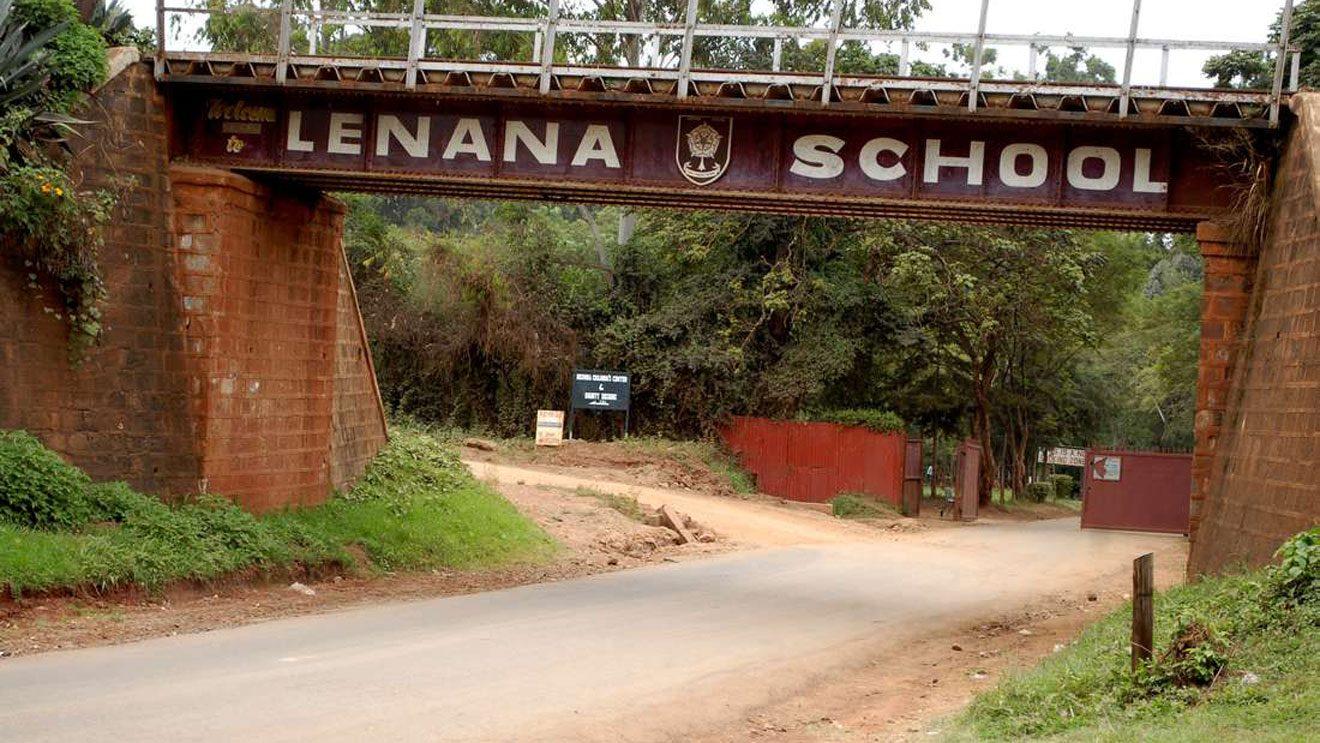
- William Kiplagat Kemei’s early retirement follows a period of student unrest at the national school.
- The episode raises wider questions about counselling, student welfare, parenting and support for school administrators.
- Kenya must examine the causes of recurring school unrest instead of treating each crisis as an isolated disciplinary incident.
The early retirement of Lenana School principal William Kiplagat Kemei should not become another convenient Kenyan story about a principal leaving and everyone moving on. The uncomfortable question is not simply why he is leaving. It is why our schools keep producing crises—and why the principal is so often expected to carry the blame.
Kemei’s early retirement came after a period of student unrest at one of Kenya’s best-known schools. His departure does not, by itself, prove that the unrest caused his decision. But the timing should make us curious, not complacent. Kenya has a bad habit of treating school unrest like a leaking roof: identify the person in charge, remove them, announce that the problem has been fixed and wait for the next rain. That is not reform. That is crisis recycling.
For decades, student unrest has been explained away as indiscipline. Burn a dormitory? Punish the students. Go on strike? Close the school. Protest? Summon parents. Crisis? Blame the principal. Then everyone goes home satisfied that discipline has been restored—until the next explosion.
But research into Kenyan school unrest has repeatedly pointed to something more complicated: poor communication, authoritarian leadership, peer pressure, drug abuse, family dysfunction, inadequate counselling, weak student participation and unresolved grievances. In other words, the riot is often the symptom. The disease is deeper.
Today’s teenager is navigating a world previous generations never knew. Social media can turn a grievance into a movement overnight. Drugs are more accessible. Family pressures are often heavier. Economic inequality is visible everywhere. Academic competition is brutal. Mental-health challenges are real. And young people are increasingly unwilling to accept authority simply because it says, “Because I said so.”
Yet we continue to run many schools using an outdated model of discipline: obedience first, dialogue later. That model is cracking.
Principals carrying enormous responsibility
A principal today is expected to be a chief executive, disciplinarian, counsellor, crisis manager, accountant, administrator, parent liaison, public relations officer and academic strategist. And when something goes wrong? The principal gets the microphone—and sometimes the blame.
Where are the professional psychologists? Where are the trained conflict mediators? Where are the properly funded safeguarding teams? Where are the early-warning systems that can detect a troubled school before students reach the point of rebellion? We cannot keep giving principals 21st-century problems and 20th-century tools.
And we cannot keep pretending that a teacher assigned “guidance and counselling” on top of a full teaching workload is a mental-health system. It is not.
Lenana should therefore become a national case study—not a national gossip story. We should ask hard questions. What were the students angry about? Were there warning signs? Did students have safe channels to raise grievances? Were parents sufficiently engaged? Was counselling accessible and effective? Were drugs or other social pressures involved? Did school leadership have the resources and authority required to respond? And most importantly: what can other schools learn before they face the same crisis?
These questions are not an attack on Kemei. They are bigger than him. The law allows teachers to retire voluntarily before the compulsory retirement age, subject to the applicable rules and approval. So early retirement is not automatically evidence of wrongdoing or institutional failure. But neither should it become an excuse to close the file.
The bigger scandal would be if Kenya learns nothing.
We have had school strikes, unrest, fires and closures for generations. The names of schools change. The principals change. The headlines change. The underlying problems stubbornly remain. That should embarrass us.
We need to stop measuring schools only by examination results. A school can produce brilliant grades while quietly failing at student wellbeing, communication and social cohesion. We should measure school climate, student wellbeing, trust between students and administrators, the effectiveness of counselling and how quickly grievances are identified and resolved. And yes, measure leadership. But leadership should not mean demanding that principals maintain silence and obedience at all costs. Good leadership is not the absence of complaints. It is the ability to hear complaints before they become crises.
Parents and government have responsibilities
Parents also need to look in the mirror. Schools are not rehabilitation centres for every social problem created at home. A principal cannot compensate for absent parenting, family conflict, financial stress or the influence of social media. Parenting does not end when a child enters a boarding school. Neither does responsibility.
The government, too, must stop treating education crises as isolated disciplinary incidents. Every serious episode should trigger a proper institutional review—not simply a punishment exercise. Find the trigger. Find the warning signs. Find the institutional weakness. Fix it. Then move on. Not the other way around.
There is also a socio-economic reality that Kenya can no longer ignore. The children sitting in our classrooms are growing up in a country where household incomes are under pressure, unemployment remains a concern, inequality is visible and social mobility often appears increasingly uncertain. For some families, school is not merely a place of learning; it is the arena in which enormous hopes for a better life are invested. That pressure inevitably finds its way into the classroom and onto the student.
For students in elite and national schools, the pressure can be particularly intense. They are surrounded by high expectations and competing ideas of success. A young person is expected to excel academically, maintain discipline, compete for scarce university opportunities and live up to the expectations of parents, teachers and society. At the same time, they are exposed through social media to lifestyles and inequalities that can create frustration, anxiety and a sense of exclusion.
We should therefore stop viewing student unrest purely through the lens of discipline. Sometimes what looks like defiance is a cry for recognition. Sometimes what looks like rebellion is frustration that has been allowed to accumulate. Sometimes the first visible sign of a problem is the moment when the problem has already become too large to ignore.
That does not excuse violence, destruction or indiscipline. Students must be held accountable for wrongdoing. But accountability and understanding are not opposites. A mature education system can punish misconduct while still investigating the conditions that produced it.
Building schools that listen
This is where Kenya needs a fundamental rethink of boarding-school culture. We have created highly controlled environments in which teenagers spend months away from their families, often under intense academic and disciplinary regimes. Such systems require extraordinary investment in pastoral care. Instead, counselling and student welfare are too often treated as secondary concerns.
Every major boarding school should have a properly staffed student-welfare unit with professional counsellors, psychologists and safeguarding officers. Students should have confidential channels for reporting bullying, abuse, drug use and other concerns. School boards should receive regular reports on student wellbeing, not merely financial statements and examination results.
Principals should also receive specialised training in adolescent behaviour, mediation, crisis management, mental health, safeguarding and digital culture. Running a modern school requires far more than administrative experience. It requires an understanding of young people and the forces shaping their lives.
The Teachers Service Commission and the Ministry of Education should also develop a national early-warning framework for school unrest. Patterns of absenteeism, sudden disciplinary cases, drug incidents, bullying complaints, social-media agitation, student grievances and deteriorating relations between students and administrators should trigger intervention before a crisis erupts.
The goal should not be to create surveillance schools. It should be to create listening schools.
There is an important difference.
A listening school does not surrender authority. It strengthens it. Students are more likely to respect institutions that they believe are fair, predictable and willing to hear them. Authority built on trust is more durable than authority maintained through fear.
Lenana’s next chapter should therefore not simply be about finding a new principal. It should be about asking what kind of leadership the school—and Kenya’s schools generally—need for the next decade.
If the lesson from the recent turbulence is simply that principals who face crises should leave, then we will have taught school leaders the wrong lesson: protect yourself first, solve the problem second.
The better lesson is that when a school experiences serious unrest, the institution must pause, investigate, listen and learn.
The outgoing principal deserves fairness. The students deserve safety. Teachers deserve support. Parents deserve confidence. But Kenya’s education system deserves something more: a willingness to confront the social and economic forces entering our schools every day.
Because the real crisis may not be the student who finally refuses to obey.
It may be the system that failed to notice why the student had stopped listening.
Lenana should not be remembered simply as another school where students rebelled and a principal retired.
It should be remembered as the moment Kenya finally asked a harder question: Are we educating children—or merely managing them?
READ ALSO: New funding model offers Kenya chance to rethink higher education financing
Until we answer that honestly, changing principals will remain easier than changing the system. And the next school crisis will already be waiting.
By Yabesh Onwonga
History and language analyst
You can also follow our social media pages on Twitter: Education News KE and Facebook: Education News Newspaper for timely updates.
>>> Click here to stay up-to-date with trending regional stories
>>> Click here to read more informed opinions on the country’s education landscape
>> Click here to stay ahead with the latest national news.