- TVET PS Esther Muoria urges graduates to apply their university skills to solving real-world challenges.
- She says universities must translate research into technologies, enterprises and services that contribute to national development.
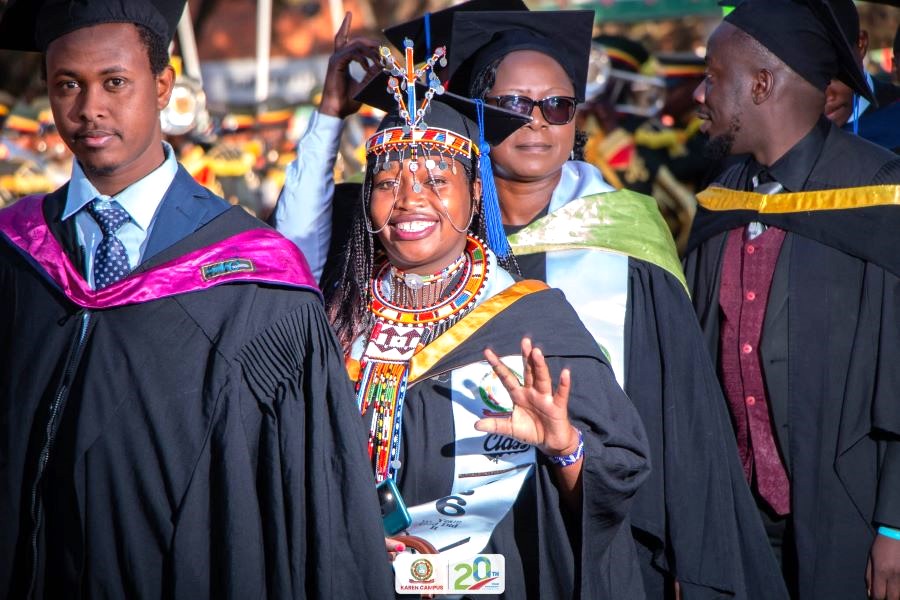
- The joint graduation brings together JKUAT and PAUSTI graduates entering employment, entrepreneurship and research.
Graduates have been urged to move beyond academic qualifications and apply the knowledge, skills and competencies acquired at university to develop practical solutions that can transform society and advance Kenya’s development agenda.
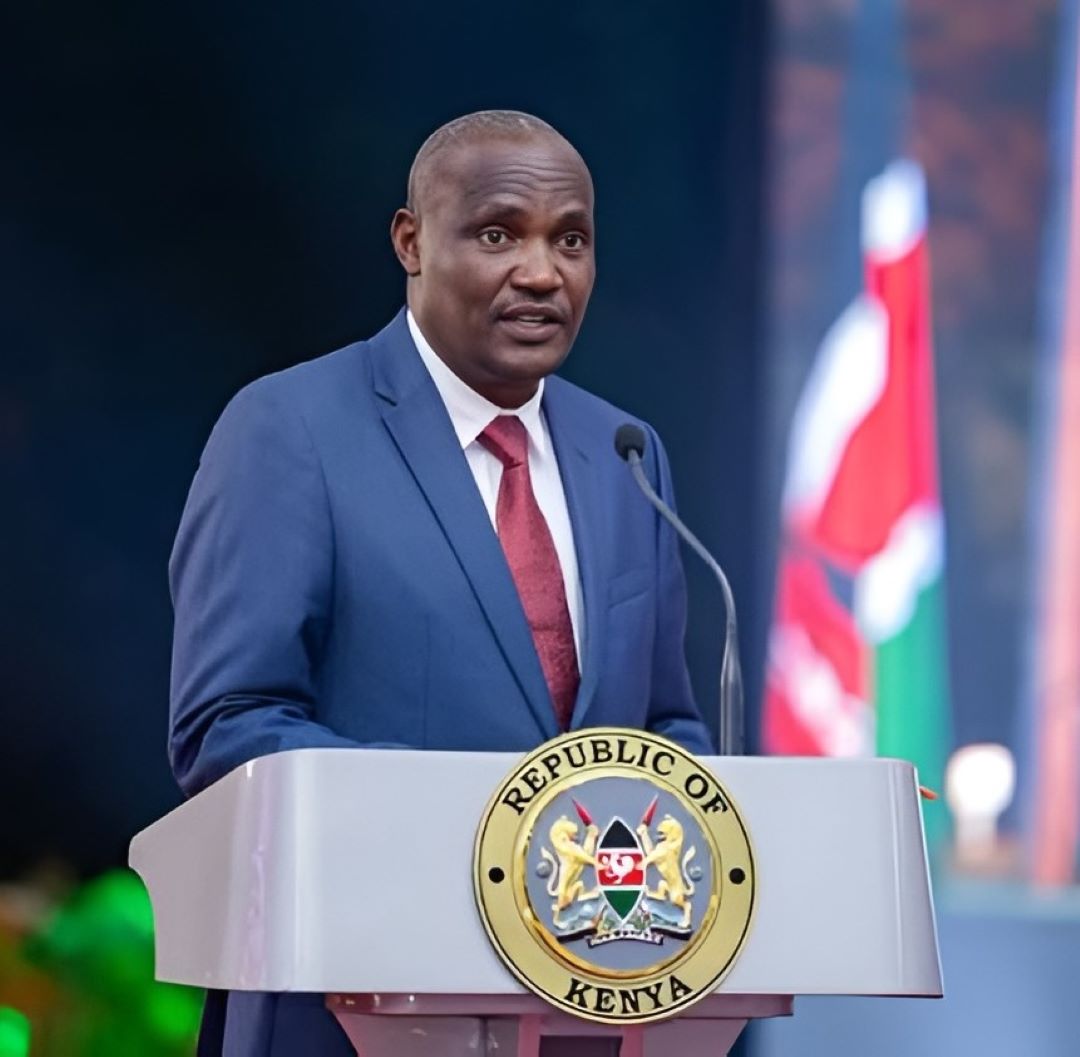
The call was made by Dr Esther Thaara Muoria, Principal Secretary, State Department for Technical and Vocational Education and Training (TVET), who served as the Chief Guest during the 46th Jomo Kenyatta University of Agriculture and Technology (JKUAT) and 14th Pan African University Institute for Basic Sciences, Technology and Innovation (PAUSTI) Joint Graduation Ceremony.
In her address, Dr Muoria underscored the critical role universities must play in translating knowledge, research and innovation into solutions that respond to the country’s economic and social challenges.
Her message placed responsibility for Kenya’s transformation not only on institutions of higher learning, but also on graduates as they transition into the professional world equipped with specialised knowledge and skills.
According to remarks shared by JKUAT, the university occupies a strategic position in advancing the conversion of knowledge, research and innovation into practical solutions that support development in Kenya and across Africa.
The emphasis on translating research into practical outcomes comes at a time when universities are increasingly expected to demonstrate the tangible impact of their academic and research outputs.
For decades, universities have served as key centres of teaching, research and knowledge generation. However, the demands of a rapidly evolving economy now require institutions to go further by ensuring that research findings do not remain confined to laboratories, libraries and academic publications.
Instead, research must increasingly be translated into technologies, enterprises, services, products and innovations that improve livelihoods and create employment opportunities.
JKUAT has long positioned itself as a leader in agriculture, technology, science and innovation, making it particularly relevant to this national discourse. The graduation ceremony therefore provided an important platform for reflecting on how universities can contribute more directly to Kenya’s development agenda.
For the graduates, Dr Muoria’s message went beyond a traditional congratulatory address.
She challenged them to innovate, create and transform as they transition into the next phase of their professional lives.
The message speaks directly to a generation entering a highly competitive labour market in which academic qualifications alone may not guarantee economic security.
Graduates are increasingly expected to demonstrate the ability to identify challenges, design solutions, leverage technology, build enterprises and adapt to evolving labour-market demands.
This means that a university education should not end at graduation.
The knowledge acquired in lecture halls, laboratories and research environments should serve as a foundation for addressing real-world challenges.
A graduate trained in agriculture, for instance, can apply research and technology to develop improved farming systems, value-addition enterprises or digital agricultural solutions. A technology graduate can design applications and systems that address challenges in education, healthcare, financial services or public administration. Engineering graduates can translate research into affordable technologies that serve both industry and communities.
Such innovations have the potential to create opportunities not only for their creators but also for other young people through employment and entrepreneurship.
Bridging research and the market
The graduation message also reinforces an increasingly important discussion within Kenya’s higher education sector: the need to ensure that university research generates tangible economic and social value.
JKUAT has consistently emphasised the importance of accelerating the commercialisation of research and innovation so that discoveries can be transformed into viable enterprises and practical solutions.
The challenge, therefore, is to strengthen collaboration between universities, industry, government and communities.
Research institutions generate knowledge, industries understand markets and production systems, government provides policy and regulatory frameworks, while communities present real-world challenges that require practical solutions.
When these stakeholders work together effectively, university research is more likely to move from theory to application.
This approach can also help Kenya reduce reliance on imported technologies by encouraging locally developed solutions tailored to national needs.
From certificates to impact
Graduation traditionally marks the completion of an academic journey. Increasingly, however, it should also signify the beginning of another—the journey from learning to impact.
The graduates of JKUAT and PAUSTI hold qualifications that can open pathways in employment, entrepreneurship, research, public service and industry.
However, these qualifications become more meaningful when complemented by creativity, integrity, resilience and a commitment to solving real-world problems.
Dr Muoria’s call to innovate and transform therefore places graduates at the centre of Kenya’s development narrative.
The country does not only require individuals with academic certificates; it needs professionals who can apply their knowledge to enhance productivity, strengthen institutions, create enterprises, advance technology and address societal challenges.
This is particularly significant in an economy where traditional employment opportunities are insufficient to absorb all graduates.
Entrepreneurship and innovation therefore offer an alternative pathway, enabling graduates to become creators of opportunities rather than passive seekers of employment.
Kenya’s development ambitions will increasingly depend on its ability to generate, apply and scale knowledge.
Key sectors such as agriculture, manufacturing, healthcare, climate adaptation, digital technology, renewable energy, education and infrastructure all require locally relevant research and innovation.
Universities therefore have a critical responsibility to produce research aligned with national priorities.
At the same time, researchers require enabling systems that allow promising ideas to progress from laboratories to the marketplace.
This includes stronger university-industry partnerships, incubation programmes, intellectual property support, access to financing and mentorship for researchers and young innovators.
Without such mechanisms, potentially transformative ideas risk remaining at the prototype or academic publication stage.
The call for commercialisation is therefore not merely directed at researchers, but at the broader ecosystem supporting research and innovation.
JKUAT’s role in Africa’s future
The message delivered at the graduation ceremony also situated JKUAT within a broader African development context.
According to the institution’s communication, the university’s contribution extends beyond Kenya to the wider African continent through knowledge, research and innovation aimed at generating practical solutions.
Africa faces complex challenges that cannot be addressed solely through imported solutions.
From food security and healthcare to digital transformation, energy and industrialisation, the continent requires institutions capable of producing context-specific knowledge and solutions.
Universities such as JKUAT can therefore serve as key drivers of African transformation by combining academic excellence with applied innovation.
The challenge is to ensure that graduates leave such institutions prepared not only to seek employment, but also to identify opportunities, build enterprises and contribute to solving challenges within their communities.
Dr Muoria’s message offers a broader reflection on Kenya’s education system.
The value of education should ultimately be measured not only by the number of certificates awarded, but also by the impact graduates are able to create using their knowledge.
A graduate who establishes a business, develops an agricultural innovation, improves public service delivery, advances medical research, builds a digital platform or solves a community challenge demonstrates the practical value of education.
This underscores the need to integrate innovation into higher education as a core function rather than a peripheral activity.
Universities should foster environments that encourage students to question existing approaches, experiment with new ideas, collaborate across disciplines and develop solutions to real-world problems.
The graduation ceremony at JKUAT therefore represented more than a celebration of academic achievement. It also served as a reminder of the responsibility that accompanies knowledge.
For the graduates, the next chapter will be defined by how effectively they apply their education.
For universities, the challenge is to ensure that research and innovation extend beyond publication to deliver real societal impact.
For Kenya, the opportunity lies in building an education and innovation ecosystem where knowledge serves as a powerful driver of enterprise, employment and national transformation.
READ ALSO: Bomet teacher among 163 beneficiaries of assistive devices for teachers with disabilities
As the new graduates step beyond the university gates, the message is clear: the certificate is not the destination. It is a tool for creating, innovating and transforming lives.
By Hillary Muhalya
You can also follow our social media pages on Twitter: Education News KE and Facebook: Education News Newspaper for timely updates.
>>> Click here to stay up-to-date with trending regional stories
>>> Click here to read more informed opinions on the country’s education landscape
>> Click here to stay ahead with the latest national news.