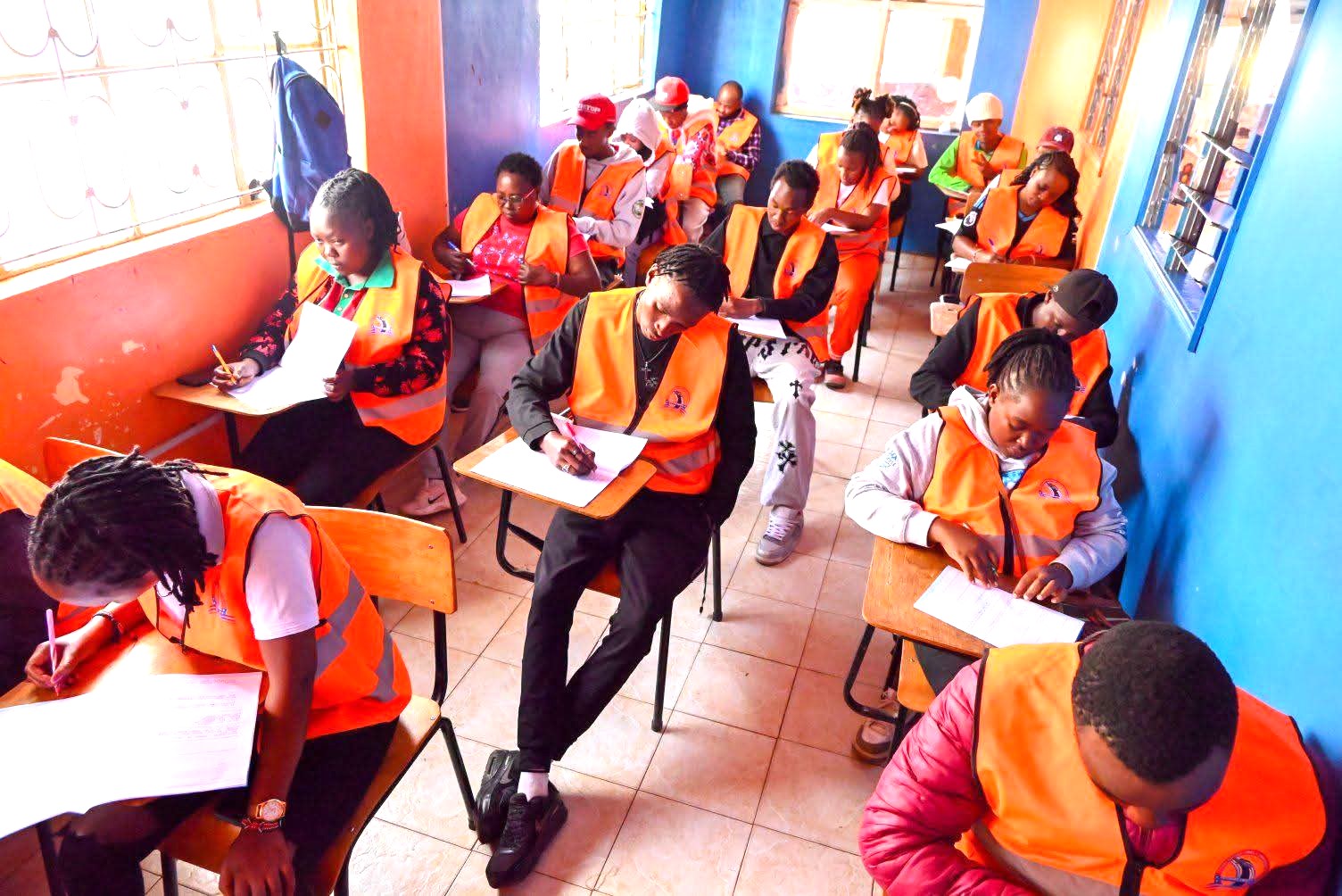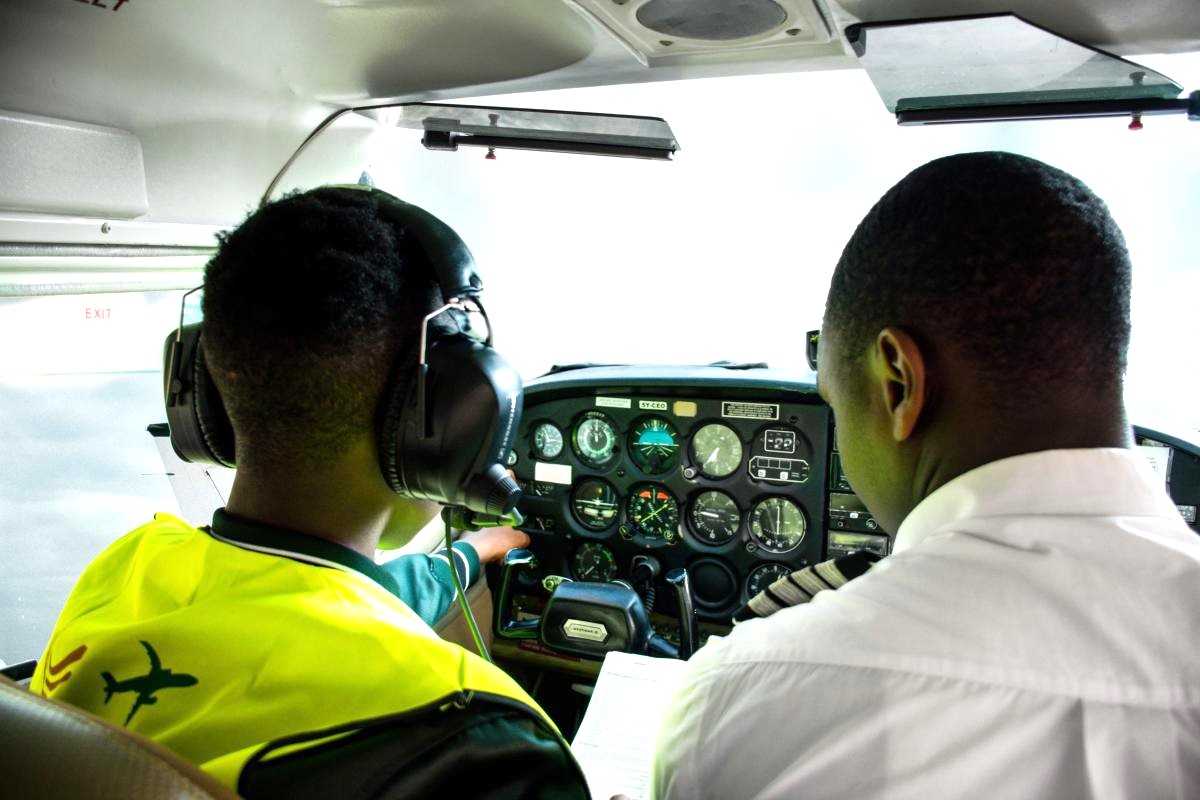
- Kenya’s aviation training landscape is expanding, creating additional options for young people aspiring to become pilots.
- Becoming a professional pilot, however, requires several licences, extensive flight training and millions of shillings.
- Students must also choose between fixed-wing and helicopter pathways, which require separate training and certification.
Kenya’s aviation industry is opening a wider door for aspiring pilots after the Kenya Civil Aviation Authority (KCAA) licensed aviation operators, including flying schools, in a new round of approvals that could strengthen the country’s aviation training and employment pipeline.
The approvals cover international cargo carriers, domestic scheduled operators, charter companies, aerial work specialists, medical evacuation providers and flying schools. The applications had earlier been advertised in the Kenya Gazette of March 19, 2026, under the Civil Aviation Act and applicable licensing regulations.
For young Kenyans aspiring to become pilots, one of the most significant aspects of the announcement is the licensing of institutions to provide flight training.
Ram Air Limited and ALS Limited received licences for flight instruction using Cessna 172 aircraft at Malindi Airport and Wilson Airport respectively. Pegasus Flyers (E.A.) Limited and Standards Aviation Limited also received licences, expanding the number of institutions available to aspiring aviators.
The development comes at a critical time for Kenya’s aviation industry, which requires a steady pipeline of trained pilots, engineers, flight instructors, cabin crew, air traffic professionals and other specialists.
For anyone considering an aviation career, an important distinction must be made at the outset: training to fly an aeroplane is not the same as training to fly a helicopter.
The two are distinct professional pathways with different aircraft types, licences, skill sets, operating environments and career opportunities.
A student training on a Cessna 172, for example, is undertaking fixed-wing aeroplane training. A student training on a Robinson R22, R44 or another helicopter is pursuing a rotary-wing pathway.
Both require discipline, technical knowledge, medical fitness, examinations and practical flight training, but the competencies developed are fundamentally different.
The aeroplane pilot pathway
For a fixed-wing pilot, the professional journey generally begins with the Student Pilot Licence, followed by the Private Pilot Licence (PPL(A)).
The PPL allows the holder to fly an aeroplane privately within the privileges of the licence but does not permit commercial flying for remuneration.
The next major stage is the Commercial Pilot Licence (CPL(A)), which authorises a pilot to conduct commercial operations within the scope of the licence.
A professional aeroplane pilot may then pursue additional qualifications such as an Instrument Rating (IR) and Multi-Engine Rating, followed by the experience and examinations required for the Airline Transport Pilot Licence (ATPL(A)).
The broad airline-oriented pathway is:
Student Pilot Licence → PPL(A) → CPL(A) → Instrument Rating → Multi-Engine Rating → ATPL requirements → Build flying experience → Airline employment.
This is the pathway most aspiring pilots envision when they consider a career in commercial aviation.
Helicopter training follows a separate licensing structure.
The student begins with a Student Pilot Licence before progressing to a Private Pilot Licence (PPL(H)), Commercial Pilot Licence (CPL(H)) and the additional experience and qualifications required for professional helicopter operations.
A helicopter does not fly like a conventional aeroplane.
Instead of fixed wings generating lift, it relies on rotating blades. This enables vertical take-off and landing, hovering and operations in environments where fixed-wing aircraft may not be suitable.
As a result, helicopter training places strong emphasis on hovering, pedal control, vertical manoeuvres, confined-area operations, low-level specialised flying and precise aircraft handling.
The broad helicopter pathway is:
Student Pilot Licence → PPL(H) → CPL(H) → Additional helicopter ratings and experience → Professional helicopter operations.
A fixed-wing licence does not permit commercial helicopter operations, and vice versa. Each requires separate training and certification.
Helicopter or aeroplane: Which is better?
There is no universal answer.
The appropriate choice depends entirely on a student’s career objectives.
For those aspiring to fly large passenger aircraft for airlines, the fixed-wing pathway is the most direct route.
For those interested in medevac, conservation, search and rescue, tourism, aerial surveying, security operations or remote-area flying, helicopter training may offer more suitable opportunities.
Fixed-wing pilots may pursue careers in passenger airlines, cargo operations, charter services, flight instruction, aerial surveying, humanitarian missions and corporate aviation.
Helicopter pilots may work in medical evacuation, tourism and safari operations, conservation, search and rescue, security, aerial photography, surveying, corporate transport and humanitarian missions.
Ultimately, the choice of aircraft determines the training pathway, and the training pathway determines the professional opportunities available.
The millions behind the pilot dream
Regardless of the chosen pathway, aviation training requires substantial financial investment.
For fixed-wing training, published Kenyan school fees provide an indication of the costs involved.
A published PPL programme based on 50 flight hours is approximately KSh1.52 million, while the associated ground-school component is approximately KSh155,000.
Together, these amount to approximately KSh1.68 million.
Another Kenyan training provider has published a PPL figure of approximately KSh1.23 million, based on a minimum of 40 flight hours.
The variation underscores the importance of evaluating total programme costs rather than focusing solely on advertised hourly rates.
Final costs may increase if a student requires additional flight hours, repeats examinations or incurs other training-related expenses.
Commercial pilot training can cost millions
The CPL stage requires a significantly higher investment.
A published CPL programme involving 150 additional flight hours is approximately KSh4.56 million, while the associated ground-school component is approximately KSh233,000.
Combined, these total approximately KSh4.79 million.
When the published PPL and CPL components are combined, the cost rises to approximately KSh6.47 million, before additional expenses.
Students may still incur costs for medical examinations, KCAA fees, examinations, equipment, accommodation, transport and extra flight hours.
Multi-engine and instrument rating
Professional aeroplane pilots typically require qualifications beyond the basic CPL, depending on the operations and career pathway they intend to pursue.
An Instrument Rating enables flight under instrument flight rules, while a Multi-Engine Rating allows operation of aircraft with more than one engine.
A published Kenyan Multi-Engine/Instrument Rating programme costs approximately KSh2.17 million, excluding additional regulatory charges.
Combining the published PPL, CPL and Multi-Engine/Instrument Rating components results in an indicative total of approximately KSh8.64 million.
This means a student pursuing a professional airline-oriented pathway may need to budget approximately KSh8 million to KSh10 million or more, depending on the institution, flight hours and additional requirements.
These figures are indicative and are not a fixed national fee structure.
Prospective helicopter pilots should not assume that fixed-wing training costs apply directly to rotary-wing programmes.
Helicopter training is generally more expensive per flight hour due to higher operating and maintenance costs.
The final cost depends on the helicopter type, training institution, required flight hours, instructor fees, examinations and additional qualifications.
Students considering helicopter training should therefore request a comprehensive cost breakdown covering the entire training pathway.
The key point is that helicopter and aeroplane training must be budgeted separately.
ATPL is a long-term airline goal
For fixed-wing pilots, the Airline Transport Pilot Licence (ATPL(A)) represents the highest level of professional pilot certification.
However, it is important to understand that an ATPL is not an immediate qualification that automatically leads to an airline captaincy.
Pilots must first meet substantial experience, flight-hour and examination requirements.
A newly qualified commercial pilot must therefore accumulate experience before becoming eligible for higher levels of operational responsibility in airline environments.
The same principle applies to helicopter pilots: obtaining a commercial licence marks the beginning of a professional career, not the completion of training.
The new flying-school licences also highlight a broader reality: aviation extends far beyond piloting.
Young people can pursue careers in aircraft maintenance engineering, aeronautical engineering, air traffic control, flight dispatch, cabin crew operations, aviation management, airport operations, aviation security, aviation safety, ground handling, air cargo and logistics, drone operations and other specialised fields.
For students unable to afford the high cost of pilot training, these pathways offer alternative entry points into the aviation industry.
Career choices should be guided by academic strengths, financial capacity, personal interests and long-term professional goals.
The new flying schools
The latest KCAA licensing exercise provides aspiring pilots with additional training institutions to consider.
Ram Air Limited and ALS Limited received licences for training operations involving Cessna 172 aircraft at Malindi and Wilson airports respectively.
Pegasus Flyers (E.A.) Limited and Standards Aviation Limited also received licences.
The inclusion of these schools expands Kenya’s formal aviation training network.
However, prospective students and parents are advised to conduct thorough due diligence before committing to any programme.
They should confirm whether fees include ground school, flight hours, examinations and regulatory charges, and clarify the implications of additional flight-hour requirements.
They should also assess aircraft availability, instructor capacity, maintenance standards, training facilities and the institution’s track record in supporting student progression.
The flying schools were licensed as part of a broader KCAA licensing exercise involving aviation operators.
Saudi Arabian Airlines received a non-scheduled cargo licence covering routes between Saudi Arabia and Kenya, with approved operations involving freighter aircraft.
Uzbekistan’s My Freighter/Centrum Air and several Tanzanian operators also secured or expanded licences for passenger, cargo and specialised services.
On the domestic market, Freedom Airline Express received scheduled authority covering routes including Nairobi–Mombasa, Nairobi–Kisumu, Nairobi–Eldoret, Nairobi–Wajir and Nairobi–Mandera.
Scenic Air Safaris also received scheduled status.
Several Kenyan charter and specialist operators were granted licences covering passenger transport, cargo, aerial work and emergency medical evacuation.
This expansion is significant because training opportunities are most valuable when aligned with a growing aviation industry.
A larger operator base can increase demand for pilots, engineers, cabin crew, instructors, dispatchers and other aviation professionals.
Licensing is not a guarantee of employment
Aspiring pilots should nevertheless maintain realistic expectations.
Obtaining a licence does not automatically guarantee employment with an airline or helicopter operator.
Recruitment decisions are based on experience, ratings, competence, medical fitness and operational requirements.
New pilots may therefore need to build experience through flight instruction, charter operations, aerial work or other assignments before becoming competitive for larger operators.
Aviation careers should be viewed as progressive, not immediate.
The high cost of pilot training raises an important national question: How can Kenya make aviation careers accessible to talented young people who lack the financial capacity to fund multi-million-shilling training programmes?
Scholarships, structured aviation loans, employer-sponsored training, banking partnerships and targeted government initiatives could help broaden access.
Without such interventions, pilot training risks remaining accessible primarily to students from financially privileged backgrounds.
Talent alone should not be insufficient to pursue a career in aviation.
Kenya needs a stronger aviation talent pipeline
The latest KCAA approvals present an opportunity to strengthen Kenya’s aviation talent development framework.
The country has airports, airlines, charter operators, flying schools and a strategic geographic position that can support a significantly larger aviation sector.
However, infrastructure alone is not sufficient.
Kenya requires a steady supply of pilots, helicopter crews, engineers, instructors, air traffic professionals, technicians and aviation managers to support industry growth.
The licensing of additional flying schools therefore represents more than an administrative milestone.
It expands the national training ecosystem and potentially increases access points for young Kenyans seeking specialised aviation careers.
For aspiring pilots, the first question should not simply be, “How much does it cost to become a pilot?”
It should be, “What kind of pilot do I want to become?”
An aspiring airline pilot will follow a different pathway from someone pursuing helicopter operations in medevac, conservation, tourism or search and rescue.
The aircraft determines the training. The training determines the licence. The licence determines the opportunities available.
Becoming a pilot is achievable, but it requires academic preparation, discipline, medical fitness, technical competence, financial planning and sustained commitment.
Kenya’s aviation sector is expanding. Its training ecosystem must expand in tandem.
READ ALSO: Meeting Prof Ouma Muga: The story that turned my news coverage into a classroom
The cockpit door may be opening wider, but the cost of entry remains the greatest barrier — and Kenya must now explore ways to ensure that talent is not grounded solely by financial constraints.
By Hillary Muhalya
You can also follow our social media pages on Twitter: Education News KE and Facebook: Education News Newspaper for timely updates.
>>> Click here to stay up-to-date with trending regional stories
>>> Click here to read more informed opinions on the country’s education landscape