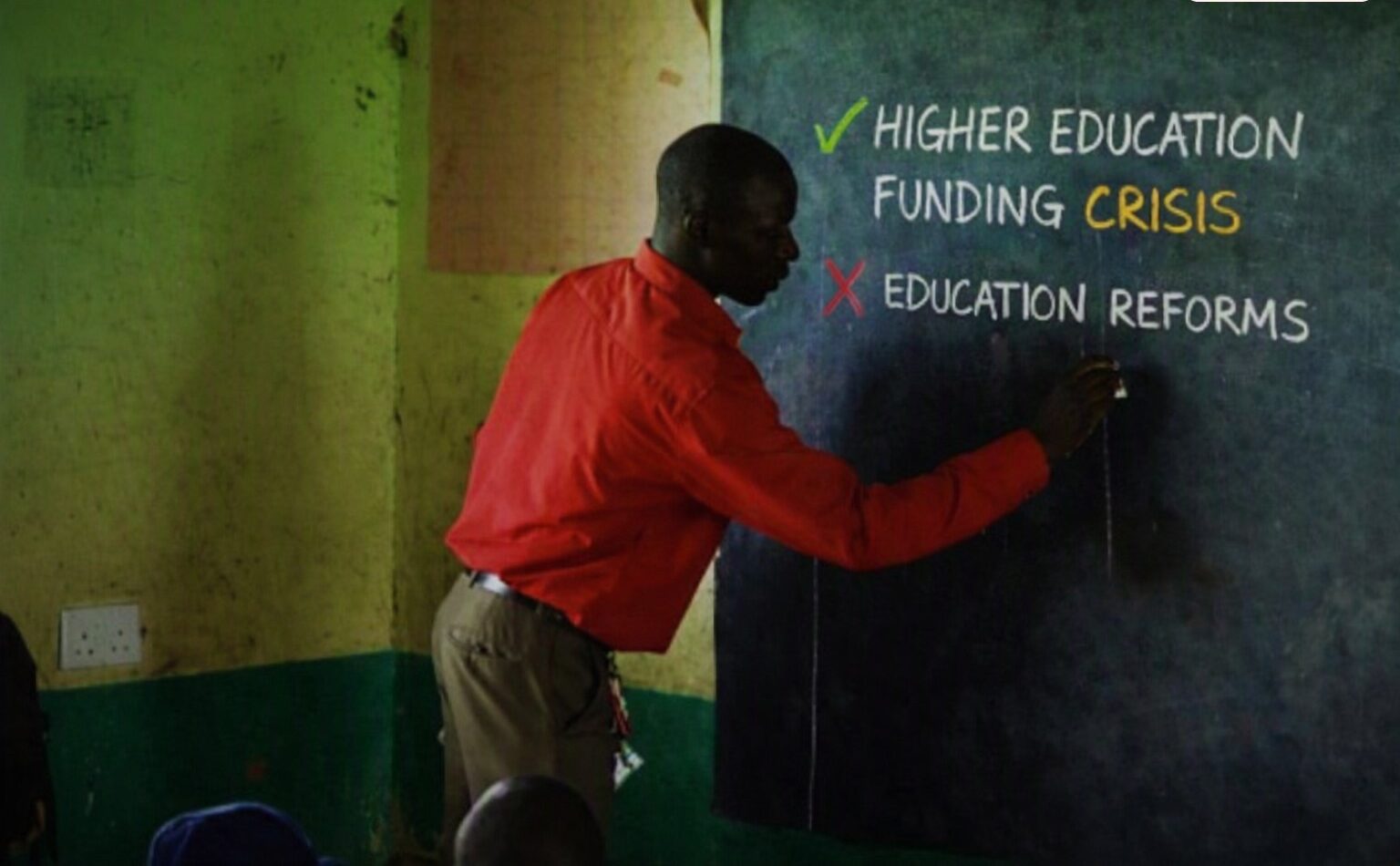
- The writer argues that the National Treasury, not TSC, holds the real power to resolve Kenya’s teacher crisis.
- Muhalya has outlined gaps at every stage of a teacher’s career, from internship and recruitment to promotion, welfare and retirement.
- The writer has also called for a long-term financing framework that treats teachers as an investment rather than a budgetary burden.
For years, whenever teachers have raised concerns about salaries, promotions, recruitment, internships, medical cover, pensions or welfare, the Teachers Service Commission (TSC) and the Ministry of Education have been the immediate points of reference. This is understandable, since TSC manages teachers while the Ministry provides policy direction. However, Kenya’s current teacher crisis requires a deeper examination, because many of the challenges facing teachers cannot be resolved by TSC or the Ministry alone. The primary constraint is often financial, and much of that funding is determined through the national budget, placing the National Treasury at the centre of the discussion.
TSC can identify teachers who need to be recruited, but Treasury must provide the funding. TSC can identify teachers eligible for promotion, but Treasury must allocate the resources to support the resulting wage bill. TSC can process retirement documentation, but government must ensure pension obligations are adequately financed and promptly disbursed. The Ministry can develop education policies, but Treasury must provide the resources required for implementation. This does not absolve TSC or the Ministry of responsibility to plan effectively, manage resources efficiently, communicate clearly and safeguard the interests of teachers. However, the country must now confront a broader question: is Kenya adequately financing the teaching profession from entry into training through to retirement?
Should university lecturers retire like other public servants? UASU’s UoN warning raises questions
The Teacher’s Career Is One Continuous Journey
The teaching profession should not be viewed as a series of disconnected stages. It begins with training, progresses through internship or employment, continues through deployment, salary progression, promotion, professional development and leadership, and ultimately culminates in retirement and pension. The full pathway should run from training to internship, employment, deployment, promotion, professional development, leadership, welfare, retirement, pension and continued contribution. At present, uncertainty exists at nearly every stage: a young teacher may not know the duration of internship, an employed teacher may wait years for promotion, schools may experience shortages due to delayed recruitment, a retiring teacher may face uncertainty over pension processing, and a retired teacher may feel excluded after decades of service. A country that depends on teachers to educate its children cannot afford such instability.
Internship And Recruitment Require Clear Financial Planning
Teacher internship was designed to provide newly trained teachers with practical experience and facilitate entry into the profession. It should function as a bridge, not a prolonged holding stage. When qualified teachers remain in temporary arrangements for extended periods, the purpose of internship becomes unclear, particularly for a teacher who is already teaching, preparing lessons, assessing learners and participating in school activities. The country requires a clear answer on the appropriate duration of teacher internship, and more importantly, a defined pathway from internship to permanent and pensionable employment. This is not solely a TSC issue, since permanent employment entails salaries, allowances, medical cover, pension contributions and future promotions. Treasury must therefore develop a long-term staffing and financing plan indicating how many interns can be absorbed annually and how many teachers will be required over the next five to ten years.
Recruitment should similarly not be reactive. Government should have clear projections on annual retirements, learner enrolment trends and staffing needs, particularly with the rollout of Junior School, and the retirement of thousands of teachers in 2026 makes this issue even more urgent. Every retiring teacher creates a staffing gap, and if that gap is not filled, the burden shifts to remaining teachers, who are required to teach more lessons, manage larger classes and assume additional responsibilities. While delayed recruitment may reduce short-term expenditure, the long-term cost is reflected in teacher burnout and reduced learning outcomes. The question should therefore not be how many teachers the country can afford to recruit this year, but how many teachers Kenya requires, and what it will cost to maintain optimal staffing levels over the next decade.
ALSO READ:
Where did 59,460 university-qualified students go after KCSE?
Promotion And Salaries Need Predictable Funding
Career progression is central to teacher motivation. Teachers invest in experience, qualifications and increased responsibility with the expectation of professional advancement, and when promotion is delayed for extended periods, frustration inevitably grows. Promotion is not merely a salary adjustment; it recognises professional growth, rewards experience and supports retention of skilled educators. TSC is responsible for identifying and processing eligible teachers, but promotion carries financial implications, and Treasury must therefore ensure predictable funding for structured career progression. Teachers should not repeatedly be informed that they qualify for promotion but must wait due to budgetary constraints.
Teachers also require certainty regarding remuneration. Collective Bargaining Agreements (CBAs) establish binding commitments between government and employees, and once concluded, they create legitimate expectations of implementation. Treasury therefore has a responsibility to ensure that agreed salary adjustments and related obligations are fully incorporated into national budgets, so that teachers are not required to renegotiate or re-litigate agreed terms each financial year. Predictable remuneration enables teachers to plan for housing, education, family needs and retirement.
Welfare Must Extend Beyond The Payslip
Teacher welfare extends beyond basic salary to include medical care, housing, retirement security, manageable workload, professional development, hardship support, safe working conditions, psychosocial support, timely payment of legitimate claims and career progression. A salary increase alone cannot resolve systemic challenges if teachers remain overworked, lack access to healthcare or are stagnated in one grade for years, so teacher welfare must be treated as a comprehensive framework.
Healthcare is a fundamental component of this welfare, and teachers should not face uncertainty regarding access to medical services for themselves or their dependants. Recent concerns regarding the financing of teachers’ medical cover highlight the risks associated with such uncertainty, and whatever system government adopts must guarantee consistent and reliable healthcare access, with Treasury ensuring that medical obligations are fully funded and sustainably maintained rather than left in doubt at every budget cycle.
Teachers serving in remote and hardship areas face additional challenges, including limited housing, high transport costs, inadequate healthcare access, poor connectivity and restricted access to essential services. If government expects teachers to serve in such regions, it must ensure sustainability of deployment, with hardship allowances and related support mechanisms reflecting actual living and working conditions, since equity in education requires equity in teacher support. Teachers who assume higher responsibilities in acting capacities should also be appropriately recognised through clear policies on appointment, remuneration and progression, rather than government relying on higher-level performance without corresponding compensation. Similarly, where legitimate claims arise from examinations, official travel, training or special assignments, they should be settled within reasonable timelines, as persistent delays create financial strain and undermine trust in public institutions.
Junior School Needs Structural Clarity And Funding
The future of Junior School remains a critical issue. It has distinct learners, teachers, curriculum requirements, assessments and operational challenges, yet questions remain over its administrative structure and autonomy — who holds ultimate responsibility, whether it should have dedicated administrative leadership, what authority such leadership should possess, who controls its resources, and who is accountable for discipline, academic performance, teacher supervision and parental communication. These questions require clear resolution, since Junior School cannot be expected to deliver a distinct curriculum level under prolonged administrative ambiguity.
A fundamental principle of governance is that responsibility must be accompanied by authority and adequate resources. If Junior School administrators are responsible for learners, teachers, curriculum delivery and performance outcomes, they must be granted the authority to execute those responsibilities effectively, and any autonomy granted must be adequately funded, since autonomy without resources is merely symbolic. Infrastructure, staffing, professional development, digital tools and operational support all require financial commitment, meaning Treasury must be actively involved in planning for the future of Junior School.
Shortages And Reform Carry Hidden Costs
Teacher shortages are often presented in numerical terms, but behind those figures are real human consequences. When schools operate below required staffing levels, the burden shifts to available teachers, who are required to teach more lessons, manage larger classes, supervise additional activities and assume extra administrative duties, leading to fatigue, reduced morale and diminished effectiveness. While the financial cost of under-recruitment may not be immediately visible, its impact is evident in learning outcomes, meaning teacher recruitment should be viewed not solely as an expenditure item but as an investment in national development.
When good teachers stop caring: How poor leadership quietly weakens schools
The education sector is also evolving rapidly. Competency-Based Education (CBE) has transformed teaching and assessment, digital systems have increased administrative demands, and teachers are expected to integrate technology and address diverse learner needs. This necessitates continuous professional development, which should not be occasional or project-based. Treasury should ensure predictable funding for ongoing capacity building, since curriculum reform cannot succeed without adequately prepared implementers.
Retirement Should Mean Transition, Not Exclusion
One of the most overlooked stages of the teaching profession is retirement. Kenya often recognises teachers during active service but neglects them after exit from the payroll, and this must change, since a teacher’s value does not end with retirement after decades of service that contribute immeasurably to national development.
A teacher’s pension reflects years of dedicated service, and retirees should not endure prolonged delays in accessing benefits they have already earned. Government must ensure that pension systems are efficient, transparent and adequately funded, and while digital systems can improve efficiency, they are not sufficient on their own: accurate records, adequate funding and institutional coordination are essential. A key question for Treasury is whether a teacher can retire with confidence that their pension will be paid promptly and in full, which is a fundamental measure of the state’s commitment to its educators.
Retired teachers possess extensive experience accumulated over decades. They understand classrooms, learners and community dynamics, and many have served as school leaders, mentors, examiners and curriculum experts. Kenya should create structured, voluntary opportunities for retired teachers who wish to continue contributing, including mentoring, teacher training support, advisory roles, literacy programmes and policy engagement, so that decades of expertise are not lost to retirement. A dignified retirement also requires more than pension payments — retired teachers require healthcare, financial guidance, social support and opportunities for continued engagement, since retirement can bring isolation and loss of purpose after long service in structured environments. Government and professional bodies must therefore treat retirement as a holistic welfare issue, so that a teacher’s service concludes with dignity and support.
Kenya Needs A Long-Term Financing Framework
Ultimately, all these issues converge on one central question: is Kenya prepared to adequately finance the teaching profession required to deliver its education system? Who will fund teacher recruitment, promotions, Junior School administration, medical cover, professional development, pension payments, hardship support, the transition from internship to permanent employment, and outstanding legitimate claims? These are not solely TSC responsibilities. TSC manages the system but does not control the resources, and the Ministry provides policy direction but requires funding to implement it. Treasury must therefore play a more central role in education financing discussions, providing clarity rather than assumptions on how many teachers will be recruited and how many will retire over the next five years, how many interns will be absorbed, the projected cost of promotions, how Junior School will be financed, the strategy for pension sustainability, and the long-term cost of teacher welfare.
Festus Mutai, former top KCPE candidate, appeals for support to resume university studies
Kenya must also reframe how it views teachers. They are often discussed primarily in terms of wage expenditure, yet a teacher is an investment in human capital development, shaping doctors, engineers, lawyers, entrepreneurs, farmers, public servants and national leaders. When teachers are well-trained, supported and motivated, the entire nation benefits; when they are neglected, the consequences are reflected in education quality, inequality, unemployment and economic performance. The question should therefore not be how much teachers cost, but what the cost of underinvesting in teachers is.
The country must move beyond annual budgetary responses and adopt a long-term financing framework for the teaching profession, covering training, internship, recruitment, deployment, salaries, promotions, professional development, leadership, medical care, welfare, retirement, pensions and post-retirement engagement. Such a framework would enable proactive planning rather than reactive crisis management, and would give TSC the financial predictability required for effective administration. The national conversation on teachers must move beyond isolated grievances to focus on the kind of teaching profession Kenya seeks to build, one in which a prospective teacher sees a clear career pathway, an intern understands progression to permanent employment, an employed teacher has a transparent promotion structure, a teacher in hardship areas receives adequate support, a teacher with increased responsibility is recognised accordingly, a sick teacher has reliable healthcare access, a teacher nearing retirement has confidence in pension systems, and a retired teacher remains valued and engaged.
TSC must manage the teaching workforce effectively, and the Ministry of Education must provide strong policy leadership. However, Treasury must recognise that education financing is not merely an accounting function but a core component of education policy, since every funding decision directly affects teacher recruitment, promotion, welfare, Junior School operations, healthcare and retirement outcomes. The national question must therefore evolve from what TSC is doing for teachers, to how Treasury is financing the teaching profession Kenya requires. A nation cannot demand world-class education while treating its teachers as a recurring budgetary burden. Teachers should be valued at entry, during service, in career progression, at retirement and beyond; a payslip may end, but a teacher’s impact does not.
By Hillary Muhalya
You can also follow our social media pages on Twitter: Education News KE and Facebook: Education News Newspaper for timely updates.
>>> Click here to stay up-to-date with trending regional stories
>>> Click here to read more informed opinions on the country’s education landscape