- Astiba Kebong’o argues that school discipline must evolve to reflect constitutional rights, technological change and growing legal scrutiny.
- He says fairness, due process and professionalism should guide disciplinary decisions in modern schools.
- The opinion calls for stronger collaboration among schools, parents and government in shaping responsible learners.
The old African proverb reminds us that “when the roots are deep, there is no reason to fear the wind.” Yet in today’s rapidly changing world, the roots of school discipline are being tested by powerful winds of technology, constitutional rights, evolving family dynamics and increased public accountability.
The question facing schools is no longer whether discipline is necessary—it undoubtedly is—but how it can be exercised fairly, lawfully and wisely in an age where every administrative decision may be scrutinised in both the court of law and the court of public opinion.
Recent legal disputes between parents and schools over disciplinary decisions have sparked intense debate across Kenya. These cases are not isolated incidents.
Increasingly, parents who feel aggrieved by disciplinary actions are seeking judicial intervention, compelling educational institutions to justify not only the outcomes of their decisions but also the processes used to reach them.
Whether courts ultimately uphold or overturn those decisions, one lesson is unmistakable: educational leadership must evolve.
The internet has transformed the world into a global village, but it has also blurred the boundaries between school life and private life.
Learners interact through social media, instant messaging, online gaming, digital payment platforms and other virtual spaces that did not exist a generation ago.
Behaviour outside the school compound can quickly find its way back into the school environment, affecting discipline, school reputation and learner welfare.
Consequently, school administrators are confronted with difficult questions. To what extent should schools regulate learners’ conduct during holidays? How should schools investigate alleged misconduct occurring outside the school? What evidence is admissible without infringing constitutional rights such as privacy and dignity?
These are questions that demand prudence rather than impulsive reactions.
Balancing discipline and rights
The Constitution of Kenya safeguards the rights and freedoms of every child, while the Basic Education Act, the Children Act and Ministry of Education policies equally require schools to provide safe, orderly and morally upright learning environments.
These obligations are complementary rather than contradictory.
Maintaining discipline and protecting constitutional rights should never be viewed as opposing forces; instead, they should reinforce one another.
As the late legal scholar Justice Benjamin Cardozo observed: “Justice, though due to the accused, is due to the accuser also.”
Fairness requires balancing the rights of all parties.
Psychologist Lawrence Kohlberg argued that true discipline should cultivate moral reasoning rather than mere obedience.
Learners who understand why values matter are more likely to make ethical decisions even when no authority figure is watching.
Similarly, educational philosopher John Dewey reminded us that:
“Education is not preparation for life; education is life itself.”
Schools therefore have a responsibility to shape character alongside academic excellence.
The need for modern disciplinary systems
For school administrators, these developments present an opportunity to rethink disciplinary systems.
Investigations should be evidence-based, confidential, impartial and properly documented.
Learners should be accorded an opportunity to be heard, parents should be actively engaged, and guidance and counselling should complement corrective measures.
The objective is not simply to punish but to restore, educate and protect the integrity of the institution.
As the saying goes, “Measure twice, cut once.” Decisions reached after careful deliberation are less likely to be challenged successfully.
Equally important is the need for schools to review their rules and regulations.
Many school policies were drafted before the widespread adoption of smartphones, social media, artificial intelligence, online accommodation services and digital financial transactions.
Such policies may no longer adequately address emerging realities.
Boards of Management, principals, teachers, parents, learners, legal experts and the Ministry of Education should periodically review school rules to ensure they remain lawful, practical and responsive to contemporary challenges.
A policy that fails to evolve soon becomes obsolete.
Parents and teachers must play their part
Parents cannot remain spectators in this conversation.
Holidays do not suspend parental responsibility.
While schools shoulder responsibility for educating children during the school term, parents remain the primary custodians of their children’s conduct outside school.
Monitoring friendships, online activities, movements and digital interactions has become an indispensable aspect of modern parenting.
As the African proverb reminds us: “The child who is not embraced by the village will burn it down to feel its warmth.”
Parents, schools, faith communities and society must therefore work collaboratively in nurturing responsible citizens.
Teachers, too, have valuable lessons to draw from the growing number of court cases involving school discipline.
Every disciplinary process should be guided by professionalism rather than emotion, rumours or public pressure.
Proper record-keeping, adherence to school procedures, respect for confidentiality and observance of the principles of natural justice are no longer optional—they are indispensable professional obligations.
Teachers should appreciate that every disciplinary matter may eventually be subjected to legal scrutiny.
As custodians of learners entrusted to them, they must ensure that justice is not only done but is manifestly seen to be done.
Shared responsibility for the future
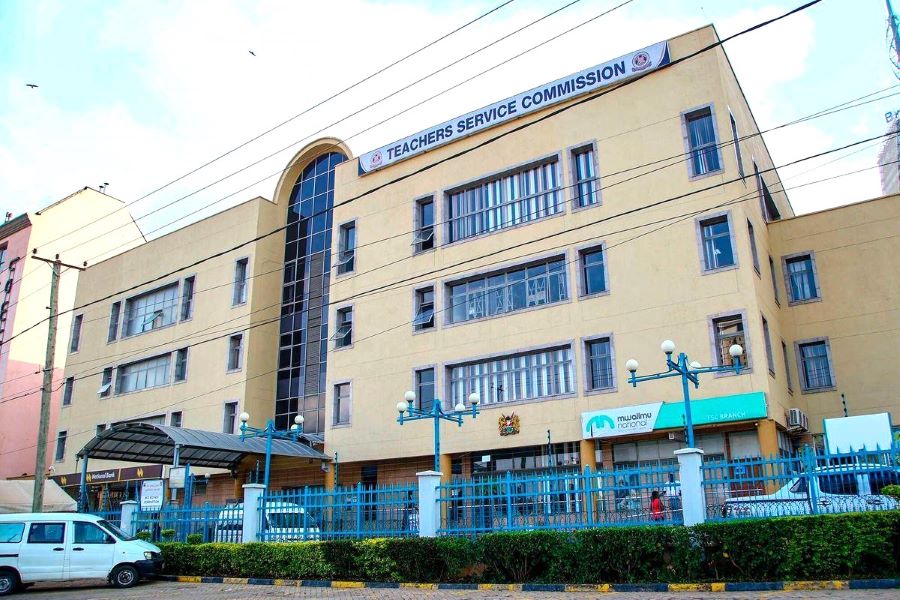
The Teachers Service Commission (TSC) has consistently emphasised professionalism, integrity, child protection and adherence to the Code of Conduct and Ethics.
Teachers are expected to safeguard learners, uphold their dignity and exercise authority responsibly.
Likewise, the Ministry of Education continues to advocate positive discipline, guidance and counselling, learner participation and child-friendly approaches that promote safety while maintaining order within schools.
Learners themselves cannot escape responsibility.
Constitutional rights are accompanied by corresponding responsibilities.
Every learner should remember that today’s choices shape tomorrow’s destiny.
They are future leaders, professionals, parents and nation-builders.
As Galatians 6:7 reminds us: “A man reaps what he sows.”
Character remains the foundation upon which lasting success is built.
The Scriptures further remind us in Proverbs 22:6:
“Train up a child in the way he should go, and when he is old he will not depart from it.”
Discipline, therefore, is not about humiliation or punishment; it is about formation.
Ultimately, discipline and constitutional rights should never be viewed as adversaries. They are partners in building schools that are safe, just, compassionate and accountable.
Modern educational leadership calls for wisdom that is firm without being oppressive, compassionate without being permissive and lawful without compromising standards.
As Lord Hewart famously observed:
“Justice should not only be done, but should manifestly and undoubtedly be seen to be done.”
The same principle applies to school discipline.
Institutions that investigate fairly, communicate openly, respect the law and uphold the dignity of every learner will command public confidence and produce responsible citizens.
The future of education will not be secured by harsher punishments but by wiser leadership.
Schools, parents, teachers, learners, the Teachers Service Commission and the Ministry of Education must stand together in nurturing disciplined, morally upright and constitutionally conscious young people.
READ ALSO: Nyakach MP delivers six new school buses, replaces bus lost in 2025 tragedy
Only then shall we raise a generation capable of leading Kenya with integrity, responsibility and wisdom.
By Astiba Kebong’o
Astiba Kebong’o writes on education and leadership. He can be reached at jackiekebongo@gmail.com.
You can also follow our social media pages on Twitter: Education News KE and Facebook: Education News Newspaper for timely updates.
>>> Click here to stay up-to-date with trending regional stories
>>> Click here to read more informed opinions on the country’s education landscape