- Parents have opposed KESSHA’s proposal to review secondary school fees upwards, saying education is already unaffordable.
- School heads argue that inflation, rising operational costs and the implementation of CBE have made the current fee structure unsustainable.
- The Ministry of Education says it will continue engaging stakeholders on school financing and capitation.
Parents have expressed concern over the proposal by secondary school principals to review school fees upwards.
Some parents in Mombasa argued that increasing fees without a corresponding rise in household incomes would make education even more unaffordable.
“They are proposing a fee increment yet the current fees are already unaffordable. Aren’t they the same principals sending our children home because of unpaid school fees?” said Bakari Ali, a parent.
The parents urged the government to reject the proposal if education is to remain affordable and accessible.
KESSHA defends proposal
Secondary school heads are pushing for an upward review of school fees, arguing that the current fee structure no longer reflects the cost of running schools.
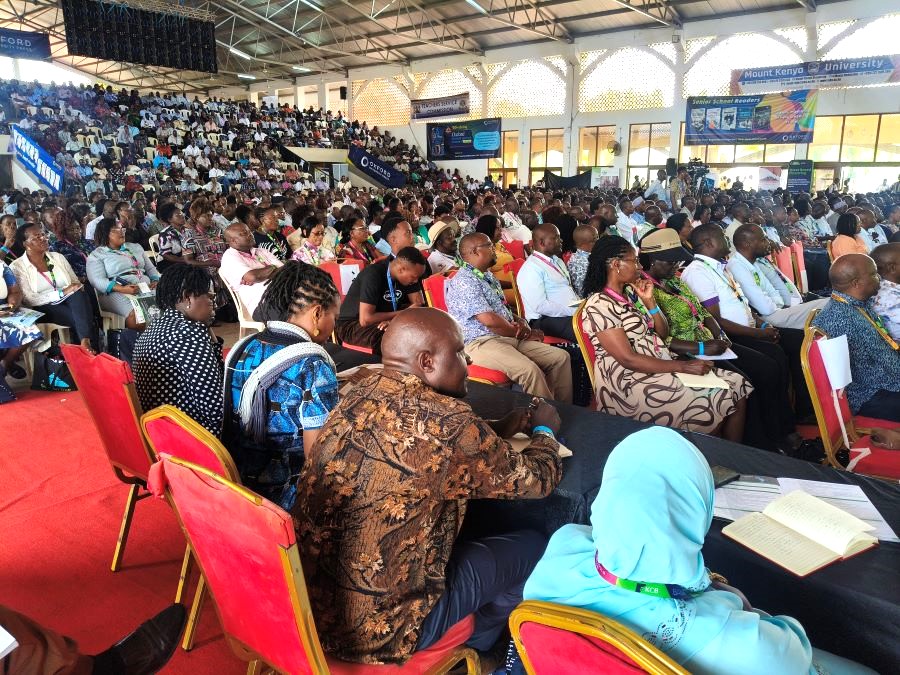
Speaking during the 49th Kenya Secondary School Heads Association (KESSHA) Annual National Conference in Mombasa, KESSHA National Chairman Willie Mwangi said the existing fee structure was introduced in 2015 and has not been reviewed despite significant increases in the cost of goods and services.
“It is not possible that the fees charged then are the same fees being charged today. School fees have not been reviewed since 2015 despite the escalation in commodity prices,” Mwangi said.
According to him, commodity prices have increased by about 65 per cent over the same period.
“Therefore, there is justification for reviewing the current school fees structure,” he said.
Mwangi also noted that the depreciation of the Kenya shilling against major foreign currencies has increased the cost of goods and services required to run schools.
Rising cost of education
The KESSHA chair said the cost of maintaining a learner has risen significantly over the past decade.
He estimated that providing meals alone now costs approximately Sh242 per learner per day, translating to about Sh60,009 annually, compared to Sh30,385 in 2015.
Mwangi further observed that while Kenya’s national budget has grown from about Sh2.2 trillion in 2015 to Sh4.8 trillion, school fees have remained unchanged.
“How come all these things have moved, yet school fees remain static? Is that sustainable?” he asked.
He warned that the widening gap between operational costs and static school fees threatens the financial sustainability of secondary schools.
“In light of these circumstances, KESSHA proposes that the government urgently review and rationalize the school fees structure to reflect current economic realities while enabling schools to continue providing quality education,” he said.
CBE increasing operational costs
Mwangi said the implementation of Competency-Based Education (CBE) has further increased education costs due to additional learning pathways, specialized subjects and infrastructure requirements.
He noted that schools are experiencing acute shortages of qualified teachers in disciplines such as Fine Arts, Aviation, Building and Construction, Film and Theatre, and Marine and Fisheries Studies.
Delivering these programmes also requires specialized equipment, learning materials and infrastructure that many schools currently lack.
“These demands have placed considerable financial strain on schools that are already operating within constrained budgets,” he said.
He added that C2 and C3 schools, which charged Sh40,535 annually in 2015, should now charge approximately Sh67,004, while C1 schools should move from Sh53,554 to about Sh88,364, based on prevailing commodity price indices.
Mwangi also called for a review of government capitation.
He noted that capitation increased from Sh10,625 per learner in 2008 to Sh12,870 in 2015, before rising to Sh22,244 in 2018, when public secondary schools were barred from charging tuition fees.
According to him, the current capitation has not been reviewed for seven years despite rising operational costs.
“The money schools actually receive today, after retentions and partial disbursements, is almost equivalent to what schools received when the programme began in 2008, despite the significant increase in the cost of goods and services,” Mwangi said.
Basic Education Principal Secretary John Ololtua said the government remains committed to ensuring the successful implementation of Competency-Based Education.
He said any aspects of the curriculum requiring review would continue to be evaluated in consultation with stakeholders.
Ololtua urged principals to continue working closely with the Ministry of Education to improve learning experiences for learners.
He acknowledged that financing remains a challenge but said the government would continue engaging the National Treasury and other stakeholders on education funding.
READ ALSO: A school’s name should never define a teacher’s professional identity
“We will continue engaging and see what will happen in future,” the PS said.
“I am ready to walk with you in the best way I can. Support us so we can support you.”
By Morris Ochieng’
You can also follow our social media pages on Twitter: Education News KE and Facebook: Education News Newspaper for timely updates.
>>> Click here to stay up-to-date with trending regional stories
>>> Click here to read more informed opinions on the country’s education landscape