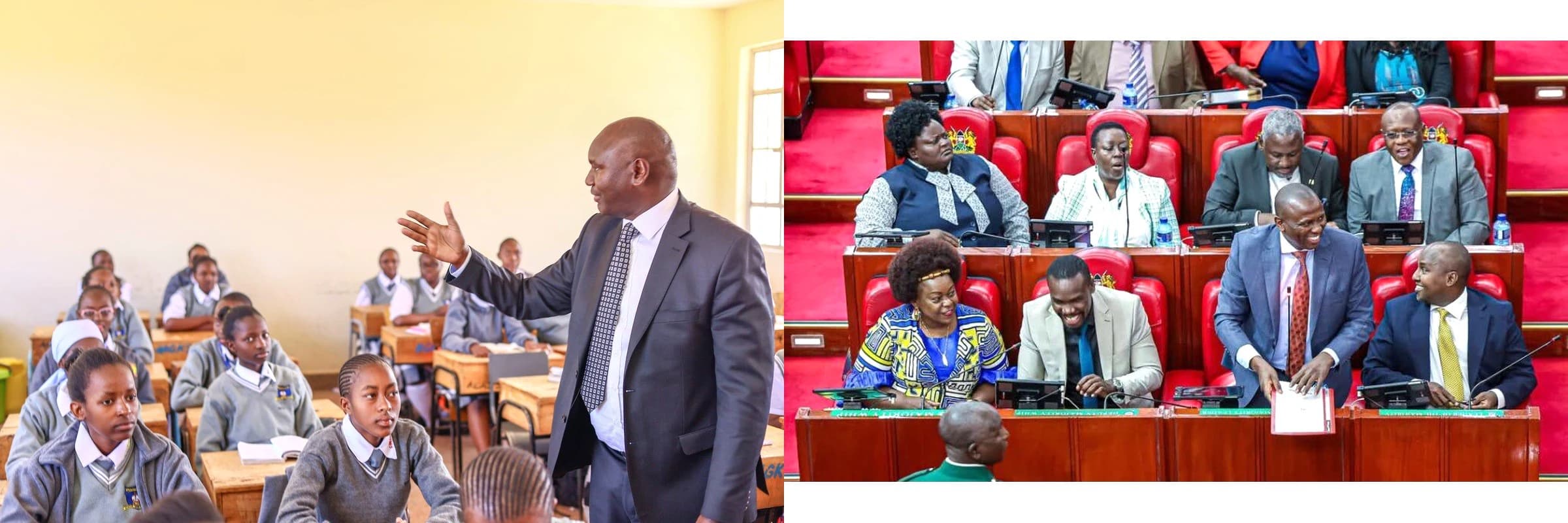


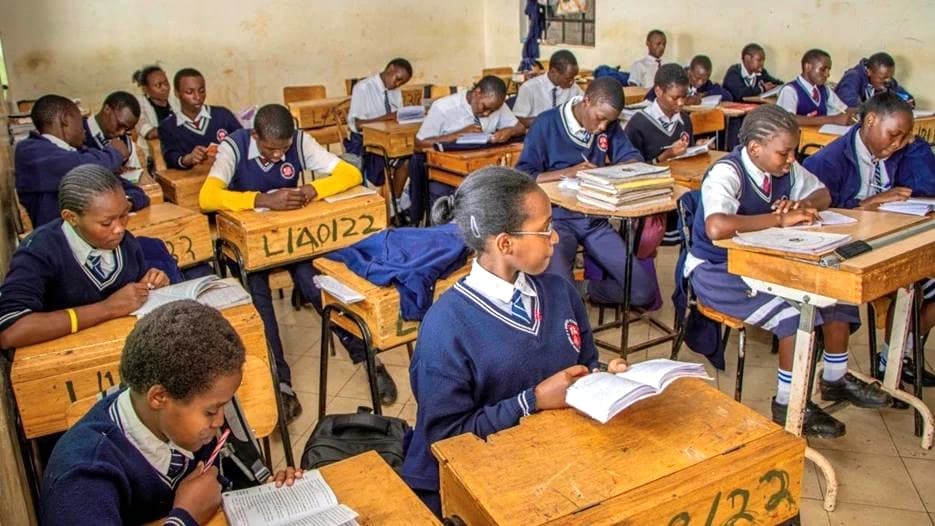




- Ashford Kimani argues that teachers should build their professional identity through competence, innovation and learner impact rather than relying on the reputation of elite schools.
- A teacher’s greatest professional asset should be competence, not the prestige of the school where they work.
- True educational excellence is measured by impact, innovation and learner transformation.
- Great teachers build great schools—not the other way around.
In Kenya’s education circles, there is a growing phenomenon that deserves honest discussion. Some teachers derive so much of their professional identity from the schools where they teach that, if the institution’s name were removed from the conversation, very little would remain to distinguish them.
Their greatest credential becomes, “I teach at Mang’u High School,” “I teach at Alliance High School,” “I teach at Kenya High School,” or another prestigious national school.
There is no doubt that these schools have earned their reputation through decades of academic excellence, strong traditions and outstanding alumni. Teaching in such institutions is an achievement in itself and often reflects a teacher’s competence and experience.
However, problems arise when a teacher’s personal professional value becomes entirely dependent on the brand of the school rather than the quality of their own work.
The reality is that a great school does not automatically make a great teacher.
Some of the most transformative educators in history worked in ordinary schools, remote villages and under-resourced communities.
Their greatness was not defined by the prestige of their institutions but by the impact they had on learners.
A teacher’s true worth should be measured by what happens in the classroom.
Can they inspire curiosity?
Can they improve learning outcomes?
Can they motivate struggling learners to believe in themselves?
Can they mentor young people into responsible citizens?
These are the qualities that define educational excellence.
Unfortunately, some teachers become so attached to the prestige of their schools that they stop investing in their own professional growth.
They begin to assume that the school’s reputation automatically translates into personal superiority.
Conversations become dominated by references to the institution rather than evidence of innovation, leadership, research, mentorship or educational achievement.
One often encounters teachers who introduce themselves not through their expertise or accomplishments but through the name of the school where they work.
Ask them about curriculum innovation, educational research, learner-centred methodologies or leadership initiatives, and the discussion quickly returns to the school’s historical reputation.
It is as though the institution’s brand has become a substitute for individual excellence.
Teachers build schools—not the other way around
History shows that school brands are built by teachers, not the other way around.
The legendary reputation of schools such as Mang’u, Alliance, Kenya High, Starehe and many others was created through the dedication of generations of exceptional educators.
These teachers invested countless hours in teaching, mentoring, coaching, counselling and nurturing learners.
The schools became great because great teachers worked there.
Every teacher should therefore ask a difficult question:
If I were transferred tomorrow to an unknown school in a remote part of the country, would I still be considered an outstanding educator?
Would my methods, leadership and impact remain visible?
Or would my professional identity disappear together with the school name?
Excellence is portable
The most effective teachers understand that excellence is portable.
They can teach in a national school, an extra-county school, a county school or a small day school and still produce remarkable results.
Their influence does not depend on selective admission policies, privileged learners or established institutional traditions.
Instead, it comes from their skills, character and commitment.
Many teachers working in lesser-known schools achieve extraordinary things every day.
They raise examination performance despite limited resources.
They mentor vulnerable learners.
They develop innovative teaching materials.
They establish clubs, write books, conduct educational research and transform entire communities.
Their schools may never appear in newspaper headlines, but their contribution to education is immense.
Ironically, some of these teachers possess far greater professional substance than individuals who merely ride on the reputation of elite institutions.
While one teacher speaks endlessly about where they work, another quietly changes lives through dedication, creativity and commitment.
The modern teacher
Educational leadership today requires more than association with a famous institution.
It demands continuous learning, adaptability, innovation and measurable impact.
The modern teacher must build a personal professional brand that stands independently of any school.
Such a brand is built through competence, integrity, mentorship and results.
There is nothing wrong with being proud of one’s school.
Every teacher should celebrate the achievements and traditions of their institution.
However, pride should never become dependency.
A teacher’s greatest achievement should not be the name displayed on the school gate but the difference they make in the lives of learners.
The real measure of a teacher
At the end of the day, schools gain prestige because of teachers—not because of buildings, uniforms or historical reputations.
The most respected educators are those whose influence remains powerful regardless of where they are posted.
When the school name is stripped away, what remains is the real measure of a teacher.
The question every educator should ask is simple:
If nobody knew where I teach, would my work still speak for itself?
That question separates those who merely borrow prestige from those who genuinely create it.
By Ashford Kimani
Ashford is a teacher of English and Literature who writes about education and social affairs.
You can also follow our social media pages on Twitter: Education News KE and Facebook: Education News Newspaper for timely updates.
>>> Click here to stay up-to-date with trending regional stories
>>> Click here to read more informed opinions on the country’s education landscape
>>> Click here to stay ahead with the latest national news.