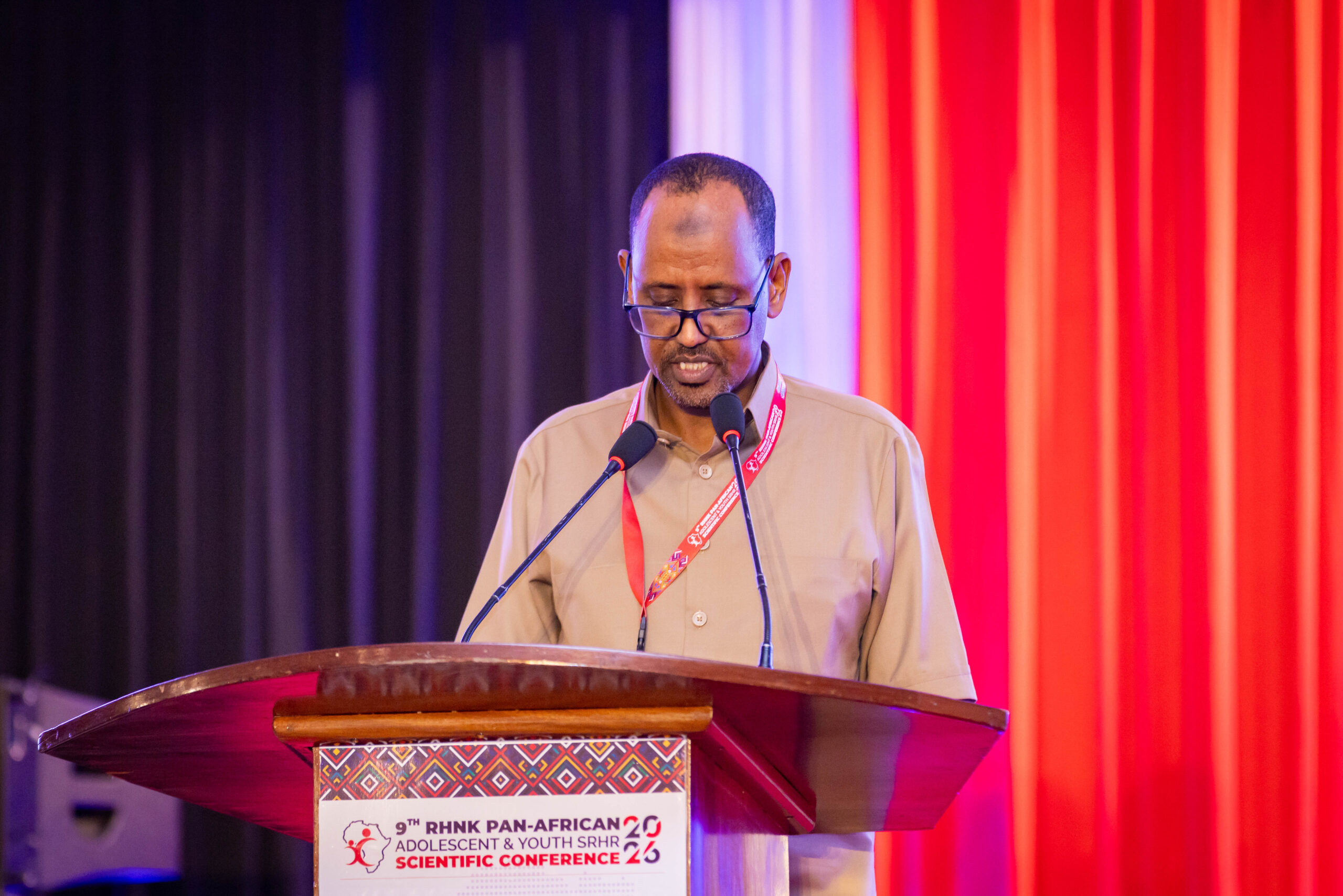
The Ministry of Health (MoH) has described Kenya’s free maternity services for teenage mothers as a necessary but reactive intervention, saying the country is still largely responding to consequences rather than preventing adolescent pregnancies and related health risks.
Speaking at the opening of the 9th Pan-African Adolescent and Youth Sexual and Reproductive Health and Rights (AYSRHR) Scientific Conference in Mombasa, Head of the Ministry’s Family Health Department, Dr Bashir Issak, said the policy ensures dignity and access for teenage mothers but falls short of addressing root causes.
“Any young woman who walks into a public health facility in Kenya to give birth does so free of charge. No bill, no deposit, no turning away. But this is damage control,” Dr Issak said. “Could we have prevented that at a lower cost?”
The conference brought together more than 1,500 delegates from over 40 countries and was convened by the Reproductive Health Network Kenya (RHNK) in partnership with the Ministry of Health and the National Council for Population and Development, among other regional partners.
Rising adolescent health burden
Dr Issak warned that Kenya continues to face a significant adolescent health crisis, citing data showing that 15 percent of girls aged 15–19 are either pregnant or already mothers, with some counties recording far higher rates.
ALSO READ:
34 Counties, MoE sign education agreements to fund bursary, scholarship programmes
In Samburu County, for instance, teenage pregnancy rates reach as high as 50 percent. He also noted that in 2025, 41 percent of new HIV infections in Kenya were recorded among young people aged 15–24, while mother-to-child HIV transmission rates have also increased.
“These are not gaps in statistics. They are gaps in survival,” he said.
Calls to shift from response to prevention
The Ministry acknowledged ongoing efforts to expand access to healthcare, including universal coverage under the Social Health Authority (SHA), deployment of more than 100,000 community health promoters, and digital health tracking systems aimed at improving maternal outcomes.
However, the medic insisted that these measures are not sufficient to reverse worsening adolescent health indicators.
“These are not small things,” he said. “But I will not stand here and pretend they are enough.”
He called for a stronger focus on prevention, urging investment in adolescent-friendly health services, comprehensive sexuality education, and community-driven approaches to reduce teenage pregnancies before they occur.
“Built barriers” limiting access
Dr Issak also highlighted structural and social barriers that continue to limit access to reproductive health services for young people, including stigma, distance to health facilities, and negative attitudes among healthcare workers.
“Distance. Cost. Stigma. The judgmental healthcare worker. The facility with no youth-friendly service space… These barriers are not natural. They were built. And what was built can be dismantled,” he said.
He further called for greater involvement of community leaders, religious institutions, the private sector, and young people in shaping reproductive health policies.
“Policy change without youth participation is not policy change. It is policy imposition.”
Continental perspective
The conference also featured insights from global and continental health experts, including Dr Samukeliso Dube, who warned that teenage pregnancy rates across Africa remain alarmingly high due to gaps in funding and access to reproductive health services.
ALSO READ:
KNUT urges student dialogue as unrest concerns rise in schools
“We are running a continent on luck and hope,” she said, linking maternal mortality trends to preventable adolescent pregnancies.
New framework on adolescent consent
A key highlight of the conference was the launch of an Adolescent Consent Referral Framework, developed in collaboration with the Kenya Judiciary Academy, healthcare providers, and youth representatives.
The tool aims to guide health workers and courts on when adolescents can independently access reproductive health services, addressing long-standing legal and procedural barriers that have complicated service delivery.
Youth voices and call for inclusion
Young participants also used the platform to call for more inclusive health systems and better access to accurate reproductive health information.
One youth speaker, Esther, said adolescents often grow up without adequate guidance on sexual health, leaving them vulnerable to misinformation and risky outcomes.
“I wish to learn the different ways how you can have safe sex instead,” she said, highlighting gaps in comprehensive sexuality education.
While reaffirming free maternity care for teenage mothers as a critical safety net, the Ministry, emphasized that long-term progress will depend on shifting resources toward prevention and addressing the social, economic, and structural drivers of adolescent pregnancies and HIV infections.
By Our reporter
You can also follow our social media pages on Twitter: Education News KE and Facebook: Education News Newspaper for timely updates.
>>> Click here to stay up-to-date with trending regional stories
>>> Click here to read more informed opinions on the country’s education landscape