It is 9:40 a.m. in a Kenyan secondary school. A principal sits in a small office, still holding an unfinished cup of tea that has gone cold. The morning routine is underway when the door suddenly swings open.
A teacher enters, breath uneven, voice controlled but tense.
“Sir… we’ve stopped a fight. Knives were involved. Two students are injured. One is refusing to speak.”
For a moment, everything pauses—not because there is no urgency, but because urgency has too many directions at once.
Who is safe? Who is responsible? What needs immediate action? Call parents? Inform the Board of Management? Suspend the learners? Begin investigations? Secure evidence? Prevent retaliation?
In that silence, discipline stops being a procedural matter. It becomes a human crisis managed under institutional pressure. And every principal understands a difficult truth: leadership is not only about enforcing rules—it is about absorbing consequences before they spread.
Suspension and expulsion, once straightforward disciplinary tools, now sit at the intersection of law, policy, emotion, and institutional survival. They are no longer routine administrative actions; they are high-stakes decisions made under scrutiny and uncertainty.
ALSO READ;
The first tension is the constitutional balance between the learner’s right to education and the school’s duty to ensure safety. Kenya’s legal framework protects access to education for every child, yet schools must also protect hundreds of others whose learning depends on order and security. A single violent or persistently disruptive learner can destabilize an entire institution, forcing principals to weigh two competing responsibilities: inclusion and protection.
The second pressure is due process. Before suspension or expulsion, schools must investigate incidents, collect statements, notify parents, convene disciplinary committees, and present cases before Boards of Management. These safeguards are necessary, but they rarely align with the urgency of real-time school crises such as violence, drug-related incidents, or coordinated unrest. Leadership becomes a constant negotiation between speed and procedure.
Closely related is the growing fear of accountability beyond the school. Disciplinary decisions can be escalated to education offices, rights bodies, or courts. As a result, many school leaders now approach discipline not only as a matter of justice, but also of defensibility. Every decision must be justifiable long after the moment of crisis has passed.
Parental engagement adds another layer of complexity. Instead of shared responsibility, some disciplinary cases quickly become disputes. Evidence is questioned, teachers are challenged, and schools are accused of bias. What should be a corrective process often becomes a prolonged confrontation, weakening trust and slowing resolution.
Evidence itself is often fragile. Serious misconduct such as bullying, drug use, theft, or harassment frequently occurs away from supervision. Learners may know what happened but remain silent out of fear. Witnesses may withdraw statements. This leaves disciplinary committees with incomplete information, where decisions must be made under uncertainty.
‘A Man of Awesome Power’ and the Kenyan reality: Why good intentions are not enough
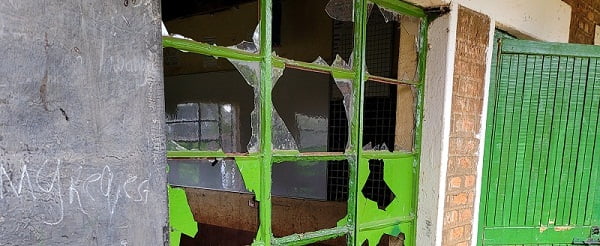
Collective indiscipline, such as strikes or riots, presents a different challenge. Damage is visible, but responsibility is hidden. Identifying instigators is difficult, forcing schools into uncomfortable choices between broad sanctions that risk unfairness and narrow sanctions that risk impunity. In many cases, accountability remains partial and contested.
Beyond discipline itself lies a structural gap: limited rehabilitation pathways for learners who are expelled or require intensive behavioural intervention. While policy emphasizes correction, there are few structured systems outside mainstream schools to support sustained behavioural change. This creates hesitation in applying exclusion, even when necessary.
At the same time, many behavioural challenges are shaped by deeper psychosocial realities—trauma, unstable home environments, emotional distress, or substance dependence. Yet counselling and psychological support remain limited in many institutions. Principals are therefore expected to manage complex human conditions with tools designed mainly for academic administration.
Despite these challenges, discipline remains essential. Schools cannot function in an environment of fear, violence, or persistent disruption. However, suspension and expulsion today are no longer simple enforcement tools. They are decisions where law, ethics, emotion, and institutional responsibility converge.
The real issue is not whether discipline should exist, but whether the education system provides enough support for those required to enforce it. Without stronger counselling systems, clearer rehabilitation pathways, and more consistent collaboration between parents and schools, disciplinary decisions will continue to carry disproportionate weight on individual leaders.
Ultimately, discipline is not just about removing a learner from school. It is about maintaining the balance between safety and opportunity, order and fairness, consequence and possibility. And at the centre of that balance stands the school principal—making decisions that shape both institutional stability and individual futures.
By Hillary Muhalya
You can also follow our social media pages on Twitter: Education News KE and Facebook: Education News Newspaper for timely updates.
>>> Click here to stay up-to-date with trending regional stories
>>> Click here to read more informed opinions on the country’s education landscape