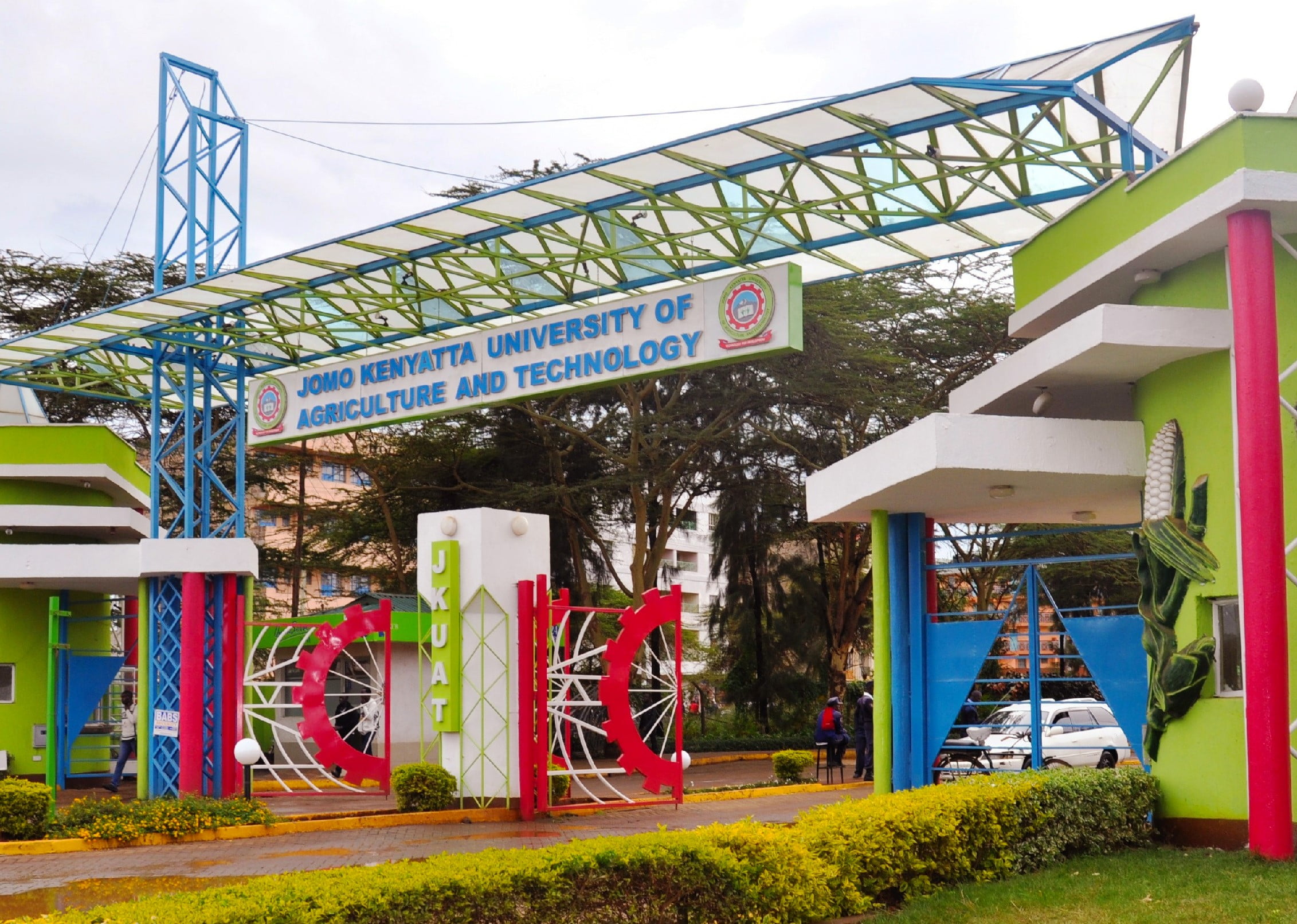
Jomo Kenyatta University of Agriculture and Technology (JKUAT) is facing mounting financial challenges after Auditor-General Nancy Gathungu raised concerns over significant financial irregularities, idle investments, and a deepening liquidity crisis in the institution’s 2025 financial statements.
According to the audit report, the university’s financial position has deteriorated sharply, with current liabilities standing at Ksh11.4 billion against current assets of Ksh4.3 billion, resulting in a negative working capital position of Ksh7.1 billion.
The Auditor-General warned that the institution’s ability to meet its financial obligations is under increasing strain.
“The university will soon be forced to depend on creditors and government support due to financial loopholes; therefore, we are forced to declare that the institution is technically insolvent,” the report states.
The audit also highlights substantial public funds tied up in dormant ventures and underutilised assets.
Among the most notable concerns is JKUAT Noodles Limited, also known as Nissin Holdings, a wholly owned university subsidiary into which Ksh358 million has been invested. The company has ceased operations, with auditors noting that production has completely stalled.
ALSO READ:
Kiambu students gain firsthand experience of Parliamentary proceedings during educational visit
The report further indicates that an account holding Ksh383.7 million linked to Nissin Holdings was not reflected in the financial records, while no additional funding had been secured to revive the venture.
JKUAT is also holding several non-performing properties linked to discontinued expansion projects. In Rwanda, the university closed its Kigali campus in December 2017 but continues to own two unused parcels of land in the Karembure area valued at Ksh8.6 million and Ksh11.2 million.
Similarly, despite shutting down its Westlands campus in Nairobi in December 2018, the institution still holds idle assets worth Ksh440 million, comprising land valued at Ksh400 million and a building worth Ksh40 million.
“As of October 2025, the available land assets have not been in use and have not generated any economic value to the institution,” the report notes, raising concerns over accountability and asset management.
Auditors also questioned the handling of Ksh100 million in rental income generated from JKUAT Towers in Nairobi’s Central Business District, which was reportedly transferred to a special project account designated for donor grants and other restricted funds.
ALSO READ:
UoN students win Ksh100,000 and scholarship at EPRA hackathon with electricity tariff innovation
In another finding, the university spent Ksh53.2 million on rent and rates for its Nairobi CBD campus despite records showing that the building is owned by the institution.
The report further cites weaknesses in internal financial controls, particularly in the management of student fee records. A review of tuition collections for the 2024/2025 financial year revealed 337 missing student invoices.
While the university’s software vendor attributed the missing records to network failures, cancelled invoices and batch processing interruptions, auditors warned that the gaps expose the institution to potential revenue losses.
The university is also struggling to recover outstanding debts amounting to KSh2.94 billion, some of which have remained unpaid for more than three years. Among the long-standing receivables are debts linked to the Kimathi Institute that have remained unresolved for over a decade, with no evidence that management has pursued recovery efforts.
The findings place JKUAT under renewed scrutiny as questions emerge over the management of billions of shillings in public resources and the sustainability of the institution’s financial operations.
By Ochola Victor
You can also follow our social media pages on Twitter: Education News KE and Facebook: Education News Newspaper for timely updates.
>>> Click here to stay up-to-date with trending regional stories
>>> Click here to read more informed opinions on the country’s education landscape