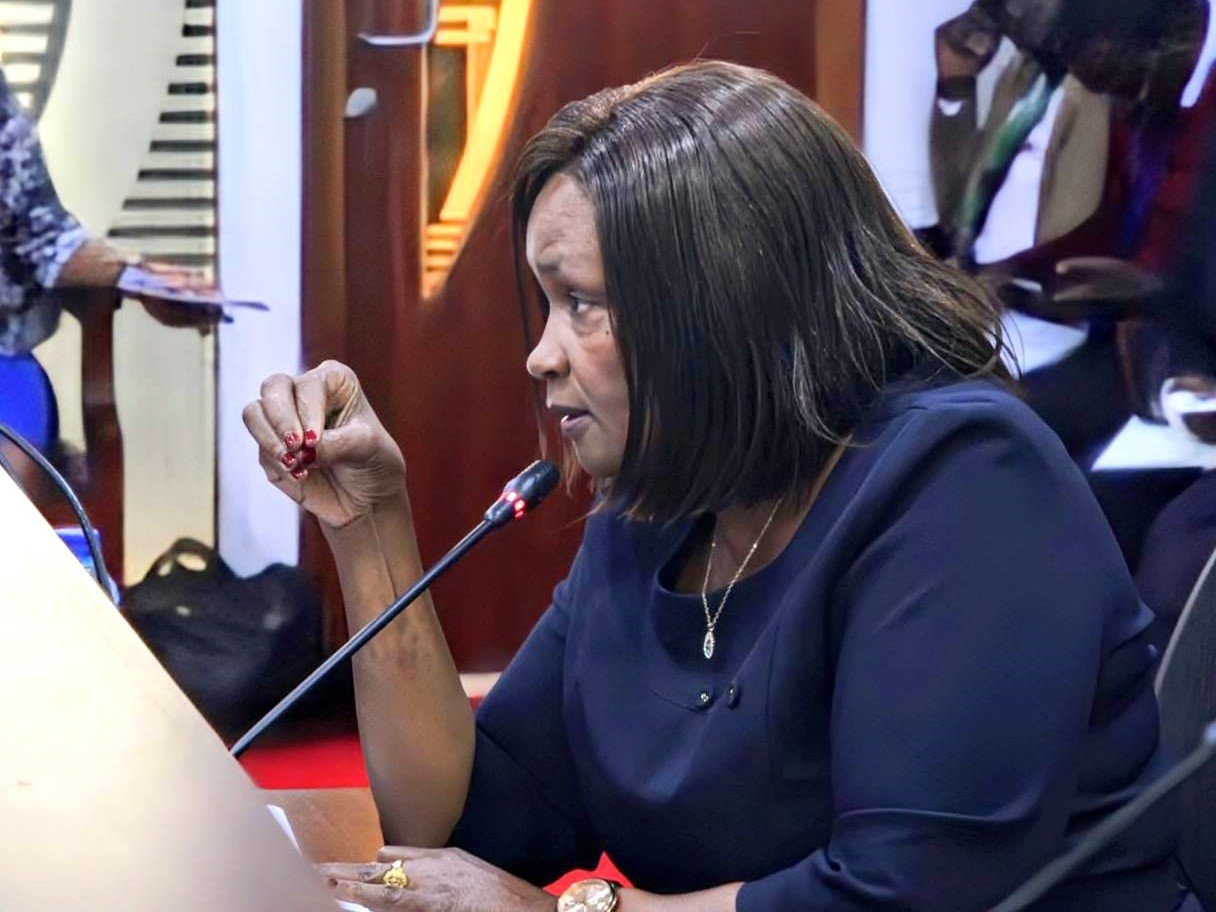
The Teachers Service Commission (TSC) has appealed to Parliament for an additional Ksh12.7 billion to bridge a funding gap threatening teachers’ medical insurance benefits, statutory covers, and key administrative obligations.
The request was presented before the National Assembly’s Budget and Appropriations Committee (BAC), chaired by Alego Usonga MP Samuel Atandi, during deliberations on the 2026/27 budget estimates.
The House Committee on Education, led by Tinderet MP Julius Melly, also expressed concern over the omission of critical teacher welfare allocations, warning that several statutory obligations remain unfunded.
“The budget for Group Life Insurance, Group Personal Accident Insurance and Work Injury Benefits Act (WIBA) cover for teachers, which requires Ksh5.3 billion, has not been catered for,” said Melly, stressing the importance of safeguarding teachers’ welfare.
According to the TSC, the requested funds will address statutory insurance obligations, historical liabilities and personnel-related expenditures. Of the total amount sought, Ksh5.3 billion is earmarked for Group Life Insurance, Group Personal Accident Insurance and WIBA compliance, while Ksh4.4 billion is required to settle outstanding obligations linked to teachers’ medical cover.
Auditor-General flags JKUAT over Ksh7.1 billion deficit, dormant investments
Speaking during the Committee session, TSC acting Chief Executive Officer Eveleen Mitei explained that although the commission does not have conventional pending bills, it inherited a substantial liability following the expiry of its medical insurance contract with Minet Kenya Limited.
“The commission has no stock of historical pending bills. However, following the expiry of the contract for provision of medical cover for teachers with Minet Kenya Limited on November 30, 2025, an amount of Ksh7.448 billion remained outstanding,” Mitei told the committee.
She added that the commission is also seeking Ksh2.2 billion for acting allowances for school administrators serving in expanded leadership roles, while Ksh800 million will cater for administrative and insurance-related adjustments.
However, Melly while supporting the new medical cover noted that the transition of teachers from private medical insurance to the Social Health Authority (SHA) under the Public Service Medical Fund in December 2025 generated significant savings.
ALSO READ:
Social media exposure linked to rising school unrest, says education committee chair MP Melly
“A saving of Ksh4 billion was identified after the commission adopted SHA in the provision of medical cover for teachers. The savings should be made available by the National Treasury to support the provision of group life cover for teachers,” he said.
The SHA-backed medical scheme currently provides outpatient and inpatient services, dental and optical care, annual medical check-ups, emergency air evacuation, and overseas treatment for teachers, their spouses and up to six dependents.
Meanwhile, the committee were informed that the State Department for Technical and Vocational Education and Training (TVET) is facing an even larger funding crisis, with a projected shortfall of Ksh19.2 billion under the government’s student-centred funding model.
The department requires Ksh28.4 billion to support approximately 523,500 TVET students during the 2026/27 financial year but has been allocated only Ksh9.2 billion by the National Treasury, leaving a substantial financing gap.
Parliament was further informed that the TVET sector is carrying a cumulative funding deficit of Ksh26 billion from the 2024/25 and 2025/26 financial years, raising concerns about the sustainability of plans to increase enrolment to two million learners.
The Education Committee also faulted the department for failing to develop a coordinated student admission and placement strategy, resulting in significant disparities in resource utilisation across institutions.
“There are institutions with excess students requiring additional resources to expand facilities, while others offering similar courses have underutilised resources,” Melly said.
The imbalance has led to overcrowding in some institutions, straining infrastructure and learning facilities, even as well-equipped campuses elsewhere remain underutilised.
To address the problem, the committee has directed the State Department for TVET to conduct a nationwide audit of assets and equipment within six months. The exercise is expected to identify underutilised resources and facilitate their redistribution to institutions experiencing high student enrolment and resource shortages.
By Ochola Victor
You can also follow our social media pages on Twitter: Education News KE and Facebook: Education News Newspaper for timely updates.
>>> Click here to stay up-to-date with trending regional stories
>>> Click here to read more informed opinions on the country’s education landscape