Kenya’s shift to the Competency-Based Education (CBE) system is not just a change in subjects and assessment. It is an attempt to move education away from rote memorisation towards critical thinking, creativity, self-expression and problem-solving.
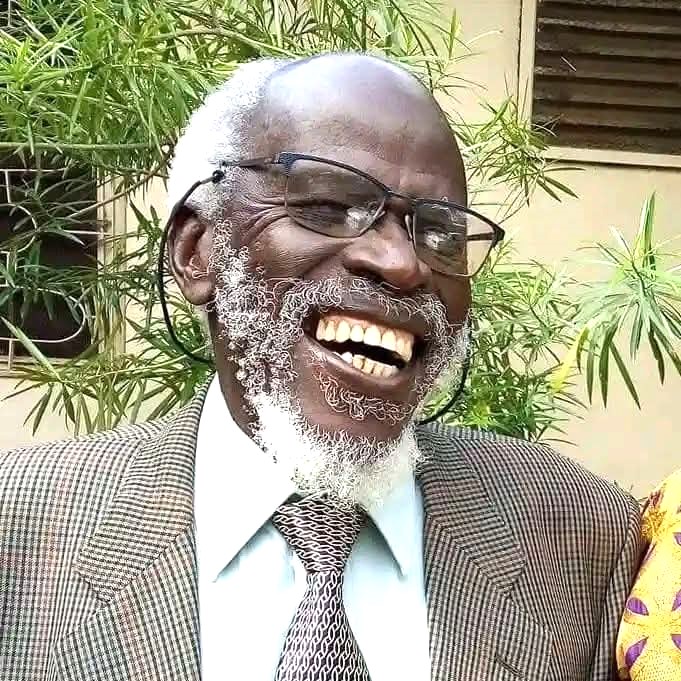
If that transition is to succeed, learners need texts that model exactly those skills. The poetry and essays of Prof. Taban Lo Liyong, particularly pieces like Meditation in Limbo, are essential for this moment.
First, Lo Liyong’s work teaches learners how to think critically about the world around them. Meditation in Limbo does not offer easy answers. Instead, it places the reader in a space of contradiction, where Africa is caught between tradition and modernity, independence and neo-colonial dependence.
CBE emphasises inquiry and analysis, and Lo Liyong’s satirical style forces students to ask: Why are we stuck here? Who benefits from this limbo? What would breaking out look like?
That kind of questioning is the heart of competency-based learning. Students learn to interrogate texts, society and their own assumptions rather than simply recite what the teacher says.
Second, his poetry models the use of language as a tool for innovation and identity. Lo Liyong deliberately twists words, invents terms like “antilegy,” and blends oral and written traditions.
Under CBE, learners are encouraged to communicate creatively in English, Kiswahili and mother tongues, while seeing language as flexible rather than fixed.
Reading Lo Liyong shows students that language can be reworked and used to challenge power. It gives them permission to own English and Kiswahili without losing their African voice, which aligns with CBE’s focus on communication and self-expression.
Citizenship and responsibility
Third, the themes in Meditation in Limbo connect directly to CBE values such as citizenship, responsibility and community service.
Lo Liyong critiques leaders and intellectuals who remain passive while society suffers. He pushes readers to move from complaint to action.
For learners under CBE, who are assessed on values and practical projects, this is important. The poem becomes a starting point for discussions on leadership, ethics and the role of youth in nation-building.
Students can also connect the poem to community service projects, debates and creative presentations required under the curriculum.
Literature as performance
Fourth, Lo Liyong’s style supports CBE’s emphasis on creativity and performance. His work is meant to be heard as much as read.
The rhythm, satire and oral cadence lend themselves to recitation, spoken word and drama in the classroom.
This helps learners develop confidence, public speaking skills and an appreciation of literature as performance rather than merely examination material.
Some may argue that Lo Liyong’s language is too complex or his tone too provocative for secondary school learners. But that is precisely why he is useful.
CBE is not designed to shield learners from difficult ideas. Rather, it aims to equip them to engage with complexity, hold multiple perspectives and articulate their own views.
Teachers can scaffold the reading, unpack the satire and guide learners to see how the poem reflects their own social realities.
In a period when Kenya seeks to produce learners who are innovative, ethical and socially engaged, texts that provoke thought and demand a response are not optional.
READ ALSO: TSC plans new TPAD 3 appraisal system and teacher staffing reforms
Taban Lo Liyong’s Meditation in Limbo and similar works do exactly that. They place learners in the space of questioning, creativity and responsibility that CBE seeks to nurture.
For that reason, his poetry is not a relic of the 8-4-4 era. It is a valuable resource for the transition that CBE demands.
By Enock Okongó
You can also follow our social media pages on Twitter: Education News KE and Facebook: Education News Newspaper for timely updates.
>>> Click here to stay up-to-date with trending regional stories
>>> Click here to read more informed opinions on the country’s education landscape