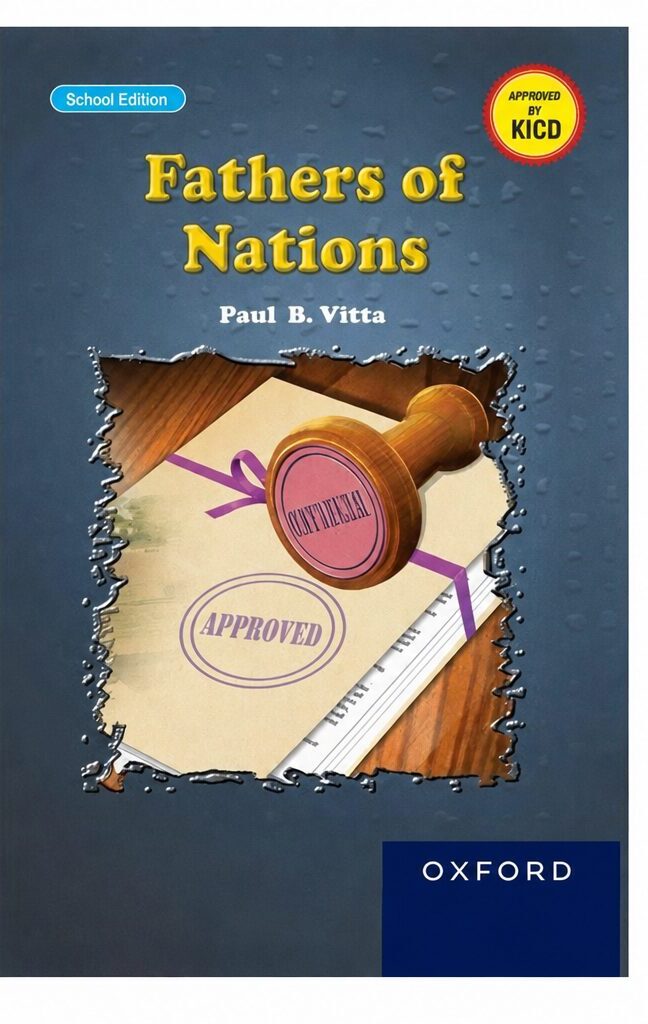
Paul B. Vitta’s Fathers of Nations is a political novel that examines Africa’s post-independence struggles through the lives of four strangers drawn from different regions of the continent. Professor Karanja Kimani from Kenya, Ngobile Melusi from Zimbabwe, Pastor Chineke Chiamaka from Nigeria, and Engineer Seif Tahir from Libya are not ordinary travellers brought together by coincidence.
They are symbolic representations of Africa’s intellectuals, freedom fighters, religious reformers, and professionals whose dreams collide with corruption, authoritarianism, tribalism, and failed governance.
Each of these four men carries a painful personal history. Before becoming critics of their governments, they were patriots who believed deeply in national progress. Their victories gave them hope. Their predicaments shattered that hope. Their individual stories become a reflection of Africa’s larger political journey—one marked by promise, disappointment, and an enduring search for renewal.
Professor Karanja Kimani represents East Africa’s intellectual class. An accomplished scholar attached to the Institute of Development Studies at the University of Nairobi, Kimani embodies education, meritocracy, and national service. He believes education is the foundation of societal transformation and dedicates his life to scholarship and research.
Initially, his life reflects stability and achievement. He builds an admirable academic career and establishes a family with his wife Asiya Omondi. Together, they have a daughter named Tuni. Kimani represents the African professional who believes that integrity, hard work, and education naturally lead to success.
However, his optimism gradually collapses under painful realities.
The first blow comes through betrayal within his family. His wife abandons him for Newborn Walomu, a former colleague who abandons academia and enters politics. Walomu rises quickly through political connections and questionable wealth accumulation. Asiya’s decision to leave Kimani for Walomu symbolizes a society increasingly rewarding material success rather than integrity and intellectual contribution.
ALSO READ:
The Samaritan: A bold Kenyan play that pits tech-driven justice against corrupt power
The second tragedy proves even more devastating. Kimani loses his daughter Tuni in a road accident. The loss plunges him into profound emotional pain. Beyond personal grief, the tragedy exposes failures in governance and public systems that citizens increasingly endure.
His final break with government emerges after confronting the political establishment represented by Walomu. Rather than protecting merit and justice, state institutions shield corrupt individuals while undermining honest citizens. Kimani becomes professionally marginalized and increasingly disillusioned. He begins questioning why African governments reward corruption while neglecting competence and integrity.
Through Kimani, Vitta explores how African intellectuals often find themselves sidelined by political systems that value patronage over merit.
Ngobile Melusi represents Southern Africa’s liberation fighters whose sacrifices during independence struggles are later forgotten by post-colonial governments. A Zimbabwean nationalist and freedom fighter, Melusi participates actively in the liberation movement with the conviction that independence will usher in justice, equality, and prosperity.
Like many liberation veterans, Melusi believes freedom will transform society and restore dignity to citizens who endured colonial oppression. He sacrifices deeply for his country’s future.
Unfortunately, independence brings disappointment rather than liberation.
The new leadership gradually abandons the ideals that inspired the liberation struggle. Ethnic politics emerge. Tribal favouritism replaces national unity. Despite his contribution to independence, Melusi finds himself politically excluded because he belongs to the Ndebele community rather than the dominant political ethnic grouping.
His disillusionment deepens as less qualified individuals receive opportunities based on political loyalty and ethnic identity rather than merit.
The greatest tragedy strikes when ethnic violence erupts. Government security forces target communities viewed as politically inconvenient. Melusi loses his wife, Ziliza, during politically instigated violence. The pain of losing his life partner destroys his faith in the government he once fought to establish.
ALSO READ:
The wolf within: Why self-awareness is the key to defeating doubt
He realizes that independence alone does not guarantee justice. Former liberation heroes have become oppressors themselves.
Melusi’s fallout with government stems from betrayal. He fought colonial domination expecting freedom. Instead, he witnesses the rise of a political class that replicates oppression under African leadership.
His story mirrors the frustrations experienced across many post-independence African societies where liberation promises remain unfulfilled decades later.
Pastor Chineke Chiamaka symbolizes West Africa’s moral voice. A respected Nigerian pastor serving at the Church Inside Africa, Chiamaka believes spiritual leadership carries responsibility beyond religious rituals. He believes faith institutions should challenge injustice and defend vulnerable citizens.
His ministry earns respect because he courageously addresses corruption, abuse of office, and poor governance. Unlike religious leaders who align themselves with political elites for personal benefit, Chiamaka chooses integrity.
His popularity grows because ordinary citizens identify with his message of accountability and justice.
However, governments uncomfortable with criticism begin viewing him as a threat.
Authorities target him through intimidation, harassment, and imprisonment. Government agencies interfere with his ministry and restrict his ability to preach. His calls for accountability are interpreted as political rebellion.
Rather than addressing corruption concerns, leadership focuses on silencing critics.
Chiamaka falls out with government because he refuses compromise. He believes leadership should serve citizens rather than exploit them. His moral convictions place him in direct conflict with leaders unwilling to tolerate scrutiny.
Through Chiamaka, Vitta highlights a recurring African political problem—the tendency of governments to suppress criticism rather than embrace accountability.
Engineer Seif Tahir represents North Africa’s educated professionals whose patriotism encounters political betrayal. A Libyan engineer formerly employed by the Ministry of Defence, Tahir believes technical expertise and national service can contribute significantly to development.
Having studied abroad, he returns home determined to apply his knowledge toward national progress. His professional competence earns him recognition and government support.
Initially, he experiences success.
ALSO READ: Tenwek senior school set to allow Arsenal anthem during principal’s talk
He becomes associated with an ambitious national initiative known as “Fist of Allah,” reflecting both patriotism and optimism about Libya’s future. Like many highly educated professionals, Tahir believes competence and dedication will secure long-term fulfilment.
However, changing political priorities quickly expose institutional instability.
Government support disappears. Political interests shift. Systems he trusted abandon him.
His personal struggles deepen through painful experiences involving Rahma Mahmoud and legal complications that leave him emotionally wounded and psychologically troubled.
Tahir becomes increasingly disillusioned by leadership structures that prioritize political expediency over competence and loyalty.
His fallout with government emerges from betrayal by institutions he once served faithfully.
Collectively, the four strangers symbolize Africa’s wounded idealists—people who believed in education, liberation, faith, professionalism, and national service but encountered systems corrupted by greed, tribalism, authoritarianism, and betrayal.
Paul B. Vitta uses their stories to ask difficult but necessary questions: Why do governments betray citizens who sacrifice most? Why does leadership often drift away from national ideals? And perhaps most importantly, can Africa reclaim the dreams that inspired independence?
In Fathers of Nations, the answer lies not in surrendering to disappointment but in confronting injustice courageously and rebuilding societies anchored on integrity, accountability, and visionary leadership.
By Ashford Kimani
Ashford teaches English and Literature in Gatundu North Sub-county and serves as Dean of Studies
You can also follow our social media pages on Twitter: Education News KE and Facebook: Education News Newspaper for timely updates.
>>> Click here to stay up-to-date with trending regional stories
>>> Click here to read more informed opinions on the country’s education landscape