Early Childhood Development Education (ECDE) is not a supporting stage of learning. It is the foundation itself. Every academic journey — whether in primary school, Junior Secondary School, or Senior School — rests entirely on what is built during these early years. If the foundation is weak, everything constructed above it becomes unstable, no matter how much investment is made later.
This is where education begins in its most critical and formative sense. Before a child interacts with formal subjects such as mathematics, science, or language structure, they first learn how to learn. ECDE shapes attention, curiosity, discipline, communication, emotional stability, and social interaction. It builds the habits of listening, sharing, responding, and thinking — skills that determine how successfully a learner progresses through the entire education system.
A strong ECDE system produces learners who enter primary school already prepared. They can recognise letters, understand basic numbers, follow instructions, and participate confidently in classroom activities. Teachers at higher levels are then able to build knowledge progressively rather than constantly repairing foundational gaps. This creates an efficient, stable, and productive education pipeline.
But when ECDE is weak, the consequences do not remain at that level. They appear later in primary school, often in Grade 2, Grade 4, and beyond, where learners struggle with basic literacy, comprehension, and numeracy. Teachers are forced into constant remediation instead of progression, and the system ends up fixing problems that should never have existed in the first place. By then, the cost of repair is much higher than the cost of prevention would have been.
This is why ECDE cannot be treated as an optional or secondary component of education. It is the core. Any serious education system must invest most heavily at the earliest stage because that is where the highest returns are achieved and where failure becomes most costly.
Yet despite this reality, ECDE remains structurally underfunded and unevenly supported. School capitation frameworks in many systems are largely designed around primary education, Junior Secondary School (JSS), and Senior School levels. ECDE, in contrast, is often partially integrated, inconsistently funded, or treated as an extension of primary schooling rather than a distinct and foundational level of education.
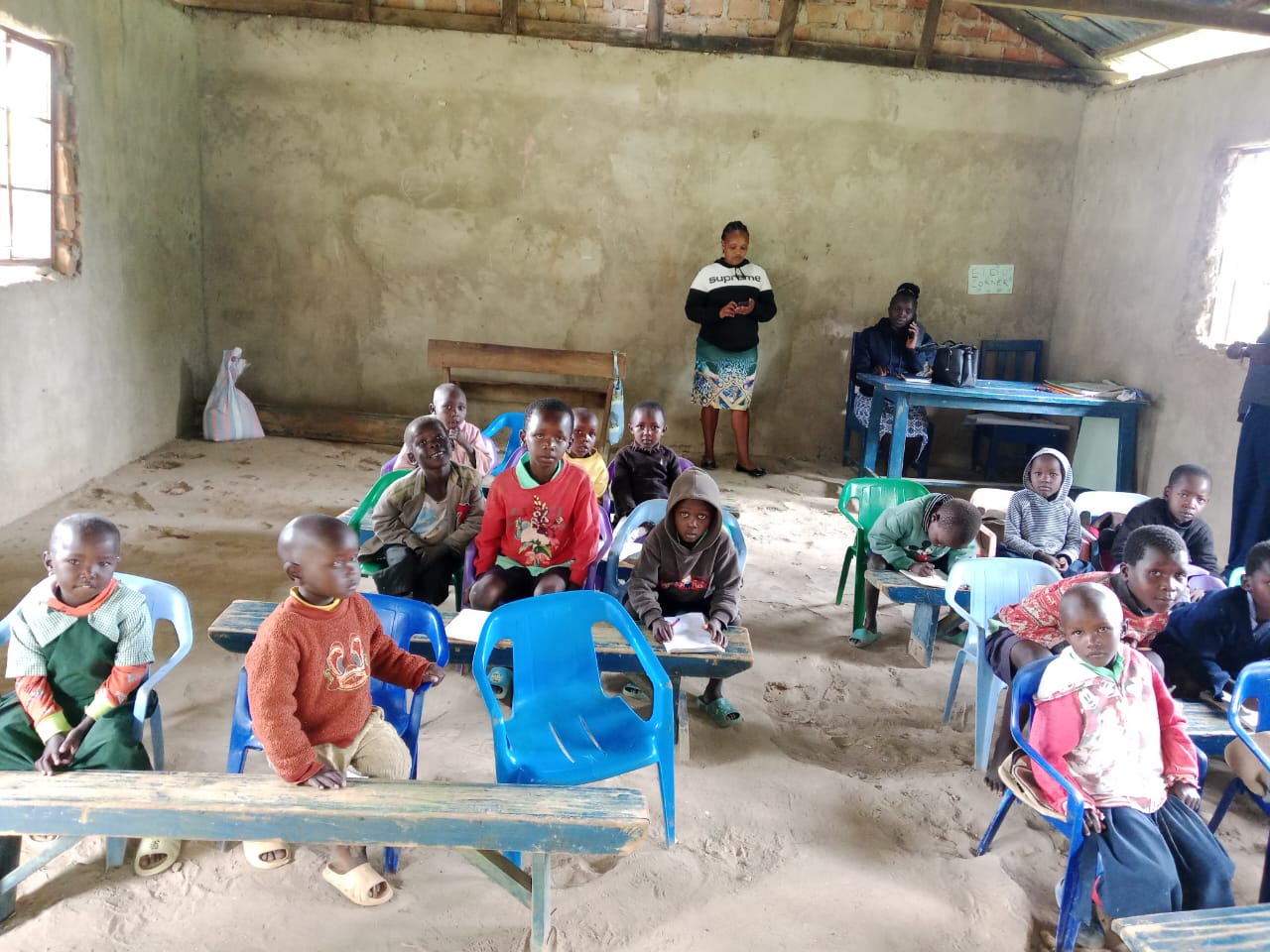
This structural gap becomes even more visible when one examines how ECDE actually functions on the ground. Many ECDE centres operate independently without the shared infrastructure of primary schools. Others are attached to primary schools but still suffer from financial neglect or unclear budgeting structures. In both cases, ECDE remains the most vulnerable level in the education chain.
These centres face daily operational challenges that go far beyond teaching. They must manage security, sanitation, feeding programmes, water supply, learning materials, and facility maintenance. Yet the funding available for these essential services is often insufficient, delayed, or unclear. Support staff, such as cooks, cleaners, and security personnel, are frequently underfunded or supported through irregular and informal arrangements.
Teachers at ECDE level are therefore expected to deliver high-quality education in environments where the basic conditions for learning are unstable. This creates a system where commitment is high, but structural support is weak. The result is inconsistency in learning outcomes and deep inequality between different ECDE centres.
At the centre of this challenge lies a fundamental question that is rarely answered clearly: How do ECDE centres actually pay their daily operational bills?
The reality is not a single structured system but a fragmented survival economy made up of multiple overlapping mechanisms.
One of the most common mechanisms is parental contribution systems. Where government funding is insufficient or delayed, parents are asked to contribute towards operational needs such as feeding programmes, minor repairs, or basic supplies. These contributions may be termly or monthly, but they are often irregular and depend heavily on household income levels. In low-income communities, this system becomes unstable and unsustainable, creating gaps in service delivery.
Another mechanism is shared funding within primary school structures, particularly in integrated institutions. In such cases, ECDE operations are indirectly supported through the primary school’s general account. Resources such as kitchens, maintenance budgets, and sometimes security services are shared across levels. While this provides temporary relief, it also creates internal competition for resources, where ECDE must compete with higher levels that are often prioritized due to exam-oriented pressures.
There are also county-level allocations since ECDE is a devolved function in many governance systems. Some counties provide funding for ECDE support staff, infrastructure development, or learning materials. However, these allocations are often inconsistent, delayed, or insufficient to meet the full operational needs of ECDE centres. This unpredictability makes long-term planning extremely difficult for school administrators.
In rural and standalone ECDE centres, another layer of financing exists in the form of community-based support systems. Communities contribute labour, food, or informal financial assistance. Cooks may be recruited locally and paid through pooled contributions. Security may be handled through community arrangements or shared responsibilities. While this reflects strong community ownership and participation, it is not a stable or formal financing model.
Some schools attempt internal revenue generation, such as small agricultural projects or school-based income activities, to support ECDE operations. However, these initiatives are limited in scale and cannot reliably cover recurring costs such as salaries, feeding programmes, sanitation, and infrastructure maintenance.
What all these mechanisms reveal is a deeper structural reality: ECDE financing is not fully institutionalised. It survives through improvisation rather than structured funding systems.
This is the hidden survival economy of early childhood education. It is a system where ECDE centres function not because funding is guaranteed, but because schools, teachers, parents, and communities continuously fill the gaps left by formal financing structures.
This raises a serious policy contradiction. ECDE is widely recognised as the foundation of learning, yet its operational survival depends on uncertain and fragmented funding arrangements. The most important stage of education is therefore also the least financially stable.
This instability is most visible in daily operations. The payment of cooks, the provision of meals, the maintenance of sanitation, the security of learners, and the availability of learning materials are all essential for effective ECDE delivery. These are not optional services; they are the basic conditions required for learning at the early childhood level. Without them, even the best curriculum cannot be effectively implemented.
The consequences are predictable. Where funding is unstable, feeding programmes become inconsistent. Where cooks are not properly paid, meal preparation becomes irregular. Where security is weak, learner safety is compromised. Where sanitation is poor, health risks increase. And when learning materials are insufficient, cognitive development slows.
To correct this, ECDE financing must move from survival-based improvisation to structured, predictable systems.
The first step is full recognition and integration of ECDE into national capitation frameworks so that learners are properly counted and funded. A system that does not fully count ECDE cannot fully support it.
The second step is direct capitation to school accounts. ECDE cannot function effectively under delayed or multi-layered funding systems because its needs are immediate and daily. Direct disbursement ensures that funds reach the point of learning without distortion, delay, or diversion through administrative layers.
However, direct funding alone is not sufficient. It must be supported by an internal financial structure within schools. ECDE funds must be clearly separated from general school budgets to prevent absorption into competing priorities.
A practical structure involves two distinct ECDE accounts within school systems:
The tuition account, which supports learning activities such as teaching materials, curriculum support, learning aids, and teacher development.
The operations account supports essential services such as cooks’ salaries, feeding programmes, security, sanitation, water supply, cleaning materials, and facility maintenance.
This separation introduces clarity, accountability, and protection of ECDE resources. Every allocation becomes traceable and purpose-driven.
At the governance level, ECDE must also be fully ring-fenced within county budgets as a devolved function. Counties should handle operational funding, staffing support, and infrastructure maintenance. However, the central government must provide supplementary funding to ensure equity across regions. Without this dual system, ECDE quality will continue to vary widely based on geographic and economic differences.
READ ALSO: Migori ECDE teachers reject online claims of Ksh4,000 pay, clarify salary structure
Ultimately, ECDE is not just the beginning of education — it is the most sensitive and most important stage of the entire system. It determines whether learners will struggle or succeed in later years. It determines whether teachers will build knowledge or constantly repair it. It determines whether the education system is stable or fragile.
As long as ECDE continues to rely on survival-based financing rather than structured, predictable funding, the foundation of education will remain unstable.
And no system can rise higher than the strength of its foundation.
By Hillary Muhalya
You can also follow our social media pages on Twitter: Education News KE and Facebook: Education News Newspaper for timely updates.
>>> Click here to stay up-to-date with trending regional stories
>>> Click here to read more informed opinions on the country’s education landscape