There is a silent contradiction embedded deep within modern education systems, one that rarely gets openly discussed but is visible in everyday life. Schools continue to produce high achievers — A+ students, top scorers and academic champions who glide through examinations with remarkable precision.
Yet, when some of these same learners step into real life, a different story begins to unfold. The confidence of academic excellence does not always translate into the confidence required to navigate work, relationships, responsibility and uncertainty. This is not a question of intelligence. It is a question of preparedness for a world that does not behave like an examination paper.
At the centre of this paradox lies a fundamental truth: school and life operate on different rules.
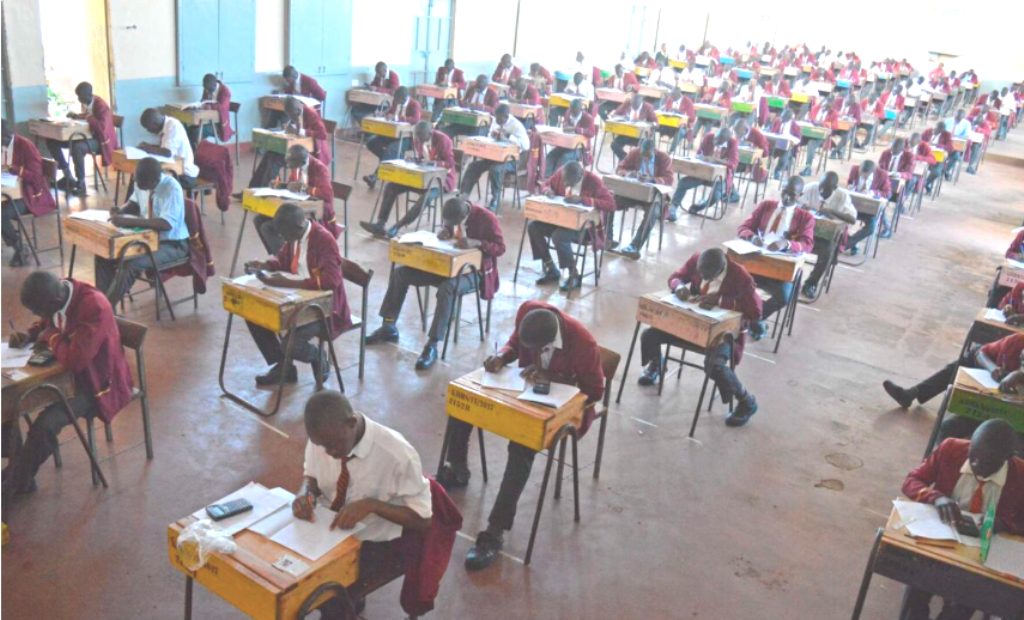
In school, success is largely built around recall and reproduction. Learners are rewarded for remembering what has been taught, repeating definitions accurately, applying familiar formulas in predictable contexts and presenting answers that align with marking schemes. The entire system is structured, guided and highly controlled. There is a syllabus that defines what must be learned, a timetable that dictates when learning happens and an examination framework that determines success or failure. In such an environment, learners quickly understand that performance is about accuracy within boundaries.
Life, however, does not function within boundaries. It does not provide options A, B, C or D. It does not come with revision notes, leaked papers or marking schemes. Life presents questions without warning, problems without structure and challenges that rarely resemble anything previously encountered. It demands interpretation, judgement, creativity and adaptability. This shift — from structured answers to uncertain problems — is where many academically strong learners begin to struggle.
A student may perform exceptionally well in mathematics by mastering formulas and practising repeated patterns, yet struggle when required to apply the same logical thinking in managing personal finances or making business decisions. The issue is not inability; it is the difference between knowing a concept and using it in unpredictable environments. Academic systems often emphasise correctness within known patterns, while life rewards flexibility in unknown situations.
Examinations themselves contribute to this gap. They are designed to test knowledge under controlled conditions, within strict time limits and often under significant pressure. Learners are trained to think quickly, recall accurately and present structured responses. This creates a culture of performance rather than deep understanding. Many learners become skilled at predicting exam patterns, identifying likely questions and mastering answer structures that maximise marks. While this approach produces excellent results in school, it does not always prepare them for environments where there are no patterns to follow.
Life is slow, uncertain and often messy. Problems do not arrive in neatly arranged sections. Decisions are rarely multiple choice. Instead, individuals are required to sit with ambiguity, evaluate incomplete information and make decisions without guaranteed outcomes. Learners who have been trained primarily for speed and correctness may find this transition difficult, not because they lack intelligence, but because they were not trained for uncertainty.
Another critical factor is the fear of mistakes embedded in many education systems. In school, mistakes are often penalised. Wrong answers lead to lost marks, and failure is recorded in performance reports. Over time, learners begin to associate mistakes with negative consequences rather than learning opportunities. This creates a mindset where avoiding errors becomes more important than exploring possibilities.
Yet in real life, mistakes are not only unavoidable — they are essential. Every meaningful growth process involves trial, error, correction and adjustment. Entrepreneurs fail before they succeed. Professionals make errors before they gain expertise. Leaders stumble before they develop clarity. In this context, the ability to recover from failure becomes more valuable than the ability to avoid it. Learners who have been conditioned to fear mistakes may struggle to take risks, make decisions under pressure or recover quickly from setbacks.
There is also a significant gap in life skills education. Many learners complete formal education with strong academic qualifications but limited exposure to practical skills such as financial literacy, emotional regulation, communication under pressure, negotiation, time management and conflict resolution. These are not secondary skills in the real world; they are foundational. Without them, academic success remains incomplete.
A learner may excel in examinations but struggle to manage income responsibly, handle workplace pressure or navigate interpersonal relationships. This disconnect reveals a deeper issue: education systems often prioritize cognitive achievement over practical competence. As a result, learners leave school intellectually prepared but practically underprepared.
The structure of schooling itself also contributes to this challenge. School environments are highly organised. Learners operate within strict schedules, guided lessons and constant supervision. Every activity is planned, and every step is monitored. This structure provides clarity and stability, which is necessary for learning. However, it can also limit the development of independence.
Life does not offer such structure. There are no bells to signal transitions, no teachers to provide constant direction and no predefined paths to follow. Individuals must learn to self-direct, self-regulate and self-motivate. When learners move from a highly structured environment to an unstructured world, some experience difficulty adjusting, not due to lack of ability, but due to lack of exposure to independence.
Modern technology adds another layer to this challenge. Social media platforms and digital environments have reshaped attention spans and learning habits. Learners are increasingly accustomed to rapid information, short bursts of engagement and constant stimulation. However, real-life problem solving requires sustained attention, patience and deep focus. This mismatch can lead to individuals who are quick to consume information but slower to process complex challenges.
Another overlooked dimension is how failure is taught — or rather, not taught. In many cases, failure is treated as something to avoid rather than something to learn from. Yet in real life, failure is a constant companion of progress. The difference between those who succeed and those who struggle is often not the presence of failure, but the response to it. Those who adapt, reflect and continue tend to grow stronger over time. Those who fear failure may become hesitant, avoiding challenges that could lead to growth.
At the heart of this issue is how success is defined. If success is measured purely by academic performance, then education will naturally produce individuals who excel in examinations. However, if success includes adaptability, creativity, emotional intelligence, resilience, leadership and problem-solving ability, then the current system reveals its limitations. A narrow definition of success produces a narrow form of preparation.
The workplace reinforces this reality. Employers are not concerned with examination scores alone. They are interested in problem-solving ability, teamwork, communication, reliability and adaptability. They value individuals who can respond to challenges, work under pressure and deliver results in unpredictable environments. This is where many academically strong individuals encounter difficulty — not because they lack intelligence, but because the skills required in the workplace extend beyond academic excellence.
This does not diminish the importance of education. Academic success remains a powerful foundation. It opens doors, builds knowledge and develops discipline. However, it is not sufficient on its own. Education must evolve to reflect the realities of life beyond school.
Bridging this gap requires a shift in approach. Learners need more exposure to real-world problem solving, practical decision-making, collaborative tasks and experiential learning. They need opportunities to fail safely, reflect on outcomes and develop resilience. They need environments that encourage critical thinking, creativity and independence alongside academic achievement.
When education begins to integrate these dimensions, learners do not just become exam performers — they become capable individuals who can navigate complexity, uncertainty and responsibility.
Ultimately, the greatest misunderstanding in education is the belief that examinations are the final measure of intelligence. They are not. They are only one stage in a much larger process of development.
Life is the real examination. It is longer, less predictable and far more demanding than any classroom test. It evaluates not only what one knows, but how one thinks, adapts and responds to challenges.
READ ALSO: Meet the Principal who produces A students wherever she goes
In that examination, success does not belong solely to those who achieved the highest grades. It belongs to those who learned how to think independently, adapt to change, recover from failure and persist in the face of difficulty.
Until education fully embraces this truth, the paradox will remain visible: brilliant students in classrooms who struggle to translate their academic excellence into the complexity of real life.
By Hillary Muhalya
You can also follow our social media pages on Twitter: Education News KE and Facebook: Education News Newspaper for timely updates.
>>> Click here to stay up-to-date with trending regional stories
>>> Click here to read more informed opinions on the country’s education landscape