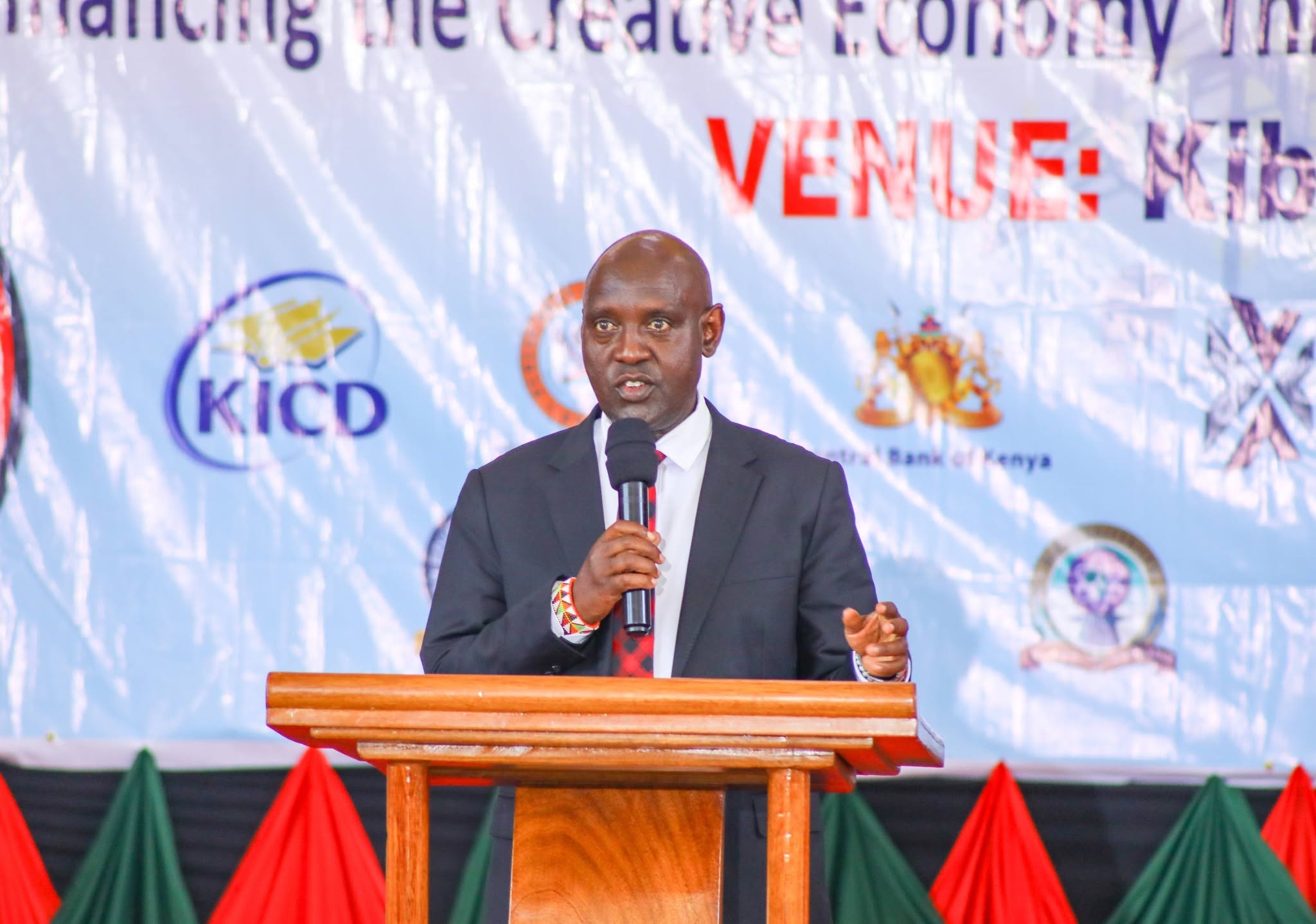
The struggle for the soul of the Kenya National Union of Teachers has, over the years, distilled into a compelling duel between two men whose lives mirror the very evolution of teacher unionism in Kenya. It is not merely a contest of personalities, nor is it a simple electoral exercise. It is, in essence, a referendum on history, ideology, temperament, and the future direction of a union that has long stood as the voice of the Kenyan teacher.
At the center of this defining moment stand Collins Oyuu and Wilson Sossion two seasoned educators, two unionists forged in different fires, yet bound by a shared past and a contested future. They are contemporaries in age, both in their mid-to-late fifties, but they diverge sharply in philosophy, style, and the rhythm of their leadership. One speaks in measured tones of order and structure, the other in the urgent cadence of resistance and pressure. Between them lies the question that now grips KNUT: should the union steady itself or rise again in defiance?
Collins Oyuu’s story is one of patience refined into strategy. Born in the late 1960s in Siaya County, his journey began in the modest setting of Ruma Primary School, where he worked as a classroom teacher. There was nothing theatrical about his entry into unionism no dramatic confrontations, no instant prominence. Instead, his path was marked by quiet immersion, a deliberate and almost methodical climb through the ranks that would, over time, shape his identity as both a leader and a custodian of institutional order.
RELATED:
Oyuu bullish of retaining KNUT leadership despite court suspending polls
His introduction to KNUT leadership in 1996 as a branch executive committee member was the first step in a long ascent. He would go on to serve as Bondo Branch Chairman, later as Rarieda Branch Secretary, and eventually secure a place on the national steering committee. Each position deepened his familiarity with the union’s internal mechanics, its rules, its politics, its delicate balances. By the time he rose to the office of Secretary-General in 2021, succeeding Wilson Sossion, Oyuu was not stepping into leadership as an outsider; he was assuming control of a system he had spent decades mastering.
He inherited a union that had been stretched by years of confrontation loud, visible, and at times powerful, but also internally strained and externally embattled. The era preceding his leadership had been defined by high-stakes standoffs with the Teachers Service Commission, prolonged strikes, and an almost permanent state of agitation. While this had elevated KNUT’s visibility, it had also exposed its vulnerabilities.
ALSO READ:
Court halts KNUT national elections at Tom Mboya Labour College
Oyuu’s response was neither dramatic nor loud. It was deliberate. He chose to lower the temperature. Under his leadership, KNUT began to recalibrate its approach, shifting from confrontation to engagement, from spectacle to structure. Negotiations with the Teachers Service Commission took on a more procedural tone. The rhetoric softened. The union, in many ways, began to breathe again.
To his supporters, this shift represented a necessary return to institutional sanity. They argue that unions, like all enduring institutions, must be built not only on passion but on process. In Oyuu, they see a stabilizer leader who understands that lasting gains are often secured through persistence, discipline, and strategic engagement rather than constant confrontation.
ALSO READ:
MoE orders TVET institutions to act on unregistered trainers
Yet this very strength has become the core of his criticism. For many teachers, particularly those who lived through the more assertive years of KNUT, the current calm feels like a dilution of power. They argue that the union has grown quieter, less feared, less capable of exerting pressure when it matters most. In their view, negotiation without leverage risks becoming concession. Stability, they caution, must not slide into passivity.
If Oyuu embodies calm, Wilson Sossion embodies fire. Born in 1969, Sossion’s journey also began in the classroom, but it quickly became clear that his ambitions extended beyond it. A graduate of Egerton University, where he earned both a Bachelor of Arts in Education and a master’s degree in economics, he entered unionism with a blend of intellectual grounding and raw political instinct.
From his early days teaching at Tenwek High School, Sossion displayed a presence that was difficult to ignore. His rise within KNUT was swift, propelled by a combination of charisma, conviction, and a willingness to confront authority head-on. By 2013, he had ascended to the position of Secretary-General, and with that office, he ushered in one of the most dynamic and controversial periods in the union’s history.
Sossion’s tenure was defined by visibility and intensity. He transformed KNUT into a national force, one that commanded attention not only within the education sector but across the broader political landscape. His leadership style was unapologetically confrontational. He believed, deeply, that power conceded nothing without pressure and he was prepared to apply that pressure.
Under his stewardship, KNUT led major nationwide strikes, forcing the government and the Teachers Service Commission to the negotiating table. Teachers saw in him a champion, a leader who spoke their frustrations loudly and acted on them decisively. His background in economics gave weight to his arguments, allowing him to frame teachers’ demands in terms of fiscal justice, inflation, and structural inequality. He did not merely demand better pay—he justified it.
For many, these were the years when KNUT roared.
But fire, while powerful, is rarely without consequence. Sossion’s confrontational approach strained relations with key institutions, particularly the Teachers Service Commission. Prolonged standoffs tested the union’s resilience, and at times, its cohesion. Critics argue that while his leadership delivered visibility and short-term wins, it also exposed KNUT to long-term strain. The union, they say, became too dependent on confrontation, risking isolation in a system that often rewards strategic engagement.
By the time Sossion exited office in 2021 to take up a nominated parliamentary role, KNUT was left in a complex state—energized, yes, but also fatigued. Strong in voice but challenged in structure. It was into this environment that Oyuu stepped, offering not more fire, but a cooling hand.
And now, as the union once again finds itself at a crossroads, these two legacies collide.
This is not simply a contest between Collins Oyuu and Wilson Sossion. It is a confrontation between two philosophies of leadership. Oyuu represents continuity, order, and the belief that institutions are strengthened through stability and process. Sossion represents resurgence, pressure, and the conviction that meaningful change is often forced, not negotiated.
Even when reduced to electoral arithmetic, the contrast remains telling. Oyuu, as the incumbent, carries a measurable advantage. His support is estimated in the range of 55 to 65 percent—anchored in institutional familiarity, delegate networks, and a preference among sections of the union for continuity. He benefits from the quiet strength of structure, from relationships built over decades, and from a system that he understands intimately.
Sossion, on the other hand, commands an estimated 35 to 45 percent base that is passionate, loyal, and deeply rooted in memory. His support may be narrower, but it is intense. It is driven by teachers who remember the days when KNUT’s voice was loud, when its presence was felt, when its demands could not be ignored. Yet his path is complicated by structural and eligibility challenges, as well as a degree of fatigue among those wary of returning to an era of constant confrontation.
What emerges is a race that is anything but predictable. It is not a landslide waiting to happen. It is a delicate balance, shaped by mood, memory, and method. A shift in delegate sentiment, a late surge of momentum, or a decisive structural rule could tilt the outcome in either direction.
For the Kenyan teacher, the stakes are immediate and deeply personal. This is not an abstract debate about leadership styles it is a practical question about outcomes. Should the union prioritize calm negotiation or assertive confrontation? Should it build quietly within the system or challenge it openly?
History suggests that the answer is rarely absolute. Every significant gain in labour movements has been forged in the tension between negotiation and agitation. The negotiator secures the table; the agitator ensures it matters. Remove one, and the balance collapses. Lean too heavily on either, and the system either stagnates or fractures.
In this sense, the story of Collins Oyuu and Wilson Sossion is not just about rivalry it is about balance. It is about the eternal push and pull that defines not only unions, but all movements that seek change within structured systems.
KNUT has lived in both realities. It has known the quiet discipline of structure and the thunder of resistance. It has negotiated and it has fought. It has gained and it has lost. What it has not yet decided is which of these voices should define its next chapter.
And so, the choice now rests with its members.
Not merely to elect a leader, but to choose a direction.
Not simply to recall the past, but to define the future.
Because in the end, this election is not about who Collins Oyuu is, or who Wilson Sossion has been. It is about what KNUT must become in a changing educational and economic landscape.
Should it remain calm or roar again?
The answer, when it comes, will echo far beyond the ballot.
By Hillary Muhalya
You can also follow our social media pages on Twitter: Education News KE and Facebook: Education News Newspaper for timely updates.
>>> Click here to stay up-to-date with trending regional stories
>>> Click here to read more informed opinions on the country’s education landscape