- Hillary Muhalya argues that getting children into classrooms is no longer enough if learning remains weak.
- He says rural learners face deeper disadvantages in foundational skills, staffing, infrastructure and access to learning resources.
- Kenya must prioritise targeted learning recovery to prevent unequal schooling conditions from producing unequal educational opportunities.
Kenya has largely won the first battle of education: getting children into school. The next battle is far more difficult — ensuring that every child who enters a classroom actually learns.
That is the uncomfortable message emerging from the 2026 Status of Junior School Education Report by Usawa Agenda, whose findings expose a widening gap between school attendance, grade progression and actual mastery of foundational skills. The report, cited by The Eastleigh Voice, shows that Kenya cannot measure educational success merely by counting enrolment or celebrating transition from one grade to another.
The most striking warning is that 33 per cent of Grade 7 learners cannot solve a Grade 3-level mathematics problem, while 27 per cent cannot read and comprehend a Grade 3-level English story. About four in 10 Grade 7 learners lack both foundational literacy and numeracy competencies.
But beneath the national average lies an even bigger problem.
Rural Kenya is carrying a heavier learning burden.
About 43 per cent of Grade 7 learners in rural schools lack both foundational literacy and numeracy skills, compared with 36 per cent in urban schools. Public schools also trail private institutions, exposing a learning divide that can no longer be explained simply by individual learner ability.
This changes the entire conversation.
The problem is not simply that some children are struggling with mathematics or reading. The problem is that Kenya is producing unequal learning opportunities within one national education system.
A child in a remote rural school may follow the same curriculum, aspire to the same Senior School pathway and ultimately compete for the same opportunities as a child in a well-resourced urban institution. Yet the two may not be starting from remotely comparable learning environments.
That is the education impasse Kenya must confront.
Unequal learning environments
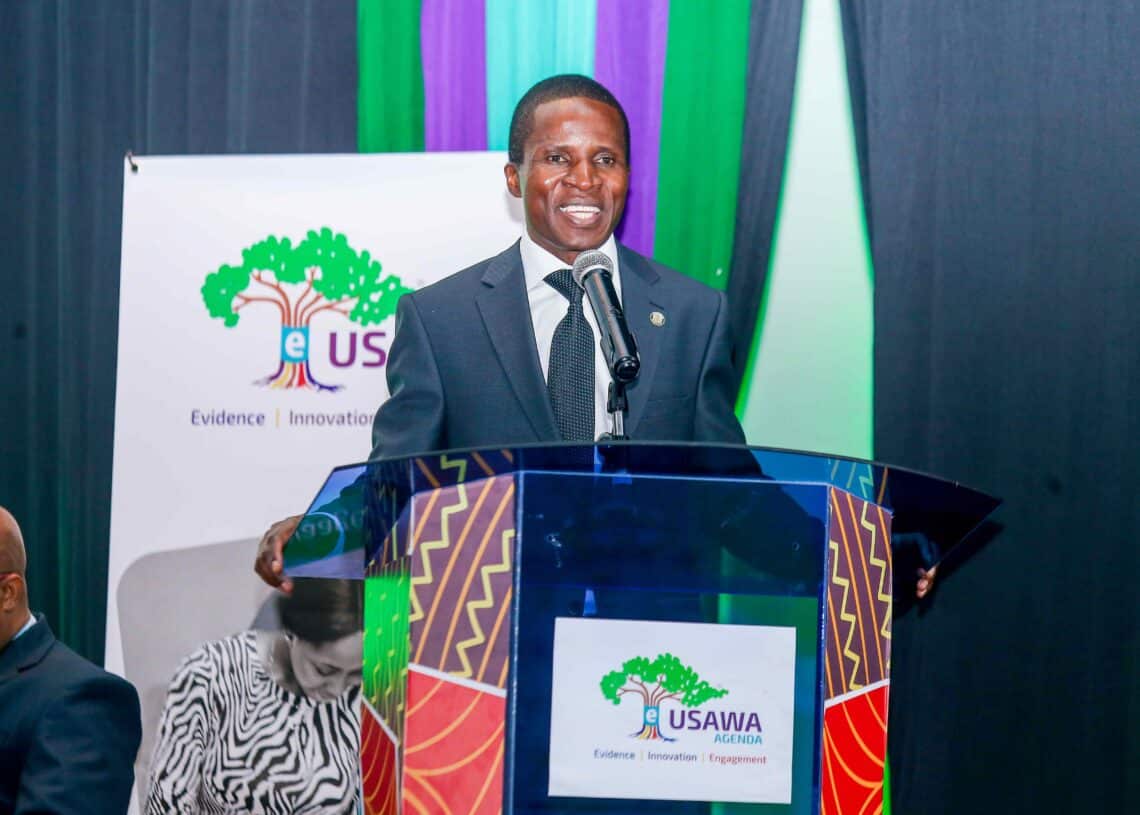
The Usawa Agenda study covered all 47 counties and involved 41,156 households, 1,527 schools and 49,835 learners, including refugee communities. Its scale makes the findings difficult to dismiss as isolated experiences from a handful of schools.
The evidence also exposes major resource disparities.
Only about 27.5 per cent of Junior Schools have functional science laboratories, while approximately 27 per cent have libraries and only about 34 per cent have adequate learning materials. Computers are available to learners in less than half of schools. Rural and public institutions are generally more disadvantaged than urban and private schools.
These figures are supported by reporting on the newly released Usawa Agenda report, which gives the proportions as 27.5 per cent for functional science laboratories, 27 per cent for libraries, 34.3 per cent for adequate learning materials and 46.3 per cent for computers.
Teacher distribution compounds the problem.
Urban Junior Schools average about seven teachers compared with approximately four in rural schools. The result is a fundamental policy question:
Can Kenya demand equal learning outcomes from unequal learning environments?
The answer is no.
The country cannot continually demand that rural schools produce the same results as better-resourced institutions while giving them fewer teachers, weaker infrastructure and fewer learning materials.
This is why the solution must begin with equity rather than equality.
Giving every school exactly the same support does not necessarily create fairness. Schools facing the greatest learning deficits require greater intervention.
Kenya should therefore establish a targeted National Foundational Learning Recovery Programme, with rural, marginalised, ASAL and other disadvantaged schools receiving priority support.
The starting principle should be simple:
Teach the learner from where the learner is — not merely from where the timetable says the learner should be.
Rebuild the foundation
If a Grade 7 learner is functioning at a Grade 3 level in mathematics, the answer is not to continue racing through the Grade 7 syllabus while hoping the gap disappears.
The learner needs structured remediation.
This is not lowering standards.
It is rebuilding the foundation required to meet higher standards.
Grades 7, 8 and 9 should become a period of deliberate learning recovery alongside competency development. Every school should know which learners cannot read with comprehension, which cannot perform foundational mathematical operations and which require targeted support.
Progression should never be allowed to conceal learning failure.
A learner can move from Grade 7 to Grade 8 without necessarily becoming more competent. That is the danger of confusing administrative progression with educational achievement.
The same warning applies to CBE.
Competency-Based Education is ultimately about what learners can do with knowledge. But critical thinking, problem-solving, communication, creativity and application of knowledge cannot flourish where basic reading and numeracy remain weak.
You cannot build higher-order competencies on a broken foundation.
The learning crisis also did not begin in Grade 7.
It started much earlier.
Usawa’s evidence points to the importance of pre-primary participation, household circumstances and parental education in determining foundational learning outcomes. This means the solution cannot be confined to Junior School.
Kenya must move the intervention upstream.
Strengthening ECDE and Grades 1–3 should become a national priority. Teachers at foundational levels require strong preparation in early literacy, language development, numeracy, formative assessment and differentiated instruction.
The country cannot wait until Grade 7 to discover that a child has been struggling for years.
Early detection is cheaper, easier and more humane than late remediation.
But early intervention alone will not solve the current crisis. Thousands of learners are already in Grade 7, 8 and 9 carrying significant learning gaps.
They need immediate support.
That calls for structured literacy and numeracy remediation within Junior School, targeted at actual learner needs rather than simply repeating the normal syllabus.
Assessment must diagnose learning
Assessment must also change.
Kenya does not need assessment merely to rank children.
It needs assessment to diagnose learning.
Every assessment should help answer three questions:
What can the learner do? What can the learner not do? What must the teacher do next?
That is the difference between assessment as bureaucracy and assessment as an instrument of learning recovery.
School leaders must become central to the transformation.
Every Junior School should have a practical academic improvement plan showing foundational learning levels, attendance, teacher shortages, subject-specific weaknesses and progress after intervention.
Headteachers and senior teachers should not merely monitor lesson plans and examination results. They should be able to answer one decisive question:
Which learners in this school are falling behind — and what are we doing about them?
Teacher deployment must equally be recalibrated.
Kenya should undertake school-by-school staffing analysis and prioritise areas where teacher shortages intersect with poverty and poor learning outcomes. Rural schools should not continually lose teachers to better-resourced urban environments.
Teacher professional development must also become more practical.
Teachers need support in remediation, differentiated instruction, formative assessment, foundational literacy, numeracy and CBE pedagogy. Training should equip teachers with classroom solutions rather than simply introducing new policy terminology.
Infrastructure must follow the same logic.
A school without a functional laboratory, library, adequate learning materials or digital resources operates at a disadvantage. The response should therefore target schools according to the severity of their infrastructure and learning deficits.
Technology can help, but it is not a magic wand.
Kenya should stop measuring digital transformation by the number of devices distributed and start measuring it by the number of learners whose learning improves because of those devices.
A computer is a resource. It is not an outcome.
A smart classroom is useful.
But a smart teacher remains indispensable.
Parents and communities have a role
Parents and communities must also become part of the solution.
Where household circumstances influence learning, schools cannot operate in isolation. Parents need practical guidance on supporting reading, homework, numeracy and attendance at home.
Community libraries, reading clubs, mentorship programmes and local learning initiatives can become powerful extensions of the classroom, particularly in disadvantaged areas.
Education financing must also be recalibrated.
The country should consider a Rural and Marginalised Learning Equity Fund that directs additional resources to schools facing the greatest combination of learning deficits, teacher shortages, poverty and infrastructure gaps.
The principle should be straightforward:
The greater the disadvantage, the greater the intervention.
That is genuine educational equity.
Learning must be the destination
Kenya must also rethink what it means to succeed under CBE.
Enrolment matters.
Attendance matters.
Transition matters.
But learning is the destination.
A child can be enrolled and not learn.
A child can attend and not master.
A child can transition and remain unprepared.
That is the central contradiction exposed by the Usawa findings.
Kenya must therefore move from an access-centred education model to a mastery-centred education model.
The new national trajectory should be: ACCESS → ATTENDANCE → FOUNDATIONAL LEARNING → MASTERY → COMPETENCE → PATHWAY → OPPORTUNITY.
That is how the learning impasse can be broken.
The Usawa findings should not become another education report that is launched, debated and eventually forgotten. They should become a national baseline for action.
The message is unmistakable.
Kenya has spent decades asking how to get children into school.
Now it must answer the harder question:
How do we make sure that no child moves through school without learning?
That should become the country’s next education revolution.
Because the real failure is not a child who struggles.
READ ALSO: Parliament Education Committee adopts report on Sossion, Lentoijoni TSC nominations
The real failure is a system that sees the struggle, measures it in a report — and does nothing.
By Hillary Muhalya
Get more stories from our website: Education News
To write to us or offer feedback, you can reach us at: editor@educationnews.co.ke
You can also follow our social media pages on Twitter: Education News KE and Facebook: Education News Newspaper for timely updates.
>>> Click here to stay up-to-date with trending regional stories