- Winnie Odinga reflects on friendships, betrayal and resilience witnessed throughout her father’s political journey.
- She says The Flame of Freedom allows Raila’s thoughts and experiences to speak beyond his lifetime.
- Hillary Muhalya examines how the written word is preserving Raila’s political story for future generations.
Raila Odinga’s political journey taught his daughter Winnie that politics can forge extraordinary friendships, produce painful betrayals and turn yesterday’s brothers into today’s opponents — but the written word can outlive every political alliance.
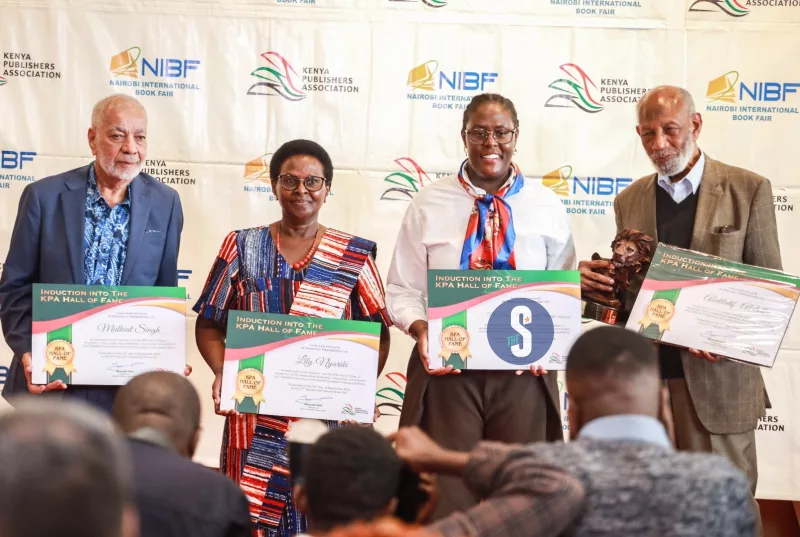
Winnie offered the reflection on Thursday while representing the Odinga family during Raila’s posthumous induction into the Kenya Publishers Association Hall of Fame at the Nairobi International Book Fair.
At the centre of her message was The Flame of Freedom, Raila’s book, which she described as a continuing connection to her late father and his political mind.
“When somebody you love dies, you begin looking for them everywhere,” Winnie said, recalling the photographs, old messages, videos and words that acquire new meaning after death.
Books, however, offer something more enduring, she said: they allow someone who is no longer alive to speak again.
“I can open a page and hear my father’s mind working,” she said.
Raila died on October 15, 2025, aged 80, after a political career spanning more than four decades of Kenya’s multiparty era.
For Winnie, that history was not something she encountered later in archives or textbooks.
She lived it.
She recalled witnessing the struggle for multiparty democracy, meetings, marches, intimidation, arrests and funerals, as well as the years when her father was detained and remained connected to his family through letters that sometimes took months to arrive.
Those experiences shaped her understanding of political life.
She learnt that elections produce both victories and defeats, that political setbacks do not necessarily end a journey and that relationships within politics can change dramatically.
“I knew marvellous friendships,” she said, describing bonds forged during difficult political struggles.
But she also witnessed what she called “glorious betrayal”.
Her most striking lesson was that political loyalties are rarely permanent.
“Your brother can become a sworn enemy,” she said, capturing the dramatic reversals that can occur when political interests and alliances change.
At the same time, she observed that former enemies can eventually become allies.
That fluidity, she suggested, is part of the political world her father navigated for decades.
Yet Raila’s journey also taught her about resilience.
Winnie spoke of a stubborn hope that survived disappointment, betrayal, imprisonment, electoral contests and the passage of time.
For her, that hope remains an important part of what Raila left behind.
Preserving Raila’s voice
But her appearance at the book fair was ultimately about something larger than political alliances.
It was about preserving memory.
Raila’s written account means that Kenyans who never met him can still encounter his thoughts, understand how he viewed the struggles of his generation and examine the political ideals that shaped his life.
Winnie said young Kenyans can use the book to consider whether the Kenya Raila fought for eventually became a reality.
That makes The Flame of Freedom more than a personal memoir. It becomes part of the record through which future generations can examine one of Kenya’s most consequential political careers.
Winnie also urged publishers to continue giving space to difficult ideas and competing perspectives.
Her message was simple: publish people with whom society agrees and those with whom it disagrees.
The appeal speaks to the wider importance of preserving political history through multiple voices.
When politics ends, the written word remains
Rallies eventually end. Posters come down. Governments change. Political alliances shift. Leaders who once appeared permanently divided can eventually sit together, while former allies can find themselves on opposite sides.
But the written word remains.
That is the enduring power Winnie sees in The Flame of Freedom.
It allows Raila to remain part of a conversation he can no longer physically join.
His supporters can read it. His critics can interrogate it. Young Kenyans can discover it. Historians can place it alongside other accounts.
And future generations can decide for themselves what his political journey meant.
READ ALSO:
Politics may change its friendships and enemies, but history keeps the record. In The Flame of Freedom, Winnie sees a way for her father’s voice to remain part of that record long after the political battles that defined his generation have ended.
By Hillary Muhalya
Get more stories from our website: Education News
To write to us or offer feedback, you can reach us at: editor@educationnews.co.ke
You can also follow our social media pages on Twitter: Education News KE and Facebook: Education News Newspaper for timely updates.
>> Click here to stay up-to-date with trending regional stories