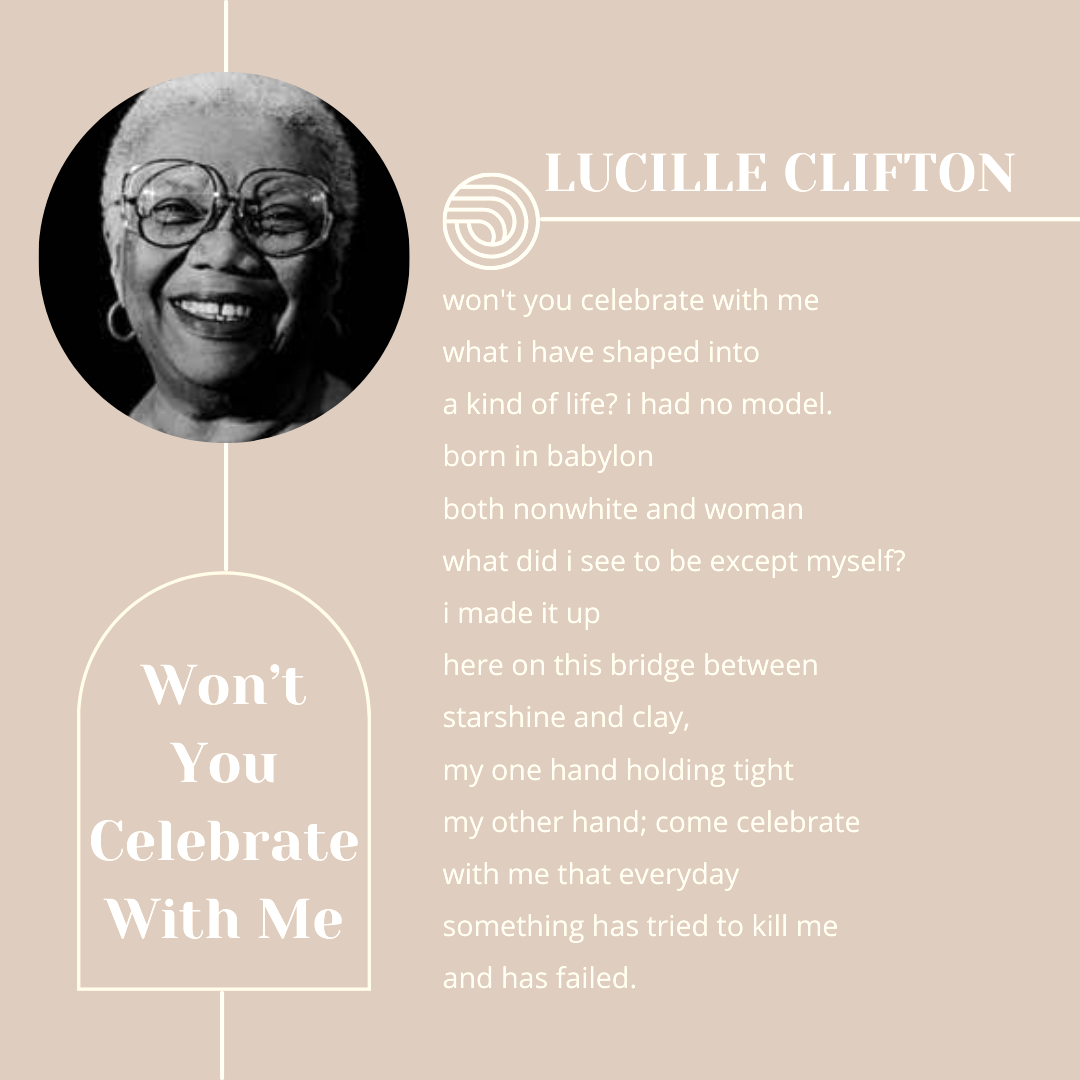
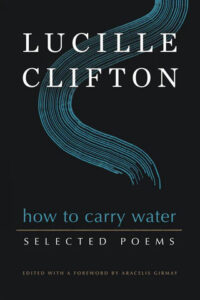
Lucille Clifton’s poem, “won’t you celebrate with me”, stands as one of the most concise yet profoundly layered meditations on identity, survival and self-definition in modern poetry. In just a handful of lines, Clifton constructs a voice that is at once personal and universal, grounded in lived experience yet expansive enough to resonate across cultures, including contemporary Kenyan classrooms navigating questions of identity, equity and resilience.
At its core, the poem is an invitation – “won’t you celebrate with me” – but it is not a casual or superficial celebration. It is a hard-earned acknowledgement of existence forged under pressure. The speaker is not celebrating privilege, inheritance or ease. Instead, she is celebrating the act of making a life where no clear blueprint existed. The line “i had no model” is pivotal. It signals absence – absence of representation, absence of guidance, absence of societal validation and above all – absence of parental care. For Clifton, to be “both nonwhite and woman” is to exist outside dominant narratives, where identity must be constructed rather than inherited.
This idea of self-creation is the intellectual backbone of the poem. When Clifton writes, “What did I see to be except myself?” she articulates a philosophical and psychological turning point. In environments where mirrors are distorted or entirely missing, one must become both reflection and reality. The declaration “I made it up” is therefore not an admission of uncertainty but a statement of agency. It reframes invention as power. In educational contexts, particularly within Kenya’s Competency-Based Curriculum (CBC), this aligns closely with the cultivation of learner autonomy, creativity and self-efficacy. Students are not merely recipients of knowledge; they are active constructors of meaning and identity.
Clifton’s imagery deepens this thematic structure. The “bridge between the starshine and the clay” captures the tension between aspiration and limitation. “Starshine” evokes dreams, possibility, and transcendence, while “clay” grounds the speaker in physical reality, history and even mortality. The bridge becomes a metaphorical space of negotiation – a place where one balances hope against hardship. This duality mirrors the lived experiences of many learners who navigate ambition within constrained socio-economic contexts. It is a reminder that aspiration does not erase struggle; rather, the two coexist.
Hand holding tight
Perhaps the most striking image in the poem is the line “my one hand holding tight/my other hand.” Here, Clifton distils the concept of self-reliance into a visceral, almost tactile form. There is no external saviour, no institutional safety net prominently visible. Survival is internal, sustained by an individual’s capacity to support themselves emotionally, mentally and spiritually. This image carries immense pedagogical value. It challenges learners to consider resilience not as an abstract virtue but as a practised, internal discipline.
The tone of the poem deserves equal attention. Clifton’s use of lowercase letters and unadorned language creates an intimacy that draws the reader in. There is no ornamental excess, no attempt to impress through complexity. Yet beneath this simplicity lies a quiet defiance. The voice is calm but unyielding. It does not shout; it asserts. This stylistic choice is particularly effective in performance settings, where the understated delivery can amplify the emotional weight of the closing lines.
Those final lines – “something has tried to kill me/and has failed” – transform the poem into a declaration of survival. The ambiguity of “something” is deliberate. It could represent systemic oppression, personal hardship, societal exclusion or internal struggle. By leaving it undefined, Clifton universalises the experience. Every reader can project their own adversities onto that “something.” The triumph, therefore, is not in eliminating struggle but in outlasting it. Survival becomes an act of resistance.
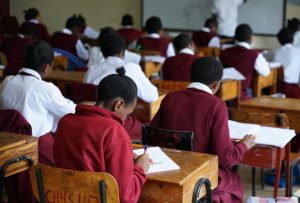
In a Kenyan classroom, this poem can function as more than a literary text; it becomes a tool for reflection and empowerment. Learners can be encouraged to interrogate their own contexts: What models do they have? Where are the gaps? How can they “make it up” in constructive, meaningful ways? Such discussions align with CBC’s emphasis on values such as resilience, integrity, and self-awareness, as well as competencies like critical thinking and communication.
Moreover, the poem lends itself exceptionally well to memorisation and oral performance. Its brevity makes it accessible, while its emotional depth provides ample room for interpretive variation. Students can experiment with pacing, pauses, and tonal shifts to bring out its layered meanings. The opening line can be delivered as an invitation, almost gentle and questioning, while the closing lines can rise into a firm, declarative statement of endurance.
Ultimately, Clifton’s poem endures because it reframes success. It shifts the focus from external validation to internal survival. In a world that ხშირად measures worth through visible achievements, “won’t you celebrate with me” insists that simply continuing to exist, to resist and to create oneself is worthy of recognition. It is a quiet but radical proposition: that survival, in itself, is a form of victory.
For educators and learners alike, this poem offers a powerful lens through which to explore identity, resilience, and the human capacity to shape meaning out of adversity. It is not merely a poem to be read – it is a poem to be lived, performed, and above all, celebrated.
By Ashford Kimani
Ashford teaches English and Literature in Gatundu North Sub-county and serves as Dean of Studies.
You can also follow our social media pages on Twitter: Education News KE and Facebook: Education News Newspaper for timely updates.
>>> Click here to stay up-to-date with trending regional stories
>>> Click here to read more informed opinions on the country’s education landscape
>>> Click here to stay ahead with the latest national news