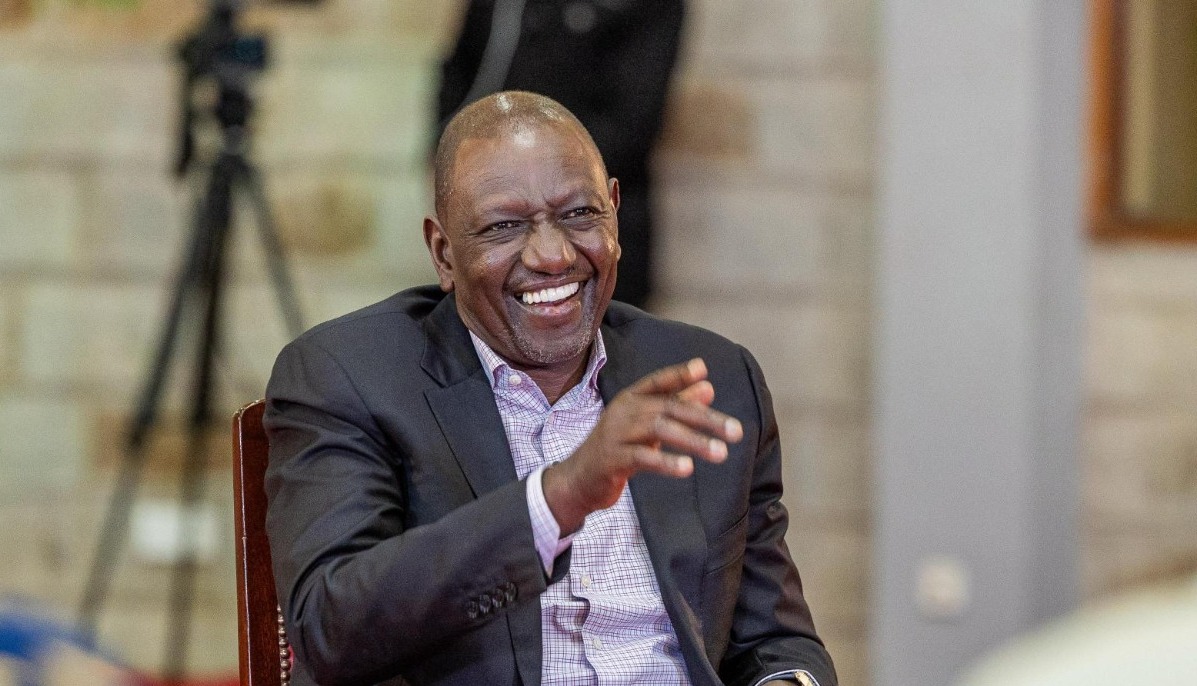
- Hillary Muhalya says strong education institutions need leaders willing to hear uncomfortable but legitimate concerns.
- He maintains that criticism should focus on evidence, procedure and institutional improvement rather than personalities.
- M uhalya says teachers, parents, learners and boards also have a responsibility to raise concerns responsibly.
As Kenyan education institutions grapple with reforms, teacher shortages, financial pressures, learner welfare concerns and growing demands for accountability, an often-overlooked question is becoming increasingly important: what happens when people inside and around an institution become afraid to question its decisions?
Across Kenya, schools and other education institutions depend on administrators to make daily decisions affecting teachers, learners, parents, finances, discipline, infrastructure and academic programmes.
But no administrator, however experienced, can see every problem or anticipate every consequence of a decision.
That is why constructive critique is not a threat to institutional stability.
It can be one of the strongest safeguards against institutional decline.
A teacher who questions a procurement decision is not necessarily attacking the headteacher. A parent seeking clarification about school expenditure is not automatically undermining management. A learner reporting a welfare concern should not be dismissed simply because the issue is uncomfortable. A Board of Management member asking for accountability is not necessarily interfering with administration.
The critical question should be straightforward: What is the evidence, what does the relevant policy or procedure provide, and what needs to be done?
Kenyan education institutions operate in an increasingly complex environment. The implementation of Competency-Based Education, changing assessment arrangements, teacher shortages, rising enrolment, financial constraints, learner protection concerns, technological changes and growing parental expectations have increased pressure on school leadership.
No headteacher or principal can manage all these challenges from the office alone.
Teachers interact with learners every day. Heads of department understand classroom realities. Deputy heads encounter operational challenges. Parents observe issues from outside the classroom. Learners experience directly the consequences of institutional decisions.
Their experiences can provide valuable early warnings.
Institutions do not usually weaken because people ask difficult questions. They become vulnerable when problems are allowed to grow because people are afraid to ask them.
Heads must be flexible enough to hear uncomfortable truths
Leadership requires authority, but authority should not become an inability to listen.
When every question is interpreted as disobedience, every complaint as hostility and every alternative view as an attack on leadership, an institution can gradually develop a culture of silence.
Silence, however, should not automatically be mistaken for harmony.
A teacher may see a problem but decide not to report it because previous concerns were dismissed. A parent may have a genuine question but withdraw after being labelled troublesome. A learner may fail to report a welfare issue because they believe nobody will listen.
The absence of complaints can therefore sometimes mean that everything is working well. But it can also mean that people have stopped believing that speaking up will make a difference.
A flexible administrator should be able to say: “Let us examine the concern.”
That does not surrender authority. It strengthens it.
The best leaders do not need every decision to be accepted without question. They need decisions to withstand reasonable examination.
There is an important difference between constructive criticism and personal attack.
An administrator can be questioned about a decision without their character being attacked. A procurement process can be examined without accusing the administrator of dishonesty. A disciplinary decision can be challenged without insulting the person who made it.
For example, instead of saying that an administrator is incompetent, a responsible critic can ask whether the correct procedure was followed.
Instead of alleging that school funds were misused, the concern can focus on whether expenditure was properly authorised, documented and accounted for.
Instead of accusing a headteacher of deliberately ignoring teachers, the issue can be framed around whether staff concerns were adequately received and addressed.
This approach protects institutional debate from becoming a personal confrontation.
It also gives administrators something concrete to investigate.
TSC, school management and staff need responsible feedback
The relationship between teachers and administrators should not be built entirely around command and compliance.
Teachers have responsibilities, and administrators have authority. But both operate within institutional frameworks designed to support education delivery.
Where workplace concerns arise, they should first be addressed through appropriate internal structures wherever possible. Where a matter remains unresolved or falls outside the school’s mandate, it can move through the appropriate education or TSC channels.
TSC regulations provide formal structures for communication, supervision and disciplinary processes, including opportunities for evidence to be assembled and teachers to respond to allegations.
The principle should be simple: resolution before unnecessary escalation, but escalation where legitimate concerns remain unresolved.
This protects both sides.
It also ensures that disagreements do not automatically become personality conflicts.
Boards of Management should not exist merely as ceremonial structures.
Their governance role can provide an important layer of institutional oversight, particularly on school resources, infrastructure, policies, community relations and other matters falling within their mandate.
The Basic Education Act gives Boards of Management responsibilities including managing school resources, safeguarding learner and staff welfare, facilitating guidance and counselling, and encouraging dialogue and participatory governance.
At the same time, oversight should not be confused with day-to-day administration.
The healthiest relationship is one in which the administrator manages the institution while the Board provides legitimate governance and accountability.
Questions should be answered through records, policy and evidence rather than confrontation.
Where administrators know that decisions may reasonably be examined, proper documentation becomes a protection rather than a burden.
School finances require open questions
Few areas demonstrate the importance of constructive scrutiny more clearly than institutional finances.
Public and school resources exist to support learners and education delivery. Questions surrounding procurement, expenditure, infrastructure projects, income and other financial decisions therefore deserve proper examination.
But a question is not a verdict.
A financial concern does not automatically establish wrongdoing. The proper response is to examine the relevant documents, approvals, records and applicable procedures.
Where the records support the decision, they provide protection to those responsible.
Where weaknesses are discovered, early scrutiny gives the institution an opportunity to correct them before they become larger problems.
This is why responsible financial questioning should strengthen institutions rather than weaken them.
Kenya’s education reforms also demonstrate why institutions need channels through which implementation challenges can be reported honestly.
Teachers are directly involved in translating CBE expectations into classroom practice. Their experiences with training, workload, assessment, learning resources and learner support can reveal challenges that may not be immediately visible at policy level.
Parents and learners also experience the education system from different perspectives.
A school serving a rural community with limited resources may face challenges that differ from those of a well-resourced urban institution.
Ignoring these differences can make reform implementation appear smoother on paper than it is in practice.
Constructive criticism should therefore not automatically be interpreted as resistance to reform.
Sometimes it is evidence that a reform requires better support, clearer communication, additional resources or a different implementation approach.
The Ministry of Education has itself used national and county-based stakeholder dialogues to gather feedback on CBE implementation, including teacher capacity building and transition arrangements.
Every complaint needs a path from receipt to resolution
An institution becomes stronger when people know what happens after they raise a concern.
A complaint should be received respectfully, recorded where appropriate and acknowledged. The institution should establish what happened by checking relevant records and hearing the people involved.
The person against whom a complaint is made should also have an opportunity to respond.
An allegation is not automatically a finding.
Once the facts have been established, the institution should determine what action is appropriate and, where possible and lawful, communicate the outcome to the person who raised the concern.
If the matter cannot be resolved at school level, it should move through the appropriate governance, education, TSC or statutory channel depending on its nature.
Serious matters involving child protection, abuse, fraud, corruption or possible criminal conduct should not be buried under informal institutional settlements. They require appropriate statutory, safeguarding or professional intervention.
A complaint should never disappear simply because it is inconvenient.
Constructive criticism requires responsibility from both sides.
Teachers, parents, learners and other stakeholders should avoid insults, rumours, exaggeration and unsupported allegations.
Where possible, concerns should be accompanied by dates, documents, records or specific examples.
Social media should not become the first and only avenue for resolving institutional disputes when legitimate internal or statutory channels are available.
Responsible criticism focuses on evidence, process, consequences and possible remedies.
The objective should be correction, not humiliation.
Administrators, equally, should avoid responding to every criticism defensively. They should distinguish between a personal attack and a legitimate institutional question.
The best administrators must be willing to change course
Leadership should not be reduced to proving that the leader is always right.
Circumstances change. New information emerges. Better solutions become available.
An administrator who listens to credible evidence and changes a decision where necessary is not necessarily displaying weakness.
The ability to reconsider can demonstrate responsible institutional leadership.
A simple statement such as, “I have considered the concern and we need to adjust our approach,” can sometimes prevent a disagreement from becoming a larger institutional conflict.
The goal should not be to win every argument.
The goal should be to protect the institution.
The future of strong education institutions cannot depend on silence.
Teachers should be able to raise legitimate professional concerns without fear of personal retaliation. Parents should have reasonable avenues for seeking clarification. Learners should have safe mechanisms for reporting welfare concerns.
Boards should be able to exercise legitimate oversight. Administrators should have the authority to make decisions while remaining open to evidence that those decisions may need reconsideration.
The institution must remain bigger than the personalities occupying particular offices.
Administrators change. Teachers transfer. Board members leave. Learners graduate. But the institution remains.
That is why protecting institutional health requires more than obedience. It requires accountability, evidence, listening and responsible disagreement.
An institution that silences every uncomfortable voice eventually becomes deaf to its own problems.
Kenyan education needs leaders who are strong enough to listen, stakeholders responsible enough to criticise constructively and systems capable of turning legitimate complaints into corrective action.
Leadership must listen—not because every critic is right, but because every institution needs the ability to discover when something is going wrong.
By Hillary Muhalya
Get more stories from our website: Education News
To write to us or offer feedback, you can reach us at: editor@educationnews.co.ke
You can also follow our social media pages on Twitter: Education News KE and Facebook: Education News Newspaper for timely updates.
>> Click here to stay up-to-date with trending regional stories