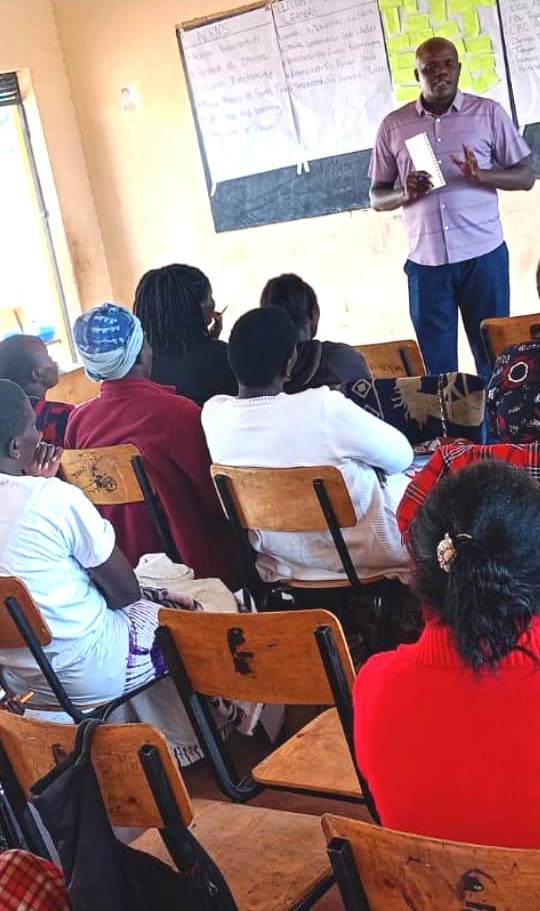
- Astiba Kebong’o argues that TSC’s social media warning should prompt teachers to rethink their digital conduct.
- She says freedom of expression must be exercised alongside professional responsibility, dignity and respect for others.
- Kebong’o calls for greater teacher training on social media, learner privacy and responsible digital communication.
TSC’s warning should prompt teachers to rethink how they speak, post and present themselves in the digital space.
The Teachers Service Commission’s warning to teachers over cyberbullying, harassment and other forms of unprofessional conduct on social media should not be viewed merely as a threat of disciplinary action. It should trigger a much broader conversation about professionalism, public trust, emotional intelligence and the responsibilities that come with being a teacher.
Social media has transformed communication. A comment can reach thousands within minutes, while a photograph intended for a few friends can quickly become public property. For teachers, this presents an important question: Where does personal expression end and professional responsibility begin?
Teachers, like every other citizen, have rights and freedoms. But they are also professionals entrusted with the education and welfare of children. The TSC Code of Conduct and Ethics for Teachers requires teachers to uphold the dignity and integrity of the teaching service and to conduct themselves in a manner that inspires public confidence.
The digital age has not changed that obligation. It has simply created a new environment in which it must be exercised.
The public eye is watching
A teacher is more than a classroom instructor. Teachers are mentors, leaders, role models and, in many communities, trusted adults to whom parents entrust their children.
That is why online behaviour matters.
Every teacher should occasionally ask: What does my social-media presence say about my character?
What does my language reveal about me? How do I respond to criticism? How do I behave when people disagree with me? What photographs do I post? What information do I share?
A teacher who routinely uses foul language, humiliates others, engages in cyberbullying or turns every disagreement into an online confrontation may unintentionally undermine the very values he or she teaches learners.
Professional disagreement is perfectly legitimate. Abuse is not.
Your language reveals your professionalism
One of the most neglected aspects of social-media conduct is the choice of register.
A teacher can criticise a policy, challenge an opinion or participate in public debate without becoming vulgar or insulting. Emotional intelligence is particularly important in this environment.
Not every provocation deserves an answer.
Not every disagreement requires a public battle.
Sometimes the most professional response is silence.
The Bible offers a timeless principle: “Let your conversation be always full of grace, seasoned with salt.” — Colossians 4:6.
The platform may have changed, but the value of disciplined speech has not.
A picture can speak louder than words
Teachers must also think carefully about the photographs and videos they publish.
A picture may appear harmless to the person posting it but communicate something very different to those who view it. A teacher should therefore ask: What does this image say about my judgment, character and professional identity?
The issue becomes even more serious when learners are involved.
Teachers should not assume that because a photograph was taken at a school event, it automatically belongs on a personal social-media account. Children’s privacy and dignity must be protected, and appropriate consent and institutional procedures should be followed before publishing identifiable images or personal information about learners.
The question should be simple:
Do I have the appropriate authority or consent to share this, and is it in the learner’s best interests?
No academic achievement, sports victory, trip or school celebration should become an excuse for compromising a child’s privacy.
Freedom to use social media, but with responsibility
Teachers have the same right as other citizens to use social-media platforms, express legitimate opinions, interact with friends and family, share information and participate in public discourse. Being a teacher does not mean surrendering one’s personal identity or lawful freedom of expression.
However, freedom comes with responsibility.
A teacher should use social media respectfully, responsibly and with an awareness that professional identity can influence how online conduct is perceived. The fact that an account is personal does not automatically make every form of conduct appropriate, particularly where it involves learners, colleagues, harassment, threats, confidentiality or conduct that brings the teaching profession into disrepute.
The distinction is important. Teachers should not be afraid of social media; they should be equipped to use it wisely.
A teacher can disagree with government policy, debate an educational issue, comment on matters affecting society or express a personal opinion without resorting to insults, vulgarity, intimidation or personal attacks.
Professionalism does not demand silence. It demands responsible expression.
The challenge, therefore, is not to ask whether teachers should use social media. They should and can use it positively. The better question is:
How can a teacher exercise the freedom to communicate while preserving dignity, respect and professional integrity?
That is where emotional intelligence becomes critical.
Before posting, commenting or sharing, a teacher should pause and consider the possible consequences. A disagreement should not become a quarrel. Criticism should not become abuse. Humour should not become humiliation. Personal expression should not compromise the dignity or privacy of another person.
Professional regulation should also never be interpreted as a blanket prohibition against legitimate expression. Equally, freedom of expression should never become an excuse for cyberbullying, harassment, threats or irresponsible conduct.
The teacher has the freedom to use social media. The professional obligation is to use that freedom wisely.
The internet has a long memory
Social media encourages people to post according to emotion rather than judgment.
Anger produces an impulsive comment. Frustration produces an insult. Excitement produces an inappropriate photograph. A disagreement produces a screenshot.
Later comes regret.
But the internet has a long memory. A post may be deleted, but someone may already have saved it. A video may disappear from one platform and continue circulating elsewhere.
Teachers therefore need digital self-discipline.
Before pressing “post”, ask:
Is it true? Is it respectful? Is it necessary? Is it lawful? Could it harm someone? Could it compromise a learner? Could it damage my professional reputation?
If the answer raises serious doubts, leave the post in the draft folder.
Teachers teach even when they are not teaching
Albert Bandura’s social learning theory reminds us that people learn through observation and modelling.
This principle is especially powerful in education.
Learners watch how teachers speak. They observe how teachers handle disagreement, criticism and anger. They notice how teachers treat people with whom they disagree.
In other words, the teacher teaches even when the teacher is not teaching.
That lesson now extends to social media.
If a teacher teaches respect in the classroom but publicly insults people online, the contradiction is difficult for learners to miss.
Other professions face the same challenge
Teaching is not alone in confronting questions about professional conduct online.
Medicine, law, journalism, public administration, policing and other professions increasingly recognise that digital behaviour can affect professional credibility and public confidence.
The underlying principle is similar: professional status comes with ethical obligations.
This does not mean professionals surrender their constitutional rights or personal lives. Rather, it means they must understand the consequences of conduct that conflicts with the standards expected of their profession.
Teachers deserve the same balance: freedom to participate in society, accompanied by responsibility to uphold professional dignity.
TSC should empower, not only discipline
This is where TSC and education stakeholders can do more.
Warnings and disciplinary mechanisms have their place, but teachers also need practical training on the realities of digital communication.
TSC should consider regular professional development on responsible social-media use; cyberbullying and online harassment; emotional intelligence; learner privacy and child protection; responsible use of photographs and videos; data protection and confidentiality; professional boundaries; digital footprints; and responsible public communication.
Social media is not disappearing. The profession therefore needs teachers who know how to use digital platforms constructively rather than teachers who are simply afraid of them.
A clear policy framework on social-media conduct could also help teachers understand what is expected of them while protecting their legitimate rights.
Teachers should be empowered before they are punished for mistakes arising from an evolving digital environment.
Do not preach water and take wine
There is a troubling contradiction when a teacher teaches learners about respect but uses social media to insult others.
It is contradictory to teach digital citizenship while recklessly sharing unverified information.
It is contradictory to teach dignity while publicly humiliating another person.
It is contradictory to teach self-control while responding to every provocation with abusive language.
Do not preach water and take wine.
The values we teach should be visible in the way we live.
Professionalism is not a uniform worn to school. It is a character standard carried wherever we go.
The teacher must become the first regulator
Policies are necessary. Regulations are necessary. Professional disciplinary mechanisms are necessary.
But the strongest regulator is personal responsibility.
Every teacher must become the first regulator of his or her own behaviour.
Before pressing POST, think.
Before pressing SEND, reflect.
Before sharing a photograph, consider privacy.
Before responding in anger, pause.
Before attacking someone publicly, ask whether the disagreement can be handled with dignity.
The question is not merely:
“What am I allowed to post?”
The more professional question is:
“What should I post as a teacher?”
Social media has changed the platform, but it has not changed the fundamentals of professionalism.
A teacher remains a teacher in the classroom, at a school function, in the community—and increasingly, behind a screen.
READ ALSO: FEASSA 2026: President Justus Mugisha opens Morogoro Games, hails record participation
Professionalism does not end at the school gate. It follows the teacher online.
By Astiba Kebong’o
Astiba Kebong’o is the author of this opinion article.
You can also follow our social media pages on Twitter: Education News KE and Facebook: Education News Newspaper for timely updates.
>>> Click here to stay up-to-date with trending regional stories
>>> Click here to read more informed opinions on the country’s education landscape
>> Click here to stay ahead with the latest national news.