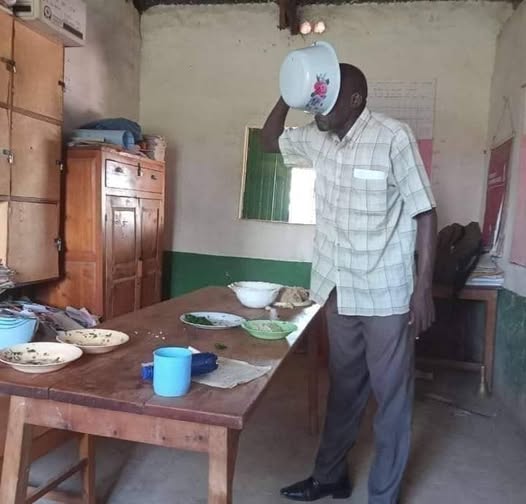
There is a silent moment in many school staffrooms that reveals more about a teacher’s character than any lesson ever delivered in class. It is not during a heated departmental meeting, nor in the structured delivery of a well-prepared lesson. It comes quietly, almost unnoticed, during tea break.
A tray is placed gently on the table. Cups clink softly as colleagues gather. A flask of tea releases a welcoming warmth into the room. A plate of mandazi or slices of bread sits at the center, humble yet symbolic of shared provision. For a brief moment, the staffroom becomes a place of rest, equality, and human connection.
And then, almost instinctively, the imbalance begins.
Some hands move faster than others. One cup quietly becomes two. One serving subtly turns into several. Without announcement or acknowledgment, a few individuals secure more than their fair share. By the time others arrive—perhaps delayed by a class, a student in need, or an administrative duty—the table tells a different story. The tea is finished. The plate is empty. The moment has passed.
What remains is not just the absence of tea, but the presence of something far more troubling: silent injustice.
ALSO READ;
Ruto directs Ogamba to fast-track KMTC funding as govt pledges lecturers, housing
At first glance, this may appear trivial—too small to warrant reflection in a profession burdened with weightier challenges such as curriculum reforms, staffing shortages, and the emotional demands of teaching. But in truth, such moments are anything but insignificant. They are revealing. They are symbolic. They are deeply instructive.
Teaching is not merely an academic profession; it is a moral calling. Teachers are not only transmitters of knowledge but also custodians of values. Every action, whether in the classroom or beyond, contributes to the invisible curriculum that shapes both learners and colleagues. Values such as fairness, restraint, empathy, and consideration are not taught through words alone—they are demonstrated through behavior.
When a teacher knowingly takes more than their share, fully aware that others may miss out, they compromise these very values. The lesson they model is not found in any syllabus, yet it speaks loudly: “Take what you can, while you can.”
This quiet form of selfishness is rarely isolated. It often reflects a deeper pattern of conduct. The same individual who over-serves themselves at tea may also dominate conversations, monopolize opportunities, or avoid responsibilities that do not offer personal gain. It is not simply about food or drink—it is about mindset.
Such behavior is rooted not in scarcity of resources, but in scarcity of character.
In many schools, especially those operating under constrained resources, tea break is more than a routine pause. It is a shared ritual—a moment of unity where hierarchy softens and collegiality takes center stage. It is where the newly posted teacher sits alongside the seasoned veteran, where laughter replaces formality, and where the collective identity of the teaching staff is quietly reinforced.
When this moment is disrupted by self-interest, the damage extends beyond the immediate. It chips away at trust. It introduces silent divisions. It transforms what should be a space of equality into one of quiet competition.
For younger or newly recruited teachers, the experience can be particularly disheartening. Eager to integrate and contribute, they observe and internalize the culture around them. When they repeatedly witness unfairness going unaddressed, they are faced with an unspoken dilemma: adapt or withdraw. Some may choose silence, suppressing their discomfort in the interest of harmony. Others may gradually conform, adopting the very behaviors they once questioned.
In this way, a small act of selfishness becomes a seed. Left unchecked, it grows into a culture.
Over time, such a culture breeds resentment. Those who consistently miss out may not voice their frustrations openly, but the feelings linger. They manifest in subtle ways—reduced cooperation, diminished morale, and a gradual erosion of team spirit. The staffroom, once a place of comfort, becomes a space of quiet tension.
More importantly, the implications extend beyond the staffroom walls.
Teachers are, by their very nature, role models. Their influence is not confined to lesson plans and assessments; it permeates the broader social fabric. A teacher who struggles with fairness in small, unseen moments may find it difficult to uphold justice in more complex, visible situations involving learners. Integrity is not situational—it is consistent.
If fairness is negotiable over a cup of tea, it risks becoming negotiable in matters of discipline, evaluation, and opportunity.
This is why such seemingly minor actions deserve serious reflection. They are not about tea. They are about character.
Addressing this issue does not require rigid policies or surveillance. It does not call for strict rationing or administrative enforcement. Rather, it demands something far more powerful: self-awareness.
It begins with a simple, honest question asked in a quiet moment: “Is what I am taking fair?”
It requires the discipline to pause, to consider others, and to act with intention rather than impulse. It calls for a conscious decision to uphold values even when no one is watching, and when the consequences of doing otherwise appear insignificant.
Leadership, in its truest form, is not defined by titles or positions. It is revealed in everyday actions—in the choices made when the stakes are low and the audience is absent. A teacher who chooses to take just enough, leaving sufficient for others, demonstrates a form of leadership that is both quiet and profound.
School administrations also have a role to play in nurturing this culture. By fostering open dialogue about professional ethics, encouraging mutual respect, and modeling fairness in their own actions, they set the tone for the entire institution. Culture is not imposed; it is cultivated.
ALSO READ;
KICOWU proposes up to 50% pay rise for commission staff in new CBA proposal
Simple measures, such as mindful distribution, gentle reminders, or even humor—can reinforce the importance of fairness without creating tension. More importantly, recognizing and appreciating acts of consideration can gradually shift behavior in a positive direction.
Ultimately, the responsibility rests with each individual teacher.
The question is not whether there will always be enough tea or food. The question is whether there will always be enough integrity.
Because it is in the smallest, most ordinary moments that true character is revealed. Not in the spotlight of performance, but in the quiet corners of daily life. Not in what we say, but in what we do.
The staffroom, often overlooked in discussions about educational excellence, is in fact a powerful space of influence. It is where professional relationships are built, where values are reinforced, and where the culture of a school is quietly shaped.
If fairness can thrive there—even in something as simple as sharing tea—then it stands a better chance of flourishing everywhere else.
And perhaps, the next time the tray is placed on the table and the tea is poured, the most important lesson will not be spoken aloud. It will be demonstrated in a simple, deliberate act: taking just enough, and leaving enough for others.
In that moment, the staffroom mirror will not crack. It will reflect something far more powerful—integrity.
By Hillary Muhalya
You can also follow our social media pages on Twitter: Education News KE and Facebook: Education News Newspaper for timely updates.
>>> Click here to stay up-to-date with trending regional stories
>>> Click here to read more informed opinions on the country’s education landscape