






- The article outlines the impact of high-handed and intimidating supervision practices on educators.
By our reporters
- THE NOBLE ROLE OF EDUCATION OFFICERS
Education officers occupy a central position in the management and quality assurance of learning institutions. Curriculum Support Officers (CSOs), Sub-County Directors of Education, Quality Assurance officers, Teachers Service Commission officials, and other supervisory personnel are entrusted with safeguarding standards, guiding curriculum delivery, and ensuring accountability in schools.
Their mandate is both technical and professional: to monitor teaching and learning, support institutional leadership, enforce policy compliance, and strengthen education systems. Teachers widely recognise that without structured supervision, standards may weaken and learning outcomes may suffer.
However, while the mandate is widely accepted, the manner of execution has increasingly become a subject of concern among educators across many institutions.
- WHEN SUPERVISION BECOMES INTIMIDATION
Teachers draw a clear distinction between supportive supervision and authoritarian enforcement. While accountability is necessary, concerns arise when supervision is delivered in a manner perceived as harsh, commanding, or dismissive.
In some schools, officers are described as arriving with a fault-finding approach rather than a developmental mindset. Instead of engaging in dialogue, they may issue directives, interrupt processes, or conduct abrupt evaluations that leave little room for explanation.
This approach, teachers argue, transforms supervision from a professional growth exercise into an experience of pressure and fear. While compliance may be achieved, motivation, creativity, and confidence often suffer in the long term.
The concern is not authority itself, but how authority is exercised.
ALSO READ;
https://educationnews.co.ke/why-form-fours-need-olympian-fortitude-to-succeed-in-kcse-preparations/
- PUBLIC INTIMIDATION IN FRONT OF STAFF AND LEARNERS
One of the most
sensitive and emotionally charged concerns raised by teachers is the experience of being reprimanded or challenged in front of colleagues or learners.
Teachers report situations where officers address performance issues publicly—in classrooms, staffrooms, or school assemblies—without prior discussion or private engagement. In such moments, educators feel exposed and professionally undermined.
Being corrected in front of learners is particularly distressing. Teachers note that classroom authority is built on confidence, respect, and trust. When that authority is publicly questioned by external supervisors, it may weaken classroom control and confuse learners about leadership structures within the learning environment.
Similarly, public criticism in staff meetings or during school visits can create embarrassment, tension, and long-lasting resentment among colleagues. Teachers argue that while correction is necessary, it should preserve dignity and be delivered in a manner that promotes reflection rather than humiliation.
Education professionals widely agree that feedback is most effective when offered privately, respectfully, and constructively. Such an approach allows for clarification, dialogue, and improvement without damaging morale or professional relationships.
- UNDERSTANDING THE REALITIES OF THE CLASSROOM
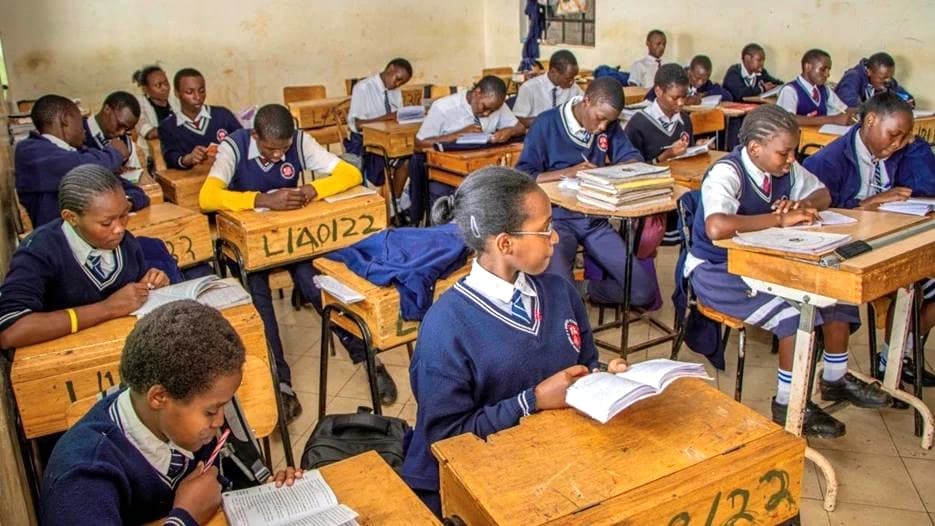
Teachers operate in complex environments shaped by multiple challenges. Large class sizes, limited teaching materials, staffing shortages, infrastructure gaps, and increasing administrative demands all affect daily performance.
Frustration arises when supervision appears disconnected from these realities. Teachers feel that evaluations sometimes focus heavily on outcomes while overlooking the conditions under which teaching takes place.
Effective supervision, they argue, must be rooted in context. Officers who take time to understand the environment are more likely to provide meaningful support rather than surface-level criticism. Without this understanding, supervision risks being perceived as unfair or unrealistic.
https://educationnews.co.ke/kisumu-boys-win-appeal-secure-spot-at-kisumu-county-championships/
- FAIRNESS, CONSULTATION, AND PROFESSIONAL RESPECT
Fairness remains a cornerstone of trust between teachers and education officers. Concerns are often raised when rules appear inconsistently applied or when certain individuals are perceived to receive preferential treatment.
Teachers also emphasise the importance of consultation. As frontline implementers of education policy, they possess practical insights that are essential for effective decision-making. Excluding them from key discussions risks weakening policy implementation and reducing ownership of reforms.
Professional respect extends beyond courtesy. It includes listening, engaging meaningfully, and recognising teachers as partners in education rather than mere subordinates in a hierarchical structure.
When respect and consultation are present, supervision becomes collaborative. When absent, it becomes confrontational.
- ALLEGATIONS OF DIVISION AND SCHOOL TENSIONS
In some cases, concerns have been raised about situations where certain officers are perceived to contribute—directly or indirectly—to tensions within school communities. Teachers and administrators have occasionally reported instances where supervisory interactions appear to deepen divisions between school leadership, staff, or even parents.
Such perceptions may arise when communication is not well coordinated, when feedback is interpreted as one-sided, or when officers engage different stakeholders separately without harmonised messaging.
The consequence, whether intentional or not, can be strained relationships within schools. Administrators may feel undermined, teachers may feel unsupported, and parents may become uncertain about school leadership structures.
Teachers argue that the role of education officers must remain neutral and unifying. Their responsibility is to strengthen institutional cohesion, not weaken it. Supervision should build bridges of trust, not deepen divides.
At the same time, it is important to acknowledge that many officers operate with professionalism, fairness, and integrity. In many cases, tensions arise not from deliberate actions but from misunderstandings, communication gaps, or heightened sensitivities within school environments.
- THE VALUE OF SUPPORTIVE LEADERSHIP AND THE PATH FORWARD
Despite the challenges raised, many teachers continue to acknowledge officers who demonstrate professionalism, humility, and balance. These officers prove that supervision can be firm yet respectful, corrective yet supportive, and authoritative yet humane.
Supportive officers mentor rather than intimidate, guide rather than condemn, and recognise effort alongside identifying areas for improvement. Their approach fosters trust, encourages professional growth, and strengthens the culture of collaboration within schools.
The future of education supervision depends on embracing this model more widely. Schools function best when officers, teachers, administrators, and parents operate as partners working toward a shared goal: improving learner outcomes.
Teachers do not reject accountability. What they reject is high-handedness, public humiliation, and perceived unfairness. They seek supervision that builds confidence rather than fear, dialogue rather than confrontation, and unity rather than division.
Ultimately, the “officers’ mirror” reflects a simple truth: the effectiveness of educational leadership is not measured by the intensity of control, but by the quality of respect and professionalism with which it is exercised.
When supervision strengthens trust, schools flourish. When it weakens trust, even strong institutions struggle to function effectively.
The responsibility, therefore, rests on every education officer to continually reflect: do their actions strengthen harmony within schools, or do they unintentionally create fear, distance, or division?
The answer defines not only leadership style, but the future character of the education system itself.
You can also follow our social media pages on Twitter: Education News KE and Facebook: Education News Newspaper for timely updates.
>>> Click here to stay up-to-date with trending regional stories
>>> Click here to read more informed opinions on the country’s education landscape

Reader Discussion (0)
Sign in to comment