- A former state-school deputy headteacher’s decision to choose private education for her son raises questions about parental school choice.
- Parents increasingly consider teaching quality, individual attention, safety, facilities and talent development when selecting schools.
- Kenya can strengthen public education by examining what drives families towards alternative schooling options.
What happens when the person who understands the public education system best decides that her own child should attend a private school?
That is the question at the heart of the decision by Ruth Lue-Quee, a former state-school deputy headteacher in England, who chose an independent primary school for her son after years working inside the public system.
Her decision was not simply about private-school facilities, status or prestige. It followed growing concerns about an education culture she felt was becoming too heavily driven by tests, targets, curriculum coverage and paperwork — sometimes at the expense of play, creativity, relationships and a genuine love of learning.
For someone who had spent years teaching and leading in state schools, the choice carried particular weight. She understood the pressures facing teachers and school leaders and had experienced them first-hand.
She also knew what she wanted her child to experience at the beginning of his educational journey.
So, when the time came to choose a school, she confronted a question many parents quietly face: Should my child receive the education the system provides, or the education I believe my child needs?
Lue-Quee eventually chose an independent primary school where classes were capped at 20 pupils and learners had access to specialist teaching and broader opportunities, including music. The school cost about £12,600 a year, excluding uniform.
For her, the choice was about creating an environment in which her son could develop a love of reading and learning rather than experience education primarily as preparation for tests.
Her experience opens a much bigger conversation — one that Kenya cannot afford to ignore.
When parents have a choice, what exactly are they looking for in a school — and what can their choices teach us about the education system itself?
Kenya’s school-choice question
Kenya has made major strides in expanding access to education. The government has invested in classrooms, teacher recruitment, learning resources and the implementation of Competency-Based Education (CBE).
But access is only the beginning.
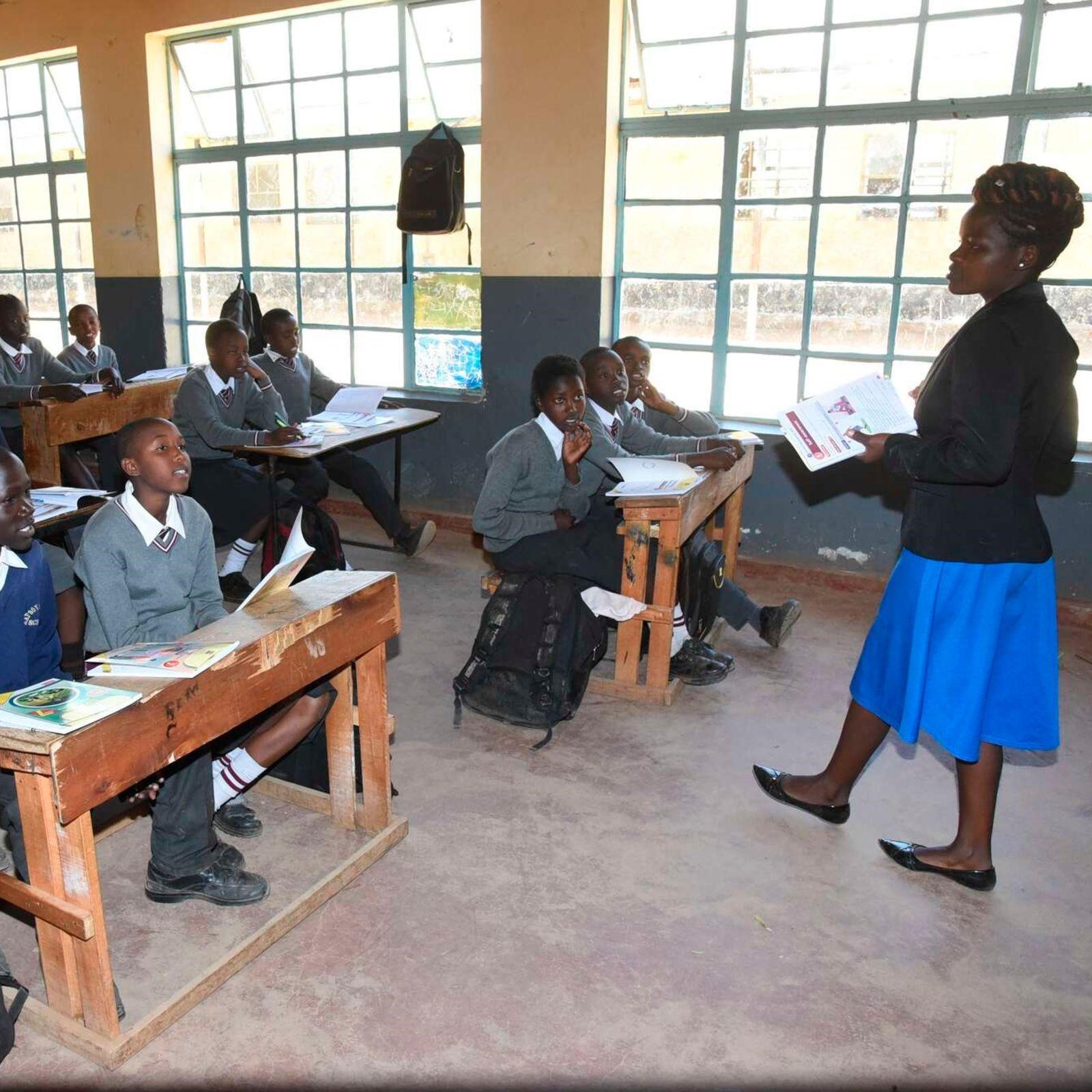
Parents increasingly judge schools by more than whether a child has a place in a classroom. They look at the quality of teaching, individual attention, discipline, communication, infrastructure, learning resources, safety and opportunities for children to discover and develop their talents.
This helps explain the continuing attraction of private schools.
Some parents perceive private institutions as offering smaller classes, closer monitoring, stronger communication with families, specialised programmes and broader extracurricular opportunities.
Yet it would be misleading to conclude that private schools are automatically better.
Kenya has many outstanding public schools, led by committed headteachers, principals and teachers who produce excellent results and nurture learners despite operating with limited resources.
The more constructive question is therefore not whether public or private schools are superior.
What can public education learn from the choices parents make?
A question for those at the top
There is also a question worth asking across Kenya’s education landscape.
Do Cabinet Secretaries, senior government officials, education directors, professionals and well-to-do families generally choose public schools for their children, or do some opt for private institutions?
The question should not be used to judge parents.
Families make school choices for legitimate and often deeply personal reasons. Location, safety, family circumstances, curriculum preferences, class size, special programmes, transport arrangements and individual learner needs can all influence a decision.
Choosing a private school does not automatically mean abandoning confidence in public education.
But patterns of parental choice can still provide useful evidence.
If people with a close understanding of education consistently value particular features of private schools, Kenya should examine those features and ask whether more children can access them within the public system.
The issue is therefore not who goes where.
It is: What are they looking for?
Beyond the test score
Lue-Quee’s concerns about testing and targets raise another important issue.
Assessment is essential. It helps teachers identify learning gaps, monitor progress and determine where learners need additional support.
The danger comes when assessment becomes the purpose rather than the instrument.
Education should prepare children not only to demonstrate what they know, but also to think, communicate, create, solve problems, collaborate and apply knowledge.
This is where CBE presents an important opportunity for Kenya.
A learner is more than an examination score.
Reading, music, sport, drama, art, technology, practical experiences and other forms of talent development can help children discover their abilities and build confidence.
The challenge is to maintain academic standards without allowing accountability to narrow the meaning of education.
The pressure behind the classroom
Another lesson from the English experience concerns the workload carried by teachers and school leaders.
Teachers cannot give their best when excessive administrative demands constantly compete with classroom preparation, learner support and professional development.
Likewise, headteachers and principals need time to lead instruction, mentor staff, monitor learner progress, engage parents and improve the school environment.
Accountability matters. Records matter. Monitoring matters.
But every administrative requirement should ultimately answer a simple question:
Does this improve teaching, learning or learner welfare?
Where paperwork is duplicated, unnecessary or excessively time-consuming, it should be reduced or digitised.
Technology should simplify accountability — not create another layer of reporting.
Thematic priorities for a stronger public system
1. Build better learning environments
Public schools require sustained investment in classrooms, libraries, laboratories, ICT, sanitation, learning materials and spaces for sport and creative activities.
Teacher recruitment and deployment should also respond to actual learner numbers so that overcrowding does not undermine individual attention.
The objective is not to copy every feature of an expensive private school.
It is to guarantee every child a decent environment in which to learn and thrive.
2. Protect teaching time
Teachers should have sufficient time to teach, assess meaningfully, support learners and prepare lessons.
School leaders should be able to concentrate on instructional leadership rather than becoming overwhelmed by administrative routines.
Low-value and duplicated paperwork should be identified and eliminated.
3. Put the whole learner at the centre
CBE should create room for creativity, critical thinking, problem-solving, communication, values and practical skills.
Assessment should guide intervention rather than dominate classroom life.
Children need opportunities to read, explore, create, play and develop their talents.
4. Strengthen the school-family partnership
Parents should receive meaningful information about their children’s learning progress, attendance, behaviour and wellbeing.
Schools should build relationships in which parents are partners in education — not people contacted only when something goes wrong.
Trust between schools and families can be as important as buildings and equipment.
5. Strengthen teachers and school leadership
Quality education ultimately depends on people.
Teacher welfare, professional development, career progression and manageable workloads matter.
So does school leadership.
Headteachers and principals require continuous development in instructional leadership, staff management, learner welfare and community engagement.
A strong school requires strong professional leadership.
6. Broaden the definition of success
Examination results matter, but they should not become the sole definition of a successful school.
Attendance, learner progression, retention, wellbeing, creativity, talent development, teaching quality, parental engagement and the learning environment should also matter.
A school can produce impressive grades while still leaving important aspects of a child’s development unattended.
The goal is confidence
Kenya does not need to turn public schools into private schools.
Nor should private education be portrayed as a threat.
Both sectors can provide useful lessons.
The real ambition should be to build a public education system that families choose because they trust its quality, not simply because it is the most affordable option available.
That requires attention to the factors that influence parental choices while protecting the principle of equitable access to quality education.
Ruth Lue-Quee’s decision should therefore not be read simply as an indictment of public education.
It is an invitation to examine what makes a parent confident in a school.
For Kenya, that question is particularly important.
Do the people who understand education most closely — including teachers, school leaders, education officials and professionals — find public schools sufficiently attractive for their own children, or do some choose private alternatives?
The answer should not be used to blame anyone.
It should be used as evidence for improvement.
Because the ultimate measure of a successful public education system is not how strongly it is defended.
It is how confidently families entrust their children to it.
READ ALSO: PSSF plans mortgage and medical savings products for public servants
And Kenya’s ambition should be clear: Quality education should be a public guarantee — not a private luxury.
By Hillary Muhalya
Get more stories from our website: Education News
To write to us or offer feedback, you can reach us at: editor@educationnews.co.ke
You can also follow our social media pages on Twitter: Education News KE and Facebook: Education News Newspaper for timely updates.
>> Click here to stay up-to-date with trending regional stories