- TSC proposed new Career Progression Guidelines (CPG) to restructure teacher grading across primary, secondary, TTCs, and KISE schools.
- Proposed reforms aim to align teacher structures with CBE framework and address long-standing promotion and remuneration challenges.
- Following TSC approval, proposed CPG will undergo formal job evaluation by SRC before official publication and implementation.
By Hillary Muhalya
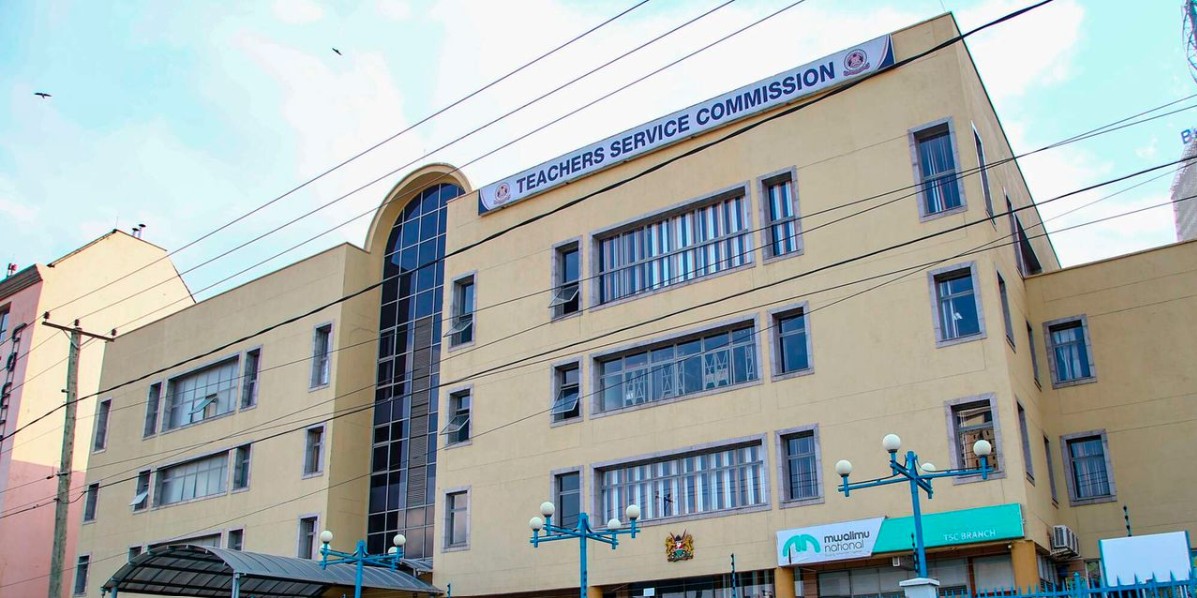
The Teachers Service Commission (TSC) has embarked on a structured review of its Career Progression Guidelines (CPG), initiating a process that could significantly reshape teacher grading, promotion pathways, and job classification across Kenya’s education sector.
The proposed reforms are designed to align teacher career structures with ongoing education reforms, particularly the Competency-Based Education (CBE) framework, while addressing long-standing concerns related to promotion stagnation, remuneration disparities, and inconsistencies in job evaluation outcomes.
Although still under technical review and stakeholder consultation, the proposed framework introduces a more detailed and differentiated grading structure covering primary schools, secondary schools, teacher training colleges (TTCs), and the Kenya Institute of Special Education (KISE).
STRUCTURED APPROVAL AND JOB EVALUATION PATHWAY
Once approved by the TSC, the revised Career Progression Guidelines will undergo a formal national job evaluation and remuneration review process involving key state institutions.
The approved CPG and accompanying job descriptions will be submitted to the Salaries and Remuneration Commission (SRC) for structured job evaluation. This will be followed by a joint technical engagement between the SRC and TSC to validate job roles, workload distribution, and grading alignment.
A review clinic will then be convened to interrogate and refine the job evaluation outcomes. Thereafter, the SRC will communicate the final results, including financial implications, to the TSC and the National Treasury.
The process will conclude with the official publication of the revised grading structure, after which teachers will receive formal communication on updated job groups, titles, and progression pathways.
ALSO READ;
Proposed TSC job group reforms provide clear promotion criteria for teachers
PROPOSED TEACHER CAREER GRADING STRUCTURE
PRIMARY SCHOOL TEACHERS
The proposed framework introduces a more refined career ladder aimed at strengthening progression clarity and leadership development within primary education.
Teacher Grade 9 – Entry level (Primary Teacher Certificate holders)
Teacher Grade 8 – Diploma entry / common cadre level
Teacher Grade 7 – Senior Teacher
Teacher Grade 6 – Deputy Principal level
Teacher Grade 5 – Principal II
Teacher Grade 4 – Principal I
Teacher Grade 3 – Principal
Teacher Grade 2 – Senior Principal
Teacher Grade 1 – Chief Principal
This structure seeks to formalize progression from classroom teaching to institutional leadership.
SECONDARY SCHOOL TEACHERS
The secondary school model aligns qualifications with structured career mobility and administrative progression.
Teacher Grade 8 – Entry level (Diploma holders)
Teacher Grade 7 – Entry level (Bachelor’s degree / common cadre)
Teacher Grade 6 – Standard Bachelor’s cadre
Teacher Grade 5 – Senior Teacher
Teacher Grade 4 – Deputy Principal
Teacher Grade 3 – Principal
Teacher Grade 2 – Senior Principal
Teacher Grade 1 – Chief Principal
This model aims to enhance clarity in promotion pathways while distinguishing teaching from leadership roles.
TEACHER TRAINING COLLEGES (TTCs)
The TTC structure reflects academic specialization and institutional leadership progression.
Teacher Grade 7 – Entry level (Degree holders and specialized areas)
Teacher Grade 6 – Common cadre for degree holders
Teacher Grade 5 – Core teaching cadre
Teacher Grade 4 – Senior Teacher
Teacher Grade 3 – Principal Teacher
Teacher Grade 2 – Deputy Principal
Teacher Grade 1 – Chief Principal
Kabete Poly to host 4th international TVET research conference
KENYA INSTITUTE OF SPECIAL EDUCATION (KISE)
The proposed KISE structure integrates instructional and administrative leadership progression within special needs education.
Grade 6 – Entry level (Graduate teachers)
Grade 5 – Common cadre level
Grade 4 – Senior Teacher
Grade 3 – Principal Teacher
Grade 2 – Deputy Director
Grade 1 – Director
CHALLENGES IN THE 2018 CAREER PROGRESSION GUIDELINES
The existing framework introduced in 2018 has faced several structural challenges, including:
Persistent remuneration disparities between teachers, Curriculum Support Officers, and administrators
Misalignment between school classification systems and job evaluation outcomes
Limited career mobility for teachers with similar qualifications but different job classifications
Overlapping roles between teaching, supervision, and administrative duties
These challenges have necessitated a comprehensive review to improve fairness, clarity, and efficiency.
RATIONALE FOR THE REFORMS
The review is driven by key developments within Kenya’s education sector, including:
Full implementation of Competency-Based Education (CBE)
Need for modernized and competency-aligned career structures
Stakeholder feedback from teachers and education sector actors
Separation of classroom teaching roles from administrative leadership pathways
Preparation for a new job evaluation exercise under SRC coordination
LEGAL AND POLICY FRAMEWORK
The proposed reforms are anchored in Kenya’s constitutional and statutory framework, including:
Article 237 of the Constitution, which defines the mandate of the TSC
Section 11 of the TSC Act, which provides for teacher management, career progression, and professional standards
Article 10 of the Constitution, which upholds transparency, accountability, and public participation
Ongoing public sector remuneration and collective bargaining frameworks within the 2025–2029 cycle
CONCLUSION
The ongoing review of the Career Progression Guidelines marks a potentially significant shift in Kenya’s education employment structure. If adopted, the proposed framework would redefine teacher grading, streamline promotion pathways, and align professional advancement more closely with evolving educational needs.
Teachers across primary schools, secondary schools, TTCs, and KISE now await the final determination from the TSC and SRC, which will shape the future architecture of career progression in the teaching service.
You can also follow our social media pages on Twitter: Education News KE and Facebook: Education News Newspaper for timely updates.
>>> Click here to stay up-to-date with trending regional stories
>>> Click here to read more informed opinions on the country’s education landscape