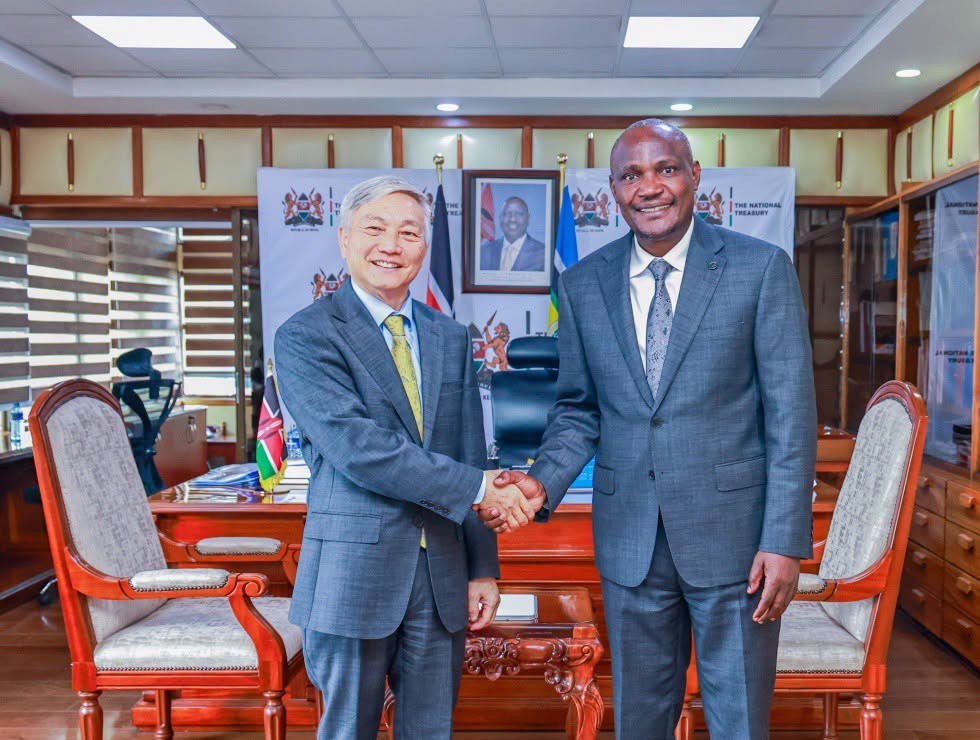
- Treasury and the World Bank have advanced the Eighth Development Policy Operation (DPO 8), targeting payroll clean-up and education system reforms
- The government has moved to harmonise human-resource and payroll data across national and county governments.
- The reforms have also targeted faster disbursement of allocations to county governments, which is expected to affect devolved services such as ECDE and reduce delays in learning material funding.
A major government reform programme backed by the World Bank is putting Kenya’s education system and public-sector payroll under renewed scrutiny, raising important questions about how teachers, schools and other public institutions will be managed in the coming years.
The reforms are being implemented under the Eighth Development Policy Operation (DPO 8), the third and final phase of the current programme series between Kenya and the World Bank. National Treasury Cabinet Secretary John Mbadi recently met senior World Bank officials to assess progress and determine how the remaining reforms can be accelerated before the DPO 8 implementation period ends. While the programme covers several areas of government, two components stand out for teachers and education stakeholders: strengthening the education system and improving the integrity of government payrolls, which are closely connected given that Kenya spends a substantial portion of its public resources on education, with teachers forming one of the largest groups of public-sector employees.
One of the most ambitious elements of DPO 8 is a plan to harmonise human-resource and payroll information across national and county governments and other public institutions. The government intends to strengthen payroll integrity through the introduction of unified payroll numbers and the cleaning up of county payrolls based on findings by the Office of the Auditor-General. A reliable payroll system determines who is recognised as an employee, where that employee is deployed, which institution is responsible for paying them and how public funds are accounted for, factors particularly significant for an education system employing hundreds of thousands of teachers. A properly integrated human-resource system could help government institutions identify duplicate records, eliminate irregular payroll entries and ensure salary expenditure corresponds to genuine employees, while also improving planning: knowing exactly how many teachers are employed, where they work and what staffing levels look like could make it easier to identify schools facing shortages and inform recruitment and deployment decisions.
ALSO READ:
Ruto pushes universal tertiary education funding rollout to next semester
What could this mean for teachers?
For teachers, the reforms could bring both opportunities and greater scrutiny. A stronger payroll system could reduce administrative inconsistencies, improve the accuracy of employment records, and make it easier to link a teacher’s employment information with deployment, transfers, promotions and other human-resource processes. However, improved payroll controls also mean public servants will increasingly be expected to have accurate and verifiable employment information, as government moves toward a system where human-resource data and payroll information are more closely connected. For the education sector, the challenge will be ensuring that technological and administrative reforms distinguish between genuine irregularities and legitimate administrative discrepancies, protecting public funds without penalising legitimate employees for weaknesses in government systems.
DPO 8 specifically identifies strengthening the education system as one of its key reform areas, arriving at a critical moment as Kenya’s education sector undergoes significant transformation. The transition to Competency-Based Education (CBE) has changed the structure and philosophy of learning, while the expansion of Junior School has created new staffing, infrastructure and curriculum demands, with schools also facing growing pressure from rising enrolment, inadequate facilities in some areas and the need for more teachers.
Missed university or TVET funding? 7 things students must know before September 21
The teacher shortage question
One of the biggest tests of the reform will be how government responds to teacher shortages. A sophisticated payroll system can tell government how many teachers are employed, but it must go further to answer where those teachers are actually needed, ensuring a school with sufficient staffing does not receive additional teachers while another struggles with severe shortages. Better human-resource data could give education authorities a clearer national picture of teacher distribution, strengthening workforce planning and making recruitment and deployment more evidence-based, a development that could make accurate data an increasingly important tool for the Teachers Service Commission (TSC) in managing the teaching workforce.
There is, however, a risk that the reform is viewed primarily through the lens of compliance. Teachers are already dealing with heavy workloads, curriculum changes, assessment requirements and increasing administrative responsibilities, meaning a payroll and human-resource reform should simplify administration rather than add another layer of bureaucracy. The success of DPO 8 should be measured not by the number of databases created or forms completed, but by whether public institutions become more efficient, transparent and responsive, translating for teachers into fewer administrative frustrations and more time dedicated to teaching.
The programme’s focus on intergovernmental fiscal management is equally significant for education. The World Bank-backed reforms seek to improve the timely approval and disbursement of additional allocations to county governments, which are responsible for devolved services, particularly Early Childhood Development Education (ECDE). When counties receive funds late, development programmes can be delayed, leaving schools waiting longer for infrastructure improvements, learning materials and other essential interventions. Strengthening intergovernmental fiscal management could therefore have an indirect but meaningful impact on learners, since predictable financing allows counties to plan and execute projects more efficiently.
ALSO READ: MoE restricts prayer days, AGMs and prize-giving events during Third Term
Ultimately, the DPO 8 reforms raise a fundamental question about how Kenya manages public resources: not simply how much money is available, but where it goes, who receives it, what it is used for and whether it produces intended results. Every shilling lost through payroll weaknesses, duplication, poor planning or inefficient administration is a resource that could otherwise support a classroom, recruit a teacher, improve a school or strengthen learning. Done correctly, the payroll reforms could become an instrument for better resource allocation rather than merely an attempt to cut government expenditure.
During the meeting with World Bank officials, CS Mbadi said Treasury would continue working with the World Bank and implementing ministries, departments and agencies to fast-track the remaining reforms, acknowledging the need to address implementation bottlenecks and deliver agreed actions within the DPO 8 timeframe. That commitment will now face the real test of implementation, given Kenya’s history of policy announcements outpacing consistent execution. For teachers, the desired outcome remains straightforward: accurate employment records, efficient human-resource management, fair deployment, reliable payroll systems and stronger investment in schools. For taxpayers, the expectation is that every education shilling delivers maximum value, and for learners, the ultimate measure of success will be whether these reforms translate into better schools and improved learning outcomes.
By Hillary Muhalya
Get more stories from our website: Education News
To write to us or offer feedback, you can reach us at: editor@educationnews.co.ke
You can also follow our social media pages on Twitter: Education News KE and Facebook: Education News Newspaper for timely updates.
>>> Click here to stay up-to-date with trending regional stories