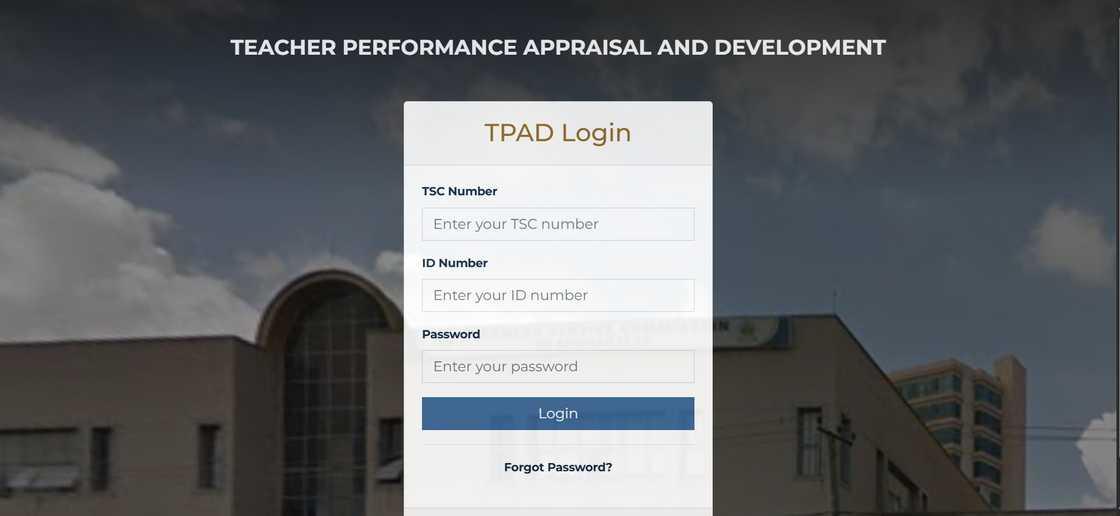
- Teachers have moved almost immediately from the extended Term Two appraisal deadline into another TPAD cycle.
- The new appraisal period comes as thousands of teachers pursue advertised promotion opportunities across different grades.
- Teachers are being encouraged to maintain professional records progressively rather than waiting until end-of-term deadlines.
The Teachers Service Commission (TSC) has opened the Term Three Teacher Performance Appraisal and Development (TPAD) cycle, putting thousands of teachers back into the Commission’s performance-management system barely days after the close of a turbulent second-term appraisal exercise.
The Term Three TPAD portal opened on August 27, 2026, just three days after the extended deadline for Term Two submissions. The rapid transition means teachers have had virtually no breathing space between completing one appraisal cycle and beginning another.
For many educators, however, TPAD is no longer simply an administrative requirement to be completed before schools close. It has become an important component of professional progression, performance monitoring and eligibility for career opportunities within the teaching service.
The latest activation also comes at a particularly significant moment, with the Commission preparing to conduct promotion interviews after advertising thousands of promotion vacancies.
The pressure was already evident during Term Two.
TSC extended the deadline for completing the second-term appraisal to August 24 after teachers reported difficulties accessing the online system. Slow servers, inaccessible dashboards, time-outs and difficulties saving information created anxiety among educators who feared that technical problems could eventually be interpreted as individual non-compliance.
In a circular dated August 18, 2026, TSC Director for Teacher Professional Management Mugwuku Nthamburi communicated the extension to regional and county directors, allowing teachers additional time to complete, submit and countersign their appraisal documents.
The extension provided temporary relief, but it exposed a bigger challenge facing an increasingly digital teaching profession: when compliance depends on an online platform, system reliability becomes part of professional accountability.
A teacher may have completed the required classroom activities and prepared the necessary evidence, but if the system cannot accept or save the information, the line between technical failure and individual non-compliance becomes blurred.
Why Term Three TPAD could matter more than ever
That is why the reopening of the Term Three portal is being watched closely.
Teachers are expected to avoid repeating the last-minute rush that characterised the previous cycle. Professional documents, evidence, lesson observations and other required components should be handled progressively throughout the term.
TPAD was introduced as a mechanism for moving teacher appraisal away from occasional inspections towards continuous professional development. The system gives teachers an opportunity to evaluate their performance while allowing supervisors to identify professional gaps and areas requiring support.
At its best, the framework should therefore be more than a compliance exercise.
It should answer a fundamental question: What support does a teacher need to become better at teaching?
From appraisal scores to career progression
This distinction matters because performance appraisal can easily become punitive when it is reduced to scores, forms and deadlines.
Teachers have previously raised concerns about the manner in which some appraisals are conducted, including disagreements over lesson observations, professional records, attendance documentation and the marks awarded by appraisers.
The quality of the conversation between the teacher and the appraiser therefore matters as much as the eventual score.
A meaningful appraisal should identify weaknesses, recognise strengths and establish practical interventions. It should help a teacher improve rather than merely create another administrative trail.
Yet the scores cannot be dismissed.
Satisfactory performance appraisal is among the requirements TSC specifies for teachers seeking appointment to advertised promotion grades.
The connection between promotion and sustained appraisal performance has consequently transformed TPAD into a career-management issue.
The message is straightforward: teachers should not wait until promotion interviews are announced before taking performance appraisal seriously.
The TPAD calendar
The TPAD calendar is designed to distribute the workload throughout the term.
Planning meetings are expected by the final week of the school holiday, while teachers should submit professional documents during the first week of the term. Lesson observations and identification of professional gaps take place during the teaching period, while professional development and internal monitoring continue throughout the term.
TPAD evidence should similarly be uploaded progressively.
Teachers handling different learning areas should familiarise themselves with the specific documentation and scoring requirements applicable to their responsibilities rather than waiting until the portal deadline approaches.
The philosophy is simple: TPAD should be a continuous process, not an end-of-term emergency.
School administrators carry significant responsibility in the process.
Headteachers, principals and their deputies are not merely observers. They have appraisal responsibilities and must ensure teachers’ submissions are handled within the prescribed timelines.
Failure by an administrator to appraise or countersign a teacher’s documentation can interfere with that teacher’s compliance record.
The accountability chain therefore runs through the entire institution.
Teachers are responsible for their submissions and evidence. Heads of institutions and other appraisers have corresponding responsibilities. Curriculum Support Officers, Sub-County Directors and County Directors provide additional layers of monitoring.
If teachers are expected to meet deadlines, administrators responsible for appraising and countersigning their work must meet theirs as well.
Digital system must also perform
The experience of Term Two provides another important lesson: digital transformation must be accompanied by dependable infrastructure.
No online appraisal system can function effectively if thousands of teachers simultaneously attempt to access it and the platform becomes unstable.
The Commission therefore has an opportunity during Term Three to strengthen the system, improve server capacity and provide timely technical support, particularly as the teaching service becomes increasingly dependent on digital platforms.
Teachers, meanwhile, can minimise the pressure by adopting one simple principle: do today’s TPAD work today.
Uploading evidence progressively, keeping professional records up to date and completing required activities within the prescribed windows can significantly reduce the end-of-term scramble.
The TPAD framework has also created room for recognising teachers who consistently demonstrate professional commitment.
Such initiatives matter because performance management should not operate exclusively through warnings, sanctions and show-cause letters.
If the system demands accountability, it should also celebrate excellence.
That balance is crucial to maintaining teacher confidence in TPAD.
As Term Three gets underway, the teaching profession is entering a consequential period.
On one side is the immediate responsibility of completing another appraisal cycle without repeating the disruptions experienced during Term Two.
On the other is the promotion exercise, which could determine the next stage of the careers of thousands of educators.
For teachers, the most prudent strategy is neither panic nor complacency.
It is consistency.
Complete the required documentation. Participate meaningfully in professional development. Keep evidence organised. Ensure lesson observations are undertaken within the prescribed period. Follow up on submissions requiring countersigning. Report genuine technical problems promptly rather than waiting until the deadline has passed.
TPAD must ultimately improve the teacher
For TSC, the responsibility is equally clear.
A system designed to measure professional performance must itself perform.
Teachers cannot reasonably be expected to meet digital compliance requirements if technological failures repeatedly prevent them from doing so. A credible appraisal system must combine accountability with reliability, fairness and professional respect.
The promotion exercise will provide a major test of how effectively the current system connects performance management with career progression.
But beyond promotions, TPAD’s ultimate value should be measured by something more fundamental: whether it helps Kenyan teachers become better teachers and gives them the professional support necessary to deliver quality education.
That is the point at which appraisal moves beyond paperwork and becomes genuine professional development.
As Term Three begins, the message to the teaching fraternity is unmistakable: The portal is open. The promotion window is approaching. The clock is already ticking.
READ ALSO:
And this time, waiting until the last minute could prove costly.
By Hillary Muhalya
Get more stories from our website: Education News
To write to us or offer feedback, you can reach us at: editor@educationnews.co.ke
You can also follow our social media pages on Twitter: Education News KE and Facebook: Education News Newspaper for timely updates.
>>> Click here to stay up-to-date with trending regional stories