- The writer has linked seating arrangements to differentiated learning principles, urging facilitators to consider learners’ academic abilities, special needs, gender balance and classroom space when selecting a seating style.
Dear reader, my 55th treatise on Competency-Based Education (CBE) strives to suggest some sitting arrangements in CBE-compliant classrooms. Based on my reading and research findings, there are 6 suggested sitting styles, which include: Group or cluster, circular, U-shaped or horseshoe, pair, traditional rows or modified, and workstation or activity-based sitting styles.
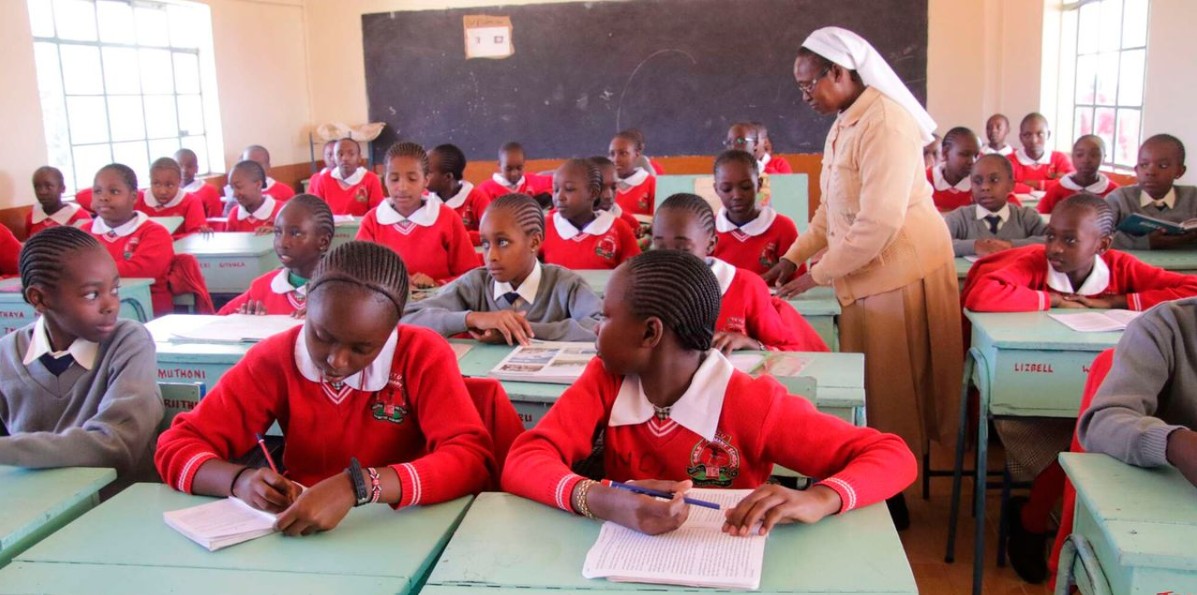
Comparatively, in the 8-4-4 System of Education, learners sit in fixed rows facing the teacher due to the over-reliance on the lecture method as part of both pedagogy and methodology. But in CBE, the sitting style is flexible because its architects designed the system to be more learner-centred. Then, based on the dynamic nature of CBE, classrooms are not static per se. In lieu, they can be re-arranged to suit the prevailing learning activities.
For example, the facilitator or teacher can have different seating styles for group discussion, science experiments, and presentation sessions. Once again, a typical CBE classroom should opt to adopt flexibility where the classroom arrangement can change to circles, semi-circles, clusters or groups and U-shaped formats. This versatility enables the learners to engage in lesson activities, group work, discussions or collaborative learning, projects, practical activities and experiments.
On this, I dote on a certain CBE expert called Mureithi Vincent Snr. While digging deep into his valuable vaults of knowledge, I unearthed what he christens as CBE-compliant sitting styles. He rhapsodises about it in his heroic book titled The Effective CBE Facilitator. Therein, he writes about classroom effectiveness, well-being and professional mastery in CBE.
ALSO READ:
Ndindi Nyoro: All ECDE centres should have uniform curriculum, equal remuneration for teachers
More importantly, he contends, a CBE-compliant sitting style is not merely the physical organisation of desks and chairs in classrooms. Instead, it is the deliberate pedagogical design of space supporting interaction, collaboration, visibility, accessibility and active learning. Meaning, in CBE, the classroom layout is part and parcel of instruction. For it directly influences how learners interact, participate, communicate and construct knowledge.
Therefore, CBE puts Constructivist Learning Theory on a pedestal. Tracing its true provenance, the philosophical foundations prompt us to quote and dote on venerable educators such as John Dewey. Then, the psychologist Jean Piaget developed Cognitive Constructivism. Likewise, Lev Vygotsky that developed Social Constructivism. They all come to a consensus: learners actively construct knowledge. Rather than just absorbing knowledge passively. They build upon previous experiences and schemas, integrating new information through active exploration, reflection and social interaction.
Ideally, when the teaching style in a CBE-compliant classroom is tailored to meet the needs of the learner, there is collaboration among learners and sharing of learning materials. In CBE, the teacher is a facilitator. The teacher is a good guide by the side, and not a certain sage on stage. So, it is incumbent upon the facilitator to focus on learner-centred seating styles, enhancing active learning and participation. While designing learning experiences, the CBE facilitator should be deft, not daft, but adroit. Adept at it. Meaning, learning experiences or activities should influence the sitting style in CBE-compliant classrooms.
Likewise, a well-thought-out sitting style should help learners hone core competencies such as communication and collaboration, critical thinking and problem solving, and creativity and imagination. Again, when done properly, the sitting style should improve levels of understanding and hone communication competencies in learners. It should promote inclusion. It should encourage mutual respect among learners.
While focusing on sitting styles in CBE-compliant classrooms, facilitators should consider some fascinating factors. For instance, the academic abilities of learners in line with Differentiated Learning or Instruction (DL/I). To trace its true provenance, it was popularised by Carol Ann. She delineated it as a proactive approach to teaching geared towards ensuring that every learner has equal opportunity to access success in class.
Put aptly, it is an approach where teachers modify their teaching methods, models, materials, activities and assessments to meet the diverse learning needs, abilities, interests, and backgrounds of learners. Moreover, when focusing on mastery of relevant content and concepts. The philosophy acknowledges that learners are different. In that regard, they should never teach them in the same way while teaching them.
Therefore, CBE makes a discernible departure from the one-size-fits-all approach in dissemination and dispensation of knowledge. In that regard, a stupendous seating style should enhance peer-to-peer learning. How? By mixing fast learners, average learners and learners in dire need of robust support. In mixed set-ups, the facilitator should be keen on gender balance to ensure that boys and girls participate equally.
Then, it is imperative to consider the manifold needs of learners. Learners with special needs should sit where they can see clearly, hear properly or access learning materials without unnecessary straining. On classroom spacing, the sitting style should be determined by the size of the classroom, number of learners and the availability of furniture. More on this matter is brought out in these 6 suggested sitting styles we cited at the beginning of this treatise.
MoE restricts prayer days, AGMs and prize-giving events during Third Term
Group or Cluster Sitting Style
Firstly, in this sitting style, learners sit in small groups around tables or desks. Typically, 4-6 learners per group. It is particularly effective during project work, problem-solving tasks and experiential learning activities. This sitting style encourages discussion and collaborative learning. It promotes teamwork. It enhances peer-to-peer learning. Then, through it, learners can hone core competencies of communication and collaboration.
Circular Sitting Style
Secondly, in this sitting style, learners sit in a circle format facing one another. While sitting that way, they can see one another. The facilitator can be in the circle. The sitting style encourages equal participation. It is the best arrangement for reflective learning, storytelling, and participatory discussions. It removes hierarchy in the classroom and reinforces equality among learners. It promotes open discussion of ideas. It helps learners build confidence and listening skills. Through it, learners also hone core competencies of communication, collaboration and problem-solving. At the core of a typical CBE classroom design is the principle of interaction over isolation. Learners should interact, share ideas, solve problems collaboratively and participate actively in learning tasks.
U-shaped or Horseshoe Sitting Style
Thirdly, in this sitting style, desks are arranged in a U-shaped format in the classroom. There is an open space in the middle to enhance the movement of the facilitator. It allows learners to maintain eye contact with one another. The sitting style is good for demonstrations. It is ideal for real discussions, presentations, and question-and-answer sessions. It enhances communication and engagement. It improves classroom interaction. It acknowledges that visibility and accessibility are key principles in CBE-compliant sitting styles. The facilitator should be able to move freely within the classroom. Observe learners. Provide robust support. Assess progress in real time. By the same token, learners should have clear visibility of instructional resources such as the board, charts, or demonstration area.
ALSO READ: MPs raise alarm over textbook disparities, school debts and unauthorised loans
Pair Sitting Style
Additionally, in this sitting style, learners simply sit in pairs. Two learners work together. It is common in reading and practical activities. It encourages co-operation. It supports peer assistance. It builds social skills. In the bid to prop up learners who look low and slow in academic performance, a keen facilitator can pair up a top achiever with a struggling student.
Traditional Rows or Modified Sitting Style
Advisedly, in this sitting style, rows are used during written tests. Or when embarking on independent work. Or when the facilitator is to make an explanation. However, CBE discourages permanent rigid rows. This format is good because there is easy class control. It is also the best when learners are to engage in assessments. It is therefore able to enhance the core competency of self-efficacy in learners.
Workstation or Activity-Based Sitting Style
Finally, this sitting style is apt and appropriate when it comes to practical or science-based lessons. Different corners of the classroom are set up for specific tasks. Then, learners rotate from station to station, while engaging in different learning experiences or activities. This enhances experiential learning and skills development.
By Victor Ochieng’
Victor Ochieng’ rolls out talks and training services in schools. He re-tools teachers on CBE. He speaks to Grade 10 learners about Pathways, Subject Combinations, Career Choices, Study Skills and School-Based Assessments (Projects, Practical and Written Tests). vochieng.90@gmail.com. 0704420232
Get more stories from our website: Education News
To write to us or offer feedback, you can reach us at: editor@educationnews.co.ke
You can also follow our social media pages on Twitter: Education News KE and Facebook: Education News Newspaper for timely updates.
>> Click here to stay up-to-date with trending regional stories