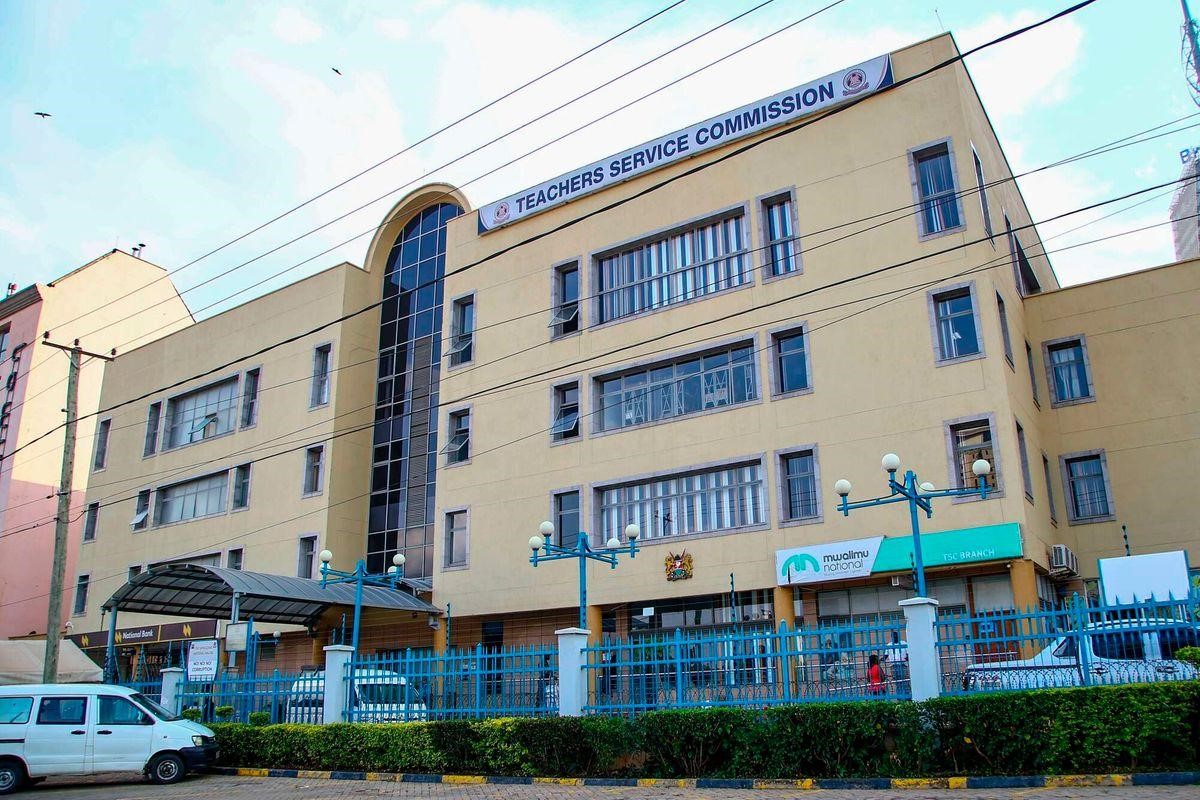
- Parliament has approved Wilson Sossion and Antonina Lentoijoni as new members of the Teachers Service Commission after weeks of political and legal uncertainty over their nominations.
- Teachers have shifted their focus from the appointment process itself to demanding tangible reforms in recruitment transparency, promotions and deployment.
- Muhalya says that the two commissioners’ combined outsider and insider experience could drive institutional reform, but warns their success will be judged by results rather than visibility.
The appointments have been approved, the court battle is over, and the political theatre has moved on. Now comes the difficult part: delivering for Kenya’s teachers. Parliament’s approval of former KNUT Secretary-General Wilson Sossion and TSC Director of Staffing Antonina Lentoijoni as members of the Teachers Service Commission has triggered a new conversation across Kenya’s education sector, following weeks in which their nominations were surrounded by political interest, legal uncertainty and intense public debate. Teachers are no longer asking whether the two will take their seats; they are asking what they will change once they get there.
Sossion does not enter the commission as an unknown quantity. His years at the helm of the Kenya National Union of Teachers made him one of the most recognisable and outspoken figures in Kenya’s education sector, building his reputation fighting for teachers’ pay, promotions, professional dignity and better working conditions. He also served as a nominated Member of Parliament between 2017 and 2022, giving him experience on both sides of the education policy battlefield, as a teachers’ representative and as a legislator.
Lentoijoni arrives from the opposite side of the institutional divide. Her career has been built inside TSC itself, and with more than two decades of experience in education and a rise to the position of Director of Staffing, she has been closely associated with some of the commission’s most consequential functions — recruitment, deployment, transfers and workforce planning. In simple terms, Sossion knows the frustrations outside the TSC boardroom; Lentoijoni knows what happens inside it. That combination could become powerful, but it could also become complicated.
ALSO READ:
George Ruto meets Teacher Cillah at Westlands Primary School
The expectations surrounding the two commissioners are enormous. Kenya has hundreds of thousands of trained teachers, while schools in some parts of the country continue to complain about staffing gaps. Teachers want faster and fairer promotions, better deployment policies, manageable workloads, improved welfare and greater clarity around career progression. The Junior School transition has added another layer of complexity, with teachers being asked to adapt to a rapidly changing education environment while simultaneously dealing with questions around training, deployment, workload, professional development and career progression.
Trust is another pressing concern, particularly in teacher recruitment. Every recruitment cycle attracts hopeful applicants, rumours, brokers and, unfortunately, fraudulent documents and promises, with individuals circulating letters purporting to originate from TSC headquarters and leaving desperate job seekers vulnerable to deception. The commission has an obligation to make its communication systems so transparent and authoritative that teachers and applicants know exactly where the truth begins and where fraud ends, since only TSC can definitively authenticate its own recruitment and employment decisions. The arrival of Sossion and Lentoijoni offers an opportunity to rebuild that confidence.
Promotions could prove the biggest battlefield. For many teachers, promotion is not simply about money — it is recognition. A teacher who has accumulated years of experience, acquired additional qualifications and taken on greater responsibility naturally expects a career structure that recognises those sacrifices, and when progression appears slow, opaque or dependent on limited vacancies, frustration inevitably grows. The new commissioners have an opportunity to champion a more predictable professional pathway, one that recognises classroom excellence without forcing every ambitious teacher to abandon classroom practice for administration, so that a teacher can become more experienced and better rewarded while remaining an excellent teacher.
Each commissioner also faces a distinct test. Sossion’s history as a powerful teachers’ advocate means many educators will expect him to challenge TSC from within, yet a commissioner is not a union official, and once appointed, the responsibility changes — he will have to balance teachers’ legitimate expectations against TSC’s legal mandate, national education policy and available public resources, a transition from advocacy to governance that will be one of his biggest tests. Lentoijoni’s extensive institutional experience gives her an understanding of how the commission operates, but teachers will expect more than continuity; they will want innovation, efficiency and visible improvement, and the question will be whether institutional experience can be converted into institutional reform.
Five national polytechnics undergo assessment for disability and elderly care diploma programmes
Teachers have heard enough rhetoric. They want a recruitment system where genuine vacancies are clearly communicated, deployment decisions that make sense, transparent promotions, career progression that rewards competence, and Junior School staffing and workload issues addressed realistically. Above all, they want to believe that their professional concerns can reach the highest level of teacher management without disappearing into bureaucracy. That is why the Sossion-Lentoijoni moment could become bigger than two appointments — it could become a test of whether TSC can bridge the widening gap between policy and the teacher standing in front of a classroom every morning. Sossion brings the voice of the organised teaching profession; Lentoijoni brings decades of institutional knowledge. If they combine those strengths rather than allowing their backgrounds to pull them in different directions, they could become an influential force for reform at TSC.
Teachers will not judge them by the excitement surrounding their appointment. They will judge them by what happens after the excitement fades — when a teacher receives a promotion that had seemed impossible, when a chronically understaffed school finally receives the personnel it needs, when recruitment becomes harder to manipulate, when communication becomes clearer, and when teachers begin to feel that the system is working with them rather than against them. Parliament has given Sossion and Lentoijoni the mandate; the teachers will now demand the results. The expectations are already enormous, and the question hanging over TSC is brutally simple: will the new commissioners merely occupy the seats, or will they change what happens in them?
By Hillary Muhalya
Get more stories from our website: Education News
To write to us or offer feedback, you can reach us at: editor@educationnews.co.ke
You can also follow our social media pages on Twitter: Education News KE and Facebook: Education News Newspaper for timely updates.
>>> Click here to stay up-to-date with trending regional stories