- MMUST has secured Sh11.7 billion for a major centre focusing on mental and community health.
- The five-year initiative will also strengthen medical training, research, infrastructure and inter-university collaboration.
- The university is simultaneously expanding hospital capacity, student intake, digital learning and renewable-energy investment.
Masinde Muliro University of Science and Technology (MMUST) is preparing for one of the most significant transformations in its history after securing Sh11.7 billion to establish a major centre of excellence focused on mental health, community health and infectious diseases.
The five-year funding package, negotiated through the African Development Bank (AfDB) under the Kenya-United Kingdom Health Alliance (KUHA), is expected to significantly reshape the university’s health training, research and community outreach agenda.
However, the significance of the investment extends beyond the construction of laboratories and lecture theatres.
It positions MMUST at the centre of a potentially far-reaching shift in Kenya’s university sector, where institutions are increasingly expected to integrate teaching with medical training, research, innovation, healthcare delivery, technology and community transformation.
The project will also have a wider university footprint, with Kisii, Maseno, Egerton, Kibabii and Bomet universities expected to benefit from the initiative, while MMUST serves as the host institution.
For Western Kenya, the development could further strengthen the region’s position as an emerging hub for medical education, health research and specialised training.
The Sh11.7 billion investment is expected to finance the construction of buildings, laboratories, classrooms, workshops, offices and lecture theatres for the centre of excellence.
This infrastructure will provide the physical foundation for training, research and innovation in areas that have become increasingly critical to Kenya’s healthcare system.
Mental health, in particular, is steadily moving from the margins of public policy into mainstream healthcare discourse.
Bringing mental health, community health and infectious diseases under one centre creates an opportunity for a more integrated and holistic approach to healthcare delivery.
Rather than addressing health challenges in isolation, the centre could support multidisciplinary research that links medicine, public health, technology, psychology, community development and education.
This approach is especially relevant in a context where healthcare challenges increasingly require solutions that extend beyond hospital-based care.
Medical school enters a new phase
MMUST’s medical training programme is already on an expansion trajectory.
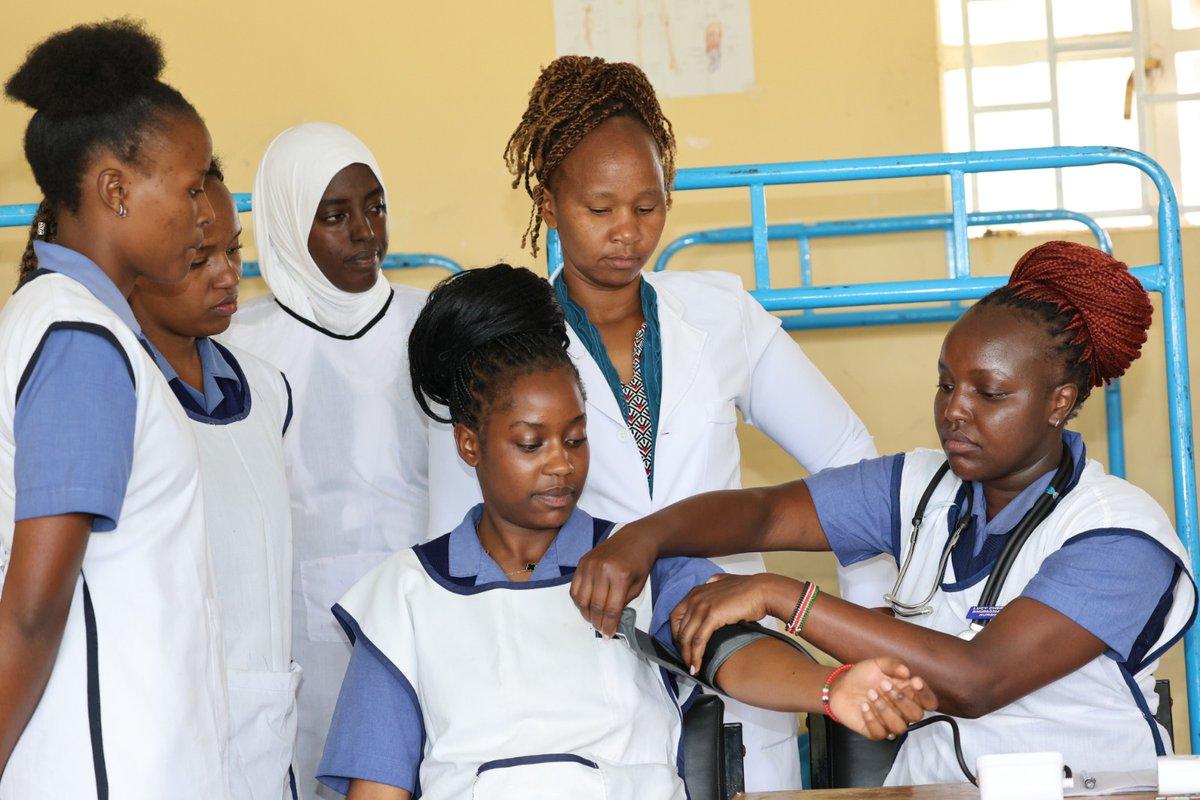
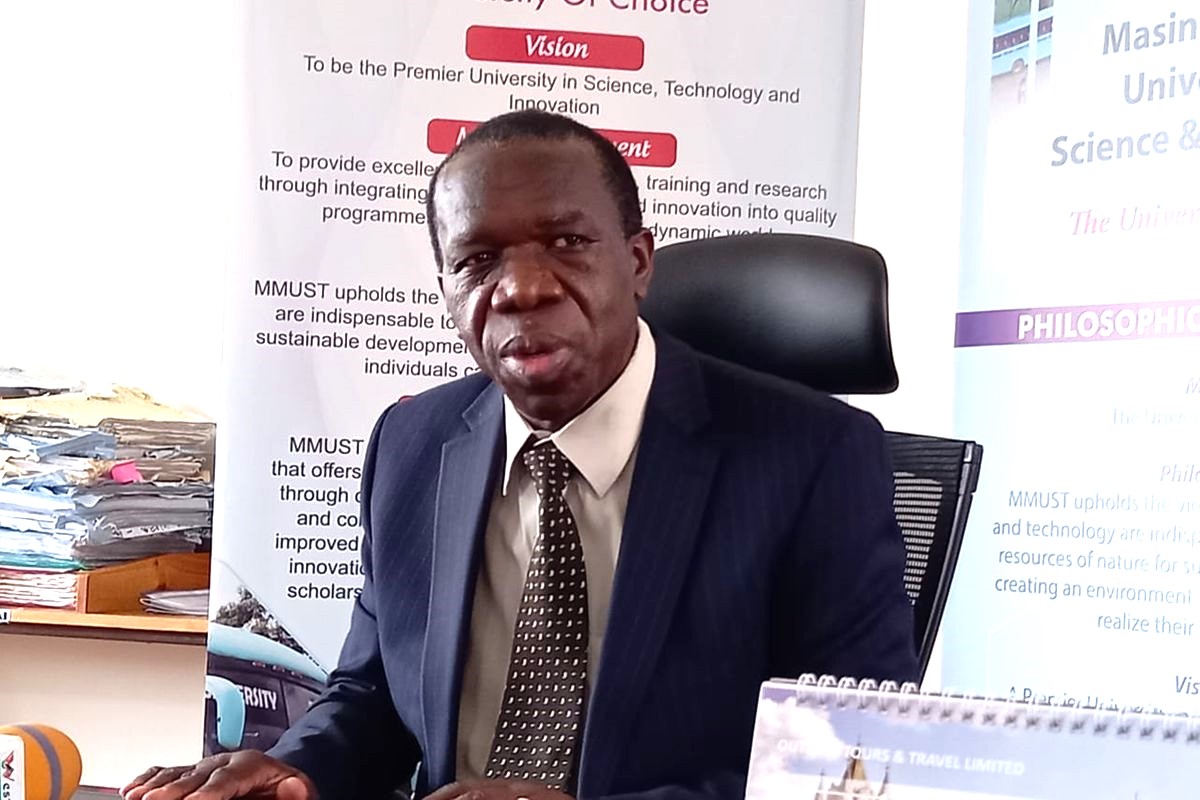
Vice Chancellor Prof Solomon Shibairo noted that the university has graduated two cohorts of doctors and is investing in additional facilities to accommodate the growing number of medical and nursing students.
Currently, the Faculty of Medicine operates under the School of Science, while nursing is housed within the School of Public Health.
The university is now developing modern prefabricated facilities that will provide dedicated teaching space for health-related programmes and accommodate more than 1,000 students at a time.
This expansion is intended to strengthen the institutional identity of medical and nursing education while providing the infrastructure required for sustained growth.
It also reflects a broader challenge facing Kenyan universities, where academic programmes are expanding faster than supporting infrastructure.
In medical education, this challenge is particularly acute, given the need for laboratories, specialised equipment, clinical facilities and access to functional hospitals.
MMUST is also collaborating with the Kakamega County Government to enable medical students to utilise the upcoming Kakamega County Teaching and Referral Hospital for clinical training.
This partnership is expected to enhance students’ exposure to real-world medical practice while strengthening linkages between the university and the county health system.
In addition, the university is finalising its own 25-bed Level 3 hospital.
The facility is reportedly 95 per cent complete and will serve students, teaching and non-teaching staff, as well as members of the surrounding community. It will include 10 beds for men, 15 for women and a maternity wing.
Once operational, the facility is expected to serve as a critical bridge between academic learning and practical healthcare delivery, particularly as MMUST expands its medical programmes.
The mental health opportunity
The mental health component of the new centre is expected to become one of its most significant pillars.
Kenya is increasingly grappling with mental health challenges among young people, families, workers and communities, yet access to specialised services remains uneven.
Universities are well positioned to help address this gap, given their concentration of medical professionals, researchers, educators, psychologists, technologists and social scientists.
A centre that integrates research, training and community intervention could therefore generate solutions that extend beyond the university environment.
Ultimately, success will not be measured solely by the number of facilities constructed, but by the extent to which the institution produces research, professionals and interventions that improve mental health outcomes.
The involvement of six universities gives the initiative a national dimension.
Kisii, Maseno, Egerton, Kibabii and Bomet universities are expected to benefit alongside MMUST.
This presents an opportunity to shift from isolated institutional research towards coordinated responses to national health challenges.
Each university can contribute distinct areas of expertise while sharing infrastructure, research outputs and academic networks.
Such collaboration could also strengthen postgraduate training and research capacity while creating opportunities for emerging researchers to engage with real-world health challenges affecting Kenyan communities.
If effectively coordinated, this model could serve as a blueprint for inter-university collaboration in other disciplines.
10,000 students and the infrastructure challenge
MMUST’s ambitions are unfolding alongside a sharp increase in student enrolment.
The university expects approximately 10,000 students this year, including about 9,000 direct-entry students and 1,000 self-sponsored students.
While these figures reflect strong demand for the institution’s programmes, they also highlight the pressures associated with rapid expansion.
Accommodation is already emerging as a significant challenge.
A growing student population requires more than lecture halls. It necessitates adequate housing, sanitation, laboratories, libraries, ICT infrastructure, transport systems, recreational facilities, healthcare services and other support structures.
At the same time, the university’s growth is expected to generate broader economic benefits.
Increased student numbers drive demand for housing, food, transport, retail services and other local businesses, potentially stimulating the surrounding economy.
The key challenge will be ensuring that urban development and university infrastructure expand in a coordinated and sustainable manner.
The AI revolution has entered the lecture hall
Infrastructure alone will not define MMUST’s next phase of growth.
The university is also preparing its academic staff for a rapidly evolving education landscape shaped by Competency-Based Education (CBE), digital transformation and artificial intelligence.
The institution’s Deans of Education, Science and Arts have already developed curricula for Bachelor of Education and Arts in Education programmes, while additional programmes are under development.
These programmes are being developed collaboratively by universities under the guidance of the Commission for University Education (CUE).
Lecturers are also undergoing training to adapt their teaching methodologies to emerging technological changes.
Artificial intelligence is redefining the traditional role of the lecturer as the primary source of knowledge.
Today, students have unprecedented access to vast amounts of information at their fingertips.
As a result, the university classroom must evolve.
The lecturer’s role is increasingly centred on guiding students to interpret information, evaluate credibility, think critically, conduct research, solve problems and apply knowledge in practical contexts.
In teacher education, this shift is particularly significant.
Teachers being prepared for CBE classrooms must themselves experience learning environments that prioritise competencies, technology integration, collaboration and problem-solving.
Solar power as a financial strategy
MMUST is also pursuing a parallel transformation in its energy strategy.
The university is in advanced discussions with KCB Bank regarding a Sh200 million project to solarise the institution.
The proposed investment is expected to reduce electricity costs while advancing the university’s transition to clean energy.
For public universities operating under financial constraints, energy expenditure often represents a significant budgetary burden.
Reducing utility costs could therefore free up resources for academic programmes, research, infrastructure development and student services.
The solar initiative thus carries both environmental and financial significance.
The financial discipline question
Significant funding alone does not guarantee institutional success.
Effective management of existing resources remains equally critical.
Prof Shibairo stated that MMUST has cleared its obligations to suppliers, the Kenya Revenue Authority and pension schemes.
This comes at a time when financial sustainability remains one of the most pressing challenges facing Kenya’s public universities.
Institutions are grappling with rising operational costs, infrastructure demands, increasing student enrolment and pressure to maintain academic quality.
MMUST’s approach therefore raises a broader sectoral question: how can universities optimise limited resources while continuing to expand?
While external funding can provide the capital required for transformation, strong financial governance is essential to sustain long-term gains.
The new investment presents MMUST with a significant opportunity, but its ultimate value will be determined by outcomes rather than infrastructure.
Key questions remain:
Will the centre generate impactful research?
Will it produce medical professionals equipped to address emerging health challenges?
Will it expand access to mental health services?
Will it strengthen infectious disease research capacity?
Will it drive innovations applicable beyond the university?
Will it foster meaningful collaboration among Kenyan universities?
And will it deliver tangible benefits to communities across Western Kenya and beyond?
The answers to these questions will determine whether the project becomes a defining milestone in Kenya’s higher education transformation.
The Sh11.7 billion package therefore represents more than a financial investment in MMUST.
It is a test of what a modern Kenyan university can achieve when medical education, research, technology, artificial intelligence, renewable energy and community service are integrated under a unified institutional vision.
MMUST now has the opportunity to move beyond programme expansion and redefine its role in national development.
READ ALSO: PS Ololtuaa’s wake-up call to teachers: Raise the bar, protect learners and embrace the digital era
The next chapter will not be defined by the scale of funding received.
It will be defined by the impact delivered.
By Hillary Muhalya
You can also follow our social media pages on Twitter: Education News KE and Facebook: Education News Newspaper for timely updates.
>>> Click here to stay up-to-date with trending regional stories
>>> Click here to read more informed opinions on the country’s education landscape