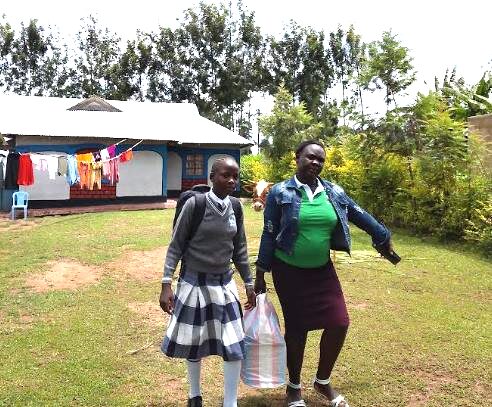
Kimutai Langat speaks to learners in Tinderet, Nandi County, where schools and families are struggling with rising CBC-related education costs, inadequate learning materials, and increasing dropout risks among Grade 10 learners.
The Competency-Based Education (CBE) system was introduced in Kenya with the promise of transforming learning by shifting focus from memorisation to practical skills, creativity, and learner-centred education.
The curriculum replaced the 8-4-4 system, which had been in place since 1985 after replacing the 7-4-2-3 structure.
Education stakeholders had hoped the reform would better prepare learners for the modern job market by nurturing talent, innovation, and critical thinking.
However, as the pioneer cohort transitioned into Grade 10 in January 2026, major challenges are beginning to emerge, particularly in rural areas where schools and families are struggling to cope with the demands of the new system.
In Tinderet Sub-county, concerns are mounting over the rising cost of education, inadequate learning materials, and the growing number of learners at risk of dropping out due to poverty.
Although basic education in Kenya is officially free, parents say the reality on the ground is different. Families continue to shoulder a wide range of indirect costs, including school uniforms, activity fees, transport, examination preparation charges, and subject-specific learning materials.
For households that rely mainly on small-scale farming, tea farming, and casual labour, these expenses are becoming increasingly difficult to manage amid economic hardships and unpredictable weather patterns that affect agricultural production.
A parent from Kapsigirio village, Mary Chebet, described the burden as overwhelming for many families.
“We are struggling. Even when children are in public schools, the demands are too many. Sometimes you are told to buy books, pay activity fees, and even contribute to development projects. When the harvest is poor, education becomes very hard to sustain,” she said.
According to teachers in the area, the financial challenges facing parents are now directly affecting learners’ attendance and academic performance.
A junior secondary school teacher at Chepsangor Mixed School, Mercy Lagat, said many learners are frequently absent because of unpaid fees and related school requirements.
“We try to keep them in school, but the reality is that some learners disappear for weeks. When they return, they are already behind. Others never come back at all. The main issue is poverty,” she said.
Education stakeholders warn that the situation could worsen if urgent interventions are not introduced to cushion vulnerable households.
Apart from financial strain, schools are also grappling with severe shortages of learning and teaching materials needed for effective implementation of the CBE curriculum.
Unlike the previous system, CBE places heavy emphasis on practical learning, continuous assessment, and learner participation. This requires schools to have adequate textbooks, laboratories, teaching aids, and digital learning tools.
However, many institutions in Tinderet Sub-county remain under-equipped and overstretched.
A science teacher at Kapngetuny Junior Secondary School, Eunice Jelagat, said inadequate resources are slowing curriculum implementation and limiting the quality of instruction.
“The curriculum requires practical lessons and learner participation, but some schools lack even the basic materials. In some classes, learners share textbooks, while laboratories and ICT facilities are either incomplete or unavailable,” she explained.
Teachers say overcrowded classrooms and insufficient infrastructure are making it difficult to offer individualised attention to learners, one of the key pillars of the new curriculum.
In several schools, digital learning components remain a major challenge due to a lack of computers, unstable electricity supply, and limited internet connectivity.
As the pioneer Grade 10 cohort settles into senior school, concerns are also emerging over learner retention and continuity.
Reports indicate that some learners who joined Grade 10 in January have failed to report back for the second term, which is already in its second week, mainly because of unpaid school fees and difficult economic conditions at home.
An official from Elimu Bora Initiative, Florence Rono, confirmed that the transition to senior school is exposing deeper structural challenges within the education system.
“We are monitoring the situation closely. There are cases where learners who joined Grade 10 in January have not reported back for the second term due to fee challenges. We are working with schools and local administrators to ensure as many learners as possible remain in school,” she said.
Rono noted that although efforts are ongoing to identify vulnerable learners and connect them with available support programmes, available resources remain insufficient compared to the growing demand.
“We are trying to intervene early, but the number of needy learners continues to increase. Without more support from both government and partners, many children remain at risk,” she added.
School administrators in the sub-county say they are under pressure to balance academic expectations with the harsh socio-economic realities facing families.
Some principals say they are forced to allow learners to remain in school despite arrears to avoid disrupting their education, even as schools struggle to meet operational costs.
Community leaders are now calling for urgent government intervention to prevent further deterioration of the situation.
Local elder Isaac Tanui warned that continued financial hardship could lock many children out of education altogether.
“We risk losing a generation if nothing is done. Many of these children are bright, but poverty is pushing them out of school, even at the Grade 10 level,” he said.
Civil society organisations and education advocates have also raised concerns over what they describe as inadequate funding for the implementation of the curriculum.
Education advocate Grace Wanjiru, who works with a regional education rights organisation, argued that the government must align funding with the practical demands of the CBE system.
“The system is good in design, but underfunded in practice. Without adequate capitation and targeted support for vulnerable learners, we will continue seeing dropouts, especially in rural areas,” she said.
Wanjiru further called for stricter oversight of school levies and improved accountability in the management of education funds to reduce the burden placed on parents.
“There is a need for transparency in how school funds are utilised so that parents are not subjected to unnecessary charges,” she added.
Parents and stakeholders are now proposing a range of interventions aimed at cushioning vulnerable learners and supporting schools.
Among the proposals being fronted are expansion of bursary programmes, establishment of community-based education support funds, and revival of school feeding programmes to improve attendance and retention.
Education stakeholders argue that school feeding initiatives could particularly benefit children from food-insecure households who often miss classes due to hunger.
Others are advocating for stronger partnerships between schools, local leaders, development partners, and private sector actors to support infrastructure development and provision of learning materials.
They believe such collaborations could help bridge the glaring resource gaps affecting many rural schools.
As Kenya continues implementing the Competency-Based Education system, stakeholders say addressing these challenges will determine whether the reform succeeds or fails.
While the curriculum aims to produce a more skilled, innovative, and competent workforce, experts warn that its success will largely depend on equitable access to education resources and the government’s ability to address inequalities affecting vulnerable communities.
READ ALSO: Tinderet’s young learners battle impassable roads as heavy rains batter rural schools
Without urgent and coordinated interventions, education stakeholders fear the promise of the CBE system could be undermined by rising dropout rates, persistent resource shortages, and widening disparities between urban and rural schools.
By Kimutai Langat
You can also follow our social media pages on Twitter: Education News KE and Facebook: Education News Newspaper for timely updates.
>>> Click here to stay up-to-date with trending regional stories
>>> Click here to read more informed opinions on the country’s education landscape