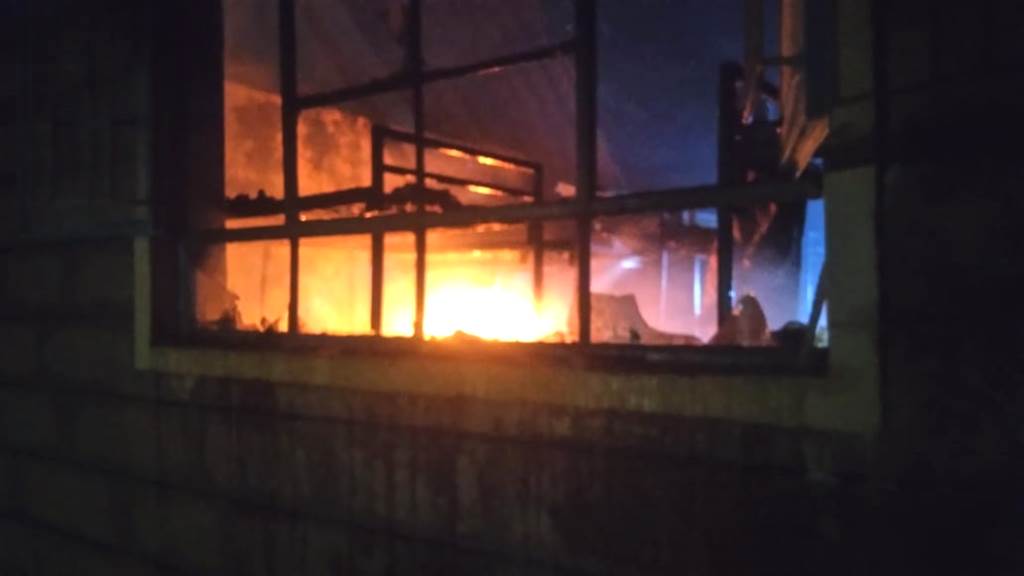
The devastating fire at Utumishi Girls Academy in Gilgil, Nakuru County, on Thursday morning has once again shaken the nation. Sixteen young girls lost their lives in what preliminary investigations by the Directorate of Criminal Investigations (DCI) suggest may have been a deliberate arson attack.
Tragically, this is not an isolated incident. Over the past three decades, hundreds of students have perished and thousands more have been injured in school fires, raising urgent questions about the safety of learners in boarding institutions.
The Ministry of Education has indicated that the Utumishi Girls Academy Board of Management failed to enforce the School Safety Manual and the Basic Education Regulations. However, the pressing question remains: who is responsible for ensuring that schools comply with these standards?
The answer lies with the Directorate of Quality Assurance and Standards (DQAS), whose officers, known as Quality Assurance and Standards Officers (QASOs), are mandated to inspect schools and ensure adherence to safety regulations. Yet persistent understaffing has undermined their efforts.
A 2020 Auditor General’s Performance Audit Report on Fire Safety in Secondary Schools revealed that Kenya faced a shortage of 473 QASOs across 286 sub-counties, with only 385 officers available nationwide against the required 858. The report linked this shortage to weak fire safety preparedness, noting that officers were unable to conduct inspections within the recommended timelines due to the large number of schools and insufficient personnel.
In 2024, the government sought to strengthen QASO operations by allocating KSh300 million annually for their activities and allowing direct access to budget allocations. QASOs serving at the sub-county level were allocated up to KSh400,000 to facilitate their activities. Officers at the county level were allocated between KSh650,000 and KSh1.2 million, while regional offices were set to receive between KSh1 million and KSh1.5 million for operational expenses. In April 2026, 300 new QASOs were recruited to bolster school inspections, with deployment expected in May.
Despite these measures, school fires continue to occur under similar circumstances: nighttime blazes, locked doors, barred windows, overcrowded dormitories, and suspected arson. Investigations have repeatedly identified dormitories as primary targets, with students sometimes involved in setting fires. Overcrowding and structural modifications further compromise safety.
The School Safety Manual, anchored in the Basic Education Act, provides clear guidelines to prevent such tragedies. Dormitories must have at least two wide doors opening outwards; windows must have metallic grills that open from the inside as emergency exits; beds must be spaced 1.2 metres apart; central pathways must be at least two metres wide; triple-decker beds are prohibited; fire extinguishers and alarms must be functional and accessible; and realistic fire drills must be conducted at least twice per term.
However, compliance remains alarmingly low. According to the Assessment on Compliance to Safety Standards for Boarding Primary and Junior Schools in Kenya conducted in September and October 2024, a total of 348 schools flagrantly violated safety standards, with many operating illegally as unregistered boarding institutions.
Dormitories in these schools often had inward-opening doors, barred windows, repurposed structures, wooden or triple-decker beds, and inadequate spacing—conditions that can quickly turn them into death traps in the event of a fire.
Repeated tragedies
The repeated tragedies have drawn sharp criticism from teachers’ unions and parents’ groups. Kenya National Union of Teachers (KNUT) Secretary General Collins Oyuu condemned lax enforcement of school safety regulations, describing many institutions as “death traps.” Similarly, Kenya Union of Post Primary Education Teachers (KUPPET) Secretary General Akelo Misori blamed institutional failures and weak enforcement for recurring fires, emphasizing that previous incidents should have prompted stronger preventive measures.
Parents’ groups, including the National Parents Association, have also demanded transparency in investigations, citing unresolved reports from previous incidents such as the Endarasha fire.
The history of school fire disasters in Kenya is grim. Among the worst are Hillside Endarasha Academy, Nyeri (2024), where 21 boys died in an overcrowded dormitory; Moi Girls High School, Nairobi (2017), where 10 girls were killed in an arson attack by a student; Asumbi Girls Boarding Primary School, Homa Bay (2012), where eight pupils died following an electrical fire in a locked dormitory; Endarasha Boys Secondary School, Nyeri, where two boys died after fellow students allegedly set a dormitory on fire; Kyanguli Secondary School, Machakos (2001), where 67 boys perished in what remains Kenya’s deadliest school fire tragedy; Nyeri High School, where four prefects died after being locked inside by suspended students; Bombolulu Girls Secondary School, Mombasa (1998), where 26 girls died in a locked dormitory; and St Kizito Secondary School, Meru (1991), where 19 girls were assaulted and burned alive.
READ ALSO: Protests erupt in Kakamega town following death of Sigalagala Poly student
Each tragedy exposes a familiar pattern: overcrowded dormitories, locked exits, barred windows, inadequate firefighting equipment, and delayed emergency response. Despite numerous solutions outlined on paper, enforcement gaps persist, leaving schools dangerously ill-prepared.
Education stakeholders argue that unless the government rigorously implements and enforces the School Safety Manual, these tragedies will continue. The Utumishi Girls Academy fire is a stark reminder that safety compliance is not optional—it is a matter of life and death.
By Obegi Malack
You can also follow our social media pages on Twitter: Education News KE and Facebook: Education News Newspaper for timely updates.
>>> Click here to stay up-to-date with trending regional stories
>>> Click here to read more informed opinions on the country’s education landscape