-
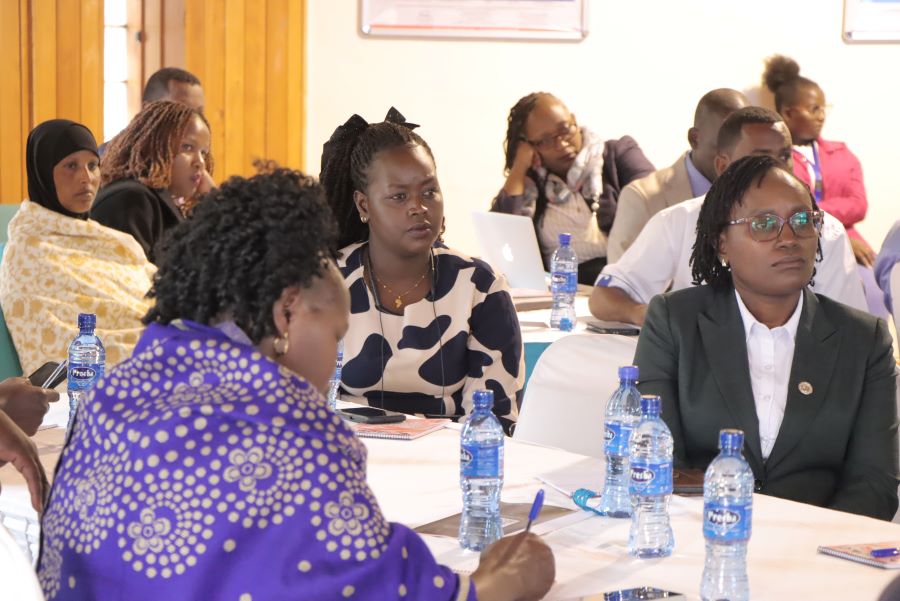
Ninety-two Quality Assurance and Standards Officers from all 47 counties are undergoing specialized STEM training organized by CEMASTEA.
-
The programme aims to strengthen teacher support, promote learner-centred approaches, and improve implementation of Competency-Based Education in schools.
By Obegi Malack
Quality Assurance and Standards Officers (QASOs) from across the country are undergoing specialized training aimed at enhancing the implementation of Science, Technology, Engineering and Mathematics (STEM) education under the Competency-Based Education (CBE) curriculum.
The training workshop, organized by the Centre for Mathematics, Science and Technology Education in Africa (CEMASTEA), has brought together 92 participants drawn from all 47 counties.
The three-day workshop, which kicked off on Wednesday, is being conducted under the theme: “Enhancing the Capacity of QASOs to Monitor and Support Teachers of STEM Subjects for Effective Implementation of Competency-Based Education.”
Supporting effective STEM teaching
Speaking during the workshop, Acting CEMASTEA Chief Executive Officer Gladys Masai said the training is designed to equip QASOs with the skills needed to effectively support teachers implementing the CBE curriculum.
“The training will help QASOs strengthen their capacity to guide and support teachers in the implementation of Competency-Based Education, particularly in STEM subjects,” she said.
Acting Director in charge of STEM Training at CEMASTEA, Livingston Makanda, noted that the workshop will empower quality assurance officers to better support teachers, ultimately enabling learners to succeed in STEM pathways.
By the end of the training, participants are expected to be able to describe learner-centred approaches that promote effective classroom practices, conduct lesson observations for effective teacher support, strengthen skills in teacher mentoring, and appreciate their role in supporting Junior Secondary School (JSS) teachers for successful curriculum implementation.
Focus on learner-centred approaches
According to Trans Nzoia County, Kwanza Sub-county Quality Assurance and Standards Officer Isaac Famba, who is also the QASO Cohort 2025 Team Leader, such capacity-building programmes have played a key role in preparing teachers to handle the STEM pathway.
He said QASOs will continue ensuring that teachers are well informed about the implementation of CBE and are adequately supported in delivering the curriculum.
Famba emphasized the importance of learner-centred teaching approaches, noting that teachers are being encouraged to focus more on learner participation and engagement rather than relying on traditional teacher-centred methods.
“We keep reminding teachers that learning should be centred on the learner. The government will continue retooling teachers to ensure they understand and effectively carry out their roles,” he said.
He added that the role of QASOs is to assess educational standards in schools, provide recommendations on areas that need improvement, and follow up to ensure the recommended actions are implemented.
Virtual laboratories to bridge infrastructure gaps
Addressing concerns about inadequate facilities for STEM education in some schools, Makanda said the government is exploring the use of virtual laboratories to support learning, particularly at the junior secondary level.
He explained that through technology-enabled virtual laboratories, teachers will be able to deliver STEM practical lessons even in schools that lack physical laboratory facilities, helping bridge infrastructure gaps and improve access to quality STEM education.
READ ALSO: Education 2050: The classroom without walls and the teacher of the future
The workshop is expected to strengthen the capacity of quality assurance officers nationwide, enabling them to provide more effective support to teachers and schools as the country continues rolling out Competency-Based Education.
You can also follow our social media pages on Twitter: Education News KE and Facebook: Education News Newspaper for timely updates.
>>> Click here to stay up-to-date with trending regional stories
>>> Click here to read more informed opinions on the country’s education landscape
>>> Click here to stay ahead with the latest national news.