- Only 702 students secured places in Bachelor of Medicine programmes despite strong competition.
- KUCCPS says medicine remains one of the most sought-after university courses.
- The placement agency has also urged more students to pursue STEM programmes.
Medicine programmes across Kenya’s accredited universities remain among the country’s most competitive courses after the Kenya Universities and Colleges Central Placement Service (KUCCPS) released the 2026/2027 placement results.
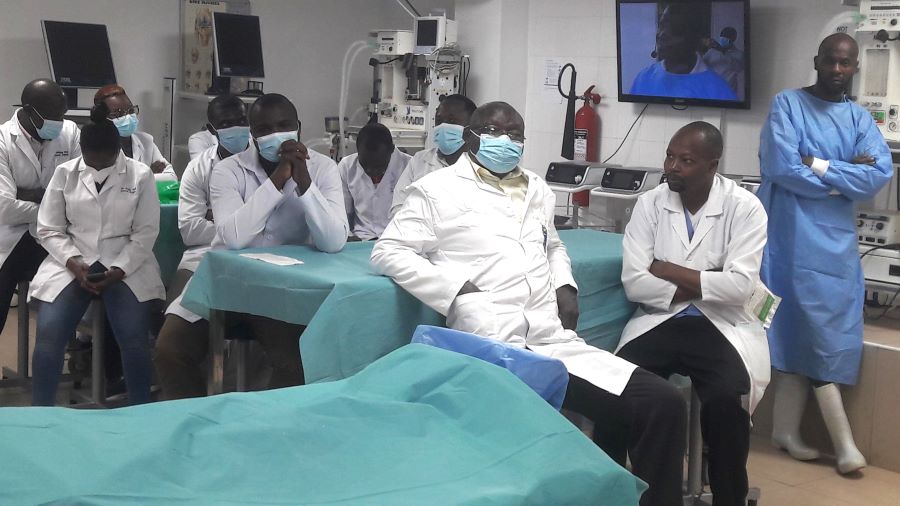
According to KUCCPS, the Bachelor of Medicine and Bachelor of Surgery (MBChB) programme attracted intense competition among the 2025 KCSE candidates seeking admission to both public and private universities, leaving many applicants unable to secure places.
KUCCPS Chief Executive Officer Agnes Wahome said only 702 students out of approximately 6,500 applicants were placed in medicine programmes offered across accredited universities.
She explained that placement into medicine programmes is based on the applicants’ cluster weight derived from performance in Chemistry, Biology, Mathematics and a language subject.
“We look at the cluster subjects. The cluster subjects are Mathematics, Chemistry, Biology and a language, and then the students compete in those four subjects. Those form the cluster subjects, the students get a cluster weight, and then the weight is what is ranked from the first to the last student before the cut-off is determined for each university,” she said.
Speaking during the release of the placement results, Education Cabinet Secretary Julius Ogamba said 202,133 applicants had been placed in degree programmes.
He added that 28,246 students secured placement in Kenya Medical Training College (KMTC) programmes.
The Cabinet Secretary further noted that 8,915 students who qualified for degree programmes but opted for diploma and other non-degree programmes were successfully placed in their preferred courses.
STEM courses still under-subscribed
Wahome observed that many STEM programmes continue to record low uptake despite universities having the capacity to admit more students.
She said many science-related courses still have unfilled slots.
“Some capacities will remain unfilled, and a good number of these capacities are in the science subjects, so it’s a challenge that we need to see improvements in the performance of our sciences,” she said.
She also noted that some specialised programmes, including Aviation Technology, Drawing and Design, and Electricity-related courses, continue to attract learners but are not yet widely available across institutions.
The KUCCPS CEO said the best-performing subjects align well with the Competency-Based Curriculum (CBC) and called on stakeholders to expand opportunities in science and technology education.
READ ALSO: Beyond borders and tribes: How Kiswahili became East Africa’s language of unity
She expressed optimism that increasing investment in STEM programmes would help meet the country’s growing demand for professionals in health, engineering, technology and other scientific fields.
By Ochola Victor
You can also follow our social media pages on Twitter: Education News KE and Facebook: Education News Newspaper for timely updates.
>>> Click here to stay up-to-date with trending regional stories
>>> Click here to read more informed opinions on the country’s education landscape