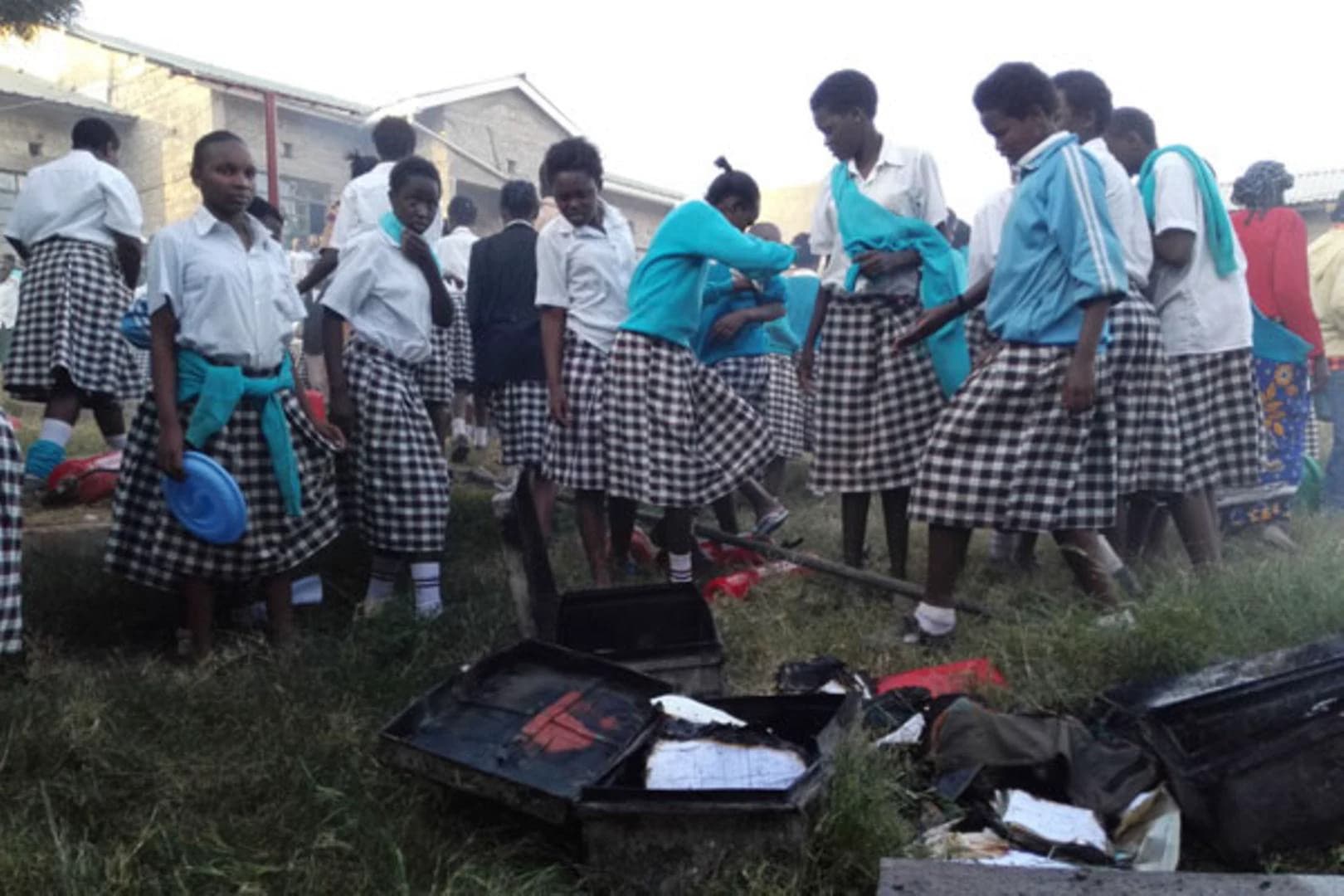






The appointment of a Multi-Stakeholder Task Team on Unrest in Schools by Education Cabinet Secretary Julius Migos Ogamba is a welcome development that deserves the support of every stakeholder who cares about the future of education in Kenya.
At a time when school unrest continues to raise questions about safety, discipline, institutional leadership and the welfare of learners, the country needs a sober, comprehensive and evidence-based examination of the problem.
The decision, published in the Kenya Gazette of October 23, 2026, offers an opportunity to move beyond the familiar cycle of condemnation, speculation, punishment and temporary calm.
Kenya must establish why school unrest keeps recurring, why previous recommendations have not sufficiently addressed the problem and what must change to prevent future incidents.
Supporting the formation of this task team does not mean assuming that it will automatically solve every problem facing schools. Rather, it means recognising that a persistent national challenge deserves a coordinated investigation, informed by evidence and involving people who understand the education system from different perspectives.
Investigating the root causes of school unrest
The first reason to support the task team is the need to confront the root causes of school unrest.
Whenever unrest occurs, public discussions often gravitate towards student indiscipline, bad influence, social media and the apparent failure of school administrators. These explanations may contain elements of truth, but they cannot adequately explain every incident.
Why do learners in different schools, regions and categories sometimes resort to unrest? Are the causes similar, or does each institution have its own circumstances? What role do school leadership, relationships between teachers and learners, peer pressure, bullying, examination anxiety and the general school environment play?
These are questions that require investigation rather than assumptions.
The task team's mandate to examine immediate, underlying and systemic causes is therefore particularly important. By considering differences in region, gender, age, disability and boarding status, the team can avoid treating every school as though it operates under identical conditions.
The second compelling reason is the opportunity to examine previous recommendations.
Kenya has repeatedly responded to education challenges through committees, inquiries and policy reviews. Yet the recurrence of similar problems raises a fundamental question: Have earlier recommendations been implemented effectively?
The Gazette specifically directs the team to study previous reports, establish their implementation status and identify barriers to implementation.
This is an important departure from simply producing another report containing recommendations that may eventually gather dust on government shelves.
Indeed, the country does not necessarily suffer from a shortage of ideas. In some instances, the real problem may be inadequate implementation, weak enforcement, insufficient resources or institutional resistance to change.
The task team should establish which recommendations remain relevant, which were never implemented and why.
There is little value in repeatedly prescribing solutions without examining why previous prescriptions failed.
A thorough implementation audit could help the Ministry of Education distinguish between problems requiring new policies and those demanding better execution of existing ones.
Third, the task team deserves support because it places school safety and disaster preparedness at the centre of the investigation.
Every parent expects a school to provide a secure environment in which children can learn and develop. Every teacher deserves to work in an institution where safety is taken seriously.
School safety cannot, however, be reduced to locking gates, conducting occasional inspections or increasing surveillance. It requires functional infrastructure, reliable emergency procedures, appropriate safeguarding measures and clearly understood responsibilities.
The proposed review of safety policies, security arrangements, emergency preparedness and school infrastructure could expose weaknesses that might otherwise remain unnoticed until tragedy strikes.
Its findings should translate into practical measures that school managers can implement and the government can monitor.
Stakeholder participation and the cost of education
Fourth, the task team's composition offers an opportunity to bring different perspectives into a national conversation that is often dominated by isolated explanations.
The Gazette names 52 members and eight joint secretaries. This broad representation creates room for a more comprehensive examination of a challenge that cuts across several dimensions of education and society.
However, the value of a multi-stakeholder team will depend on the quality of its deliberations, the evidence it gathers and its willingness to listen to those directly affected.
Learners, teachers, parents, school heads and other education stakeholders should have meaningful opportunities to contribute their experiences.
Students must not be treated merely as subjects of investigation. Their experiences of school life, relationships with authority, academic pressure and access to support services may provide important clues about the conditions that precede unrest.
Equally, teachers and school administrators should be heard without automatically being portrayed as either the problem or the solution.
Effective investigation requires fairness, confidentiality where appropriate and a willingness to distinguish individual misconduct from institutional shortcomings.
Perhaps the most significant aspect of the task team's mandate is its willingness to examine the cost and organisation of education.
The Gazette directs the team to assess boarding school models, school uniform costs, household financial circumstances, government capitation grants and the unit cost of education from primary through senior school.
These questions are important because educational unrest cannot responsibly be investigated without examining the environment in which learners live and study.
The cost of uniforms, food, learning materials and other school requirements can place pressure on families.
Questions surrounding the adequacy and timely disbursement of capitation funding may also affect the ability of institutions to provide essential services.
These factors should not automatically be blamed for unrest. Their actual influence must be established through evidence.
Nevertheless, examining them is necessary if the country hopes to develop solutions that address underlying difficulties rather than merely responding to visible symptoms.
The review of boarding schools is equally timely.
Boarding institutions serve important educational and social purposes, but their organisation requires careful attention to learner welfare, supervision, recreation, access to support and the management of daily routines.
The task team should avoid blanket conclusions that condemn boarding schools as a category.
Instead, it should identify practices that work, weaknesses that require correction and circumstances under which different school models best serve learners.
Another important consideration is the influence of changing social and technological realities.
Smartphones, social media, misinformation and peer networks can affect how learners communicate, organise themselves and respond to events within and beyond school.
Yet technology should not become a convenient scapegoat.
The investigation must establish when and how these factors contribute to unrest, while recognising that digital communication can also support learning, responsible engagement and access to information.
Turning recommendations into lasting reforms
Ultimately, the success of this initiative will depend on what happens after the investigation.
The task team must work within a clear timetable, consult widely, protect the integrity of its findings and present practical recommendations with defined implementation responsibilities.
The Ministry of Education should subsequently communicate which recommendations it will adopt, the resources required, the institutions responsible and the timelines for implementation.
Progress must also be monitored.
Where recommendations are not implemented, the responsible institutions should explain why.
Otherwise, the country risks repeating the familiar experience of commissioning investigations without achieving meaningful change.
Kenya must also resist the temptation to approach school unrest exclusively through punishment.
Learners who engage in violence or destruction must be held accountable through appropriate procedures, but accountability should accompany prevention, guidance, counselling, responsible leadership and the creation of safe learning environments.
The appointment of the Multi-Stakeholder Task Team is therefore an opportunity that Kenya should embrace.
It provides a structured avenue to investigate difficult questions, revisit neglected recommendations and examine the relationship between learner behaviour, school management, infrastructure, funding and the wider social environment.
The team should not be expected to manufacture convenient answers or assign blame to predetermined targets.
Its duty is to establish the facts, identify weaknesses and propose workable solutions.
Ultimately, the objective must be bigger than stopping the next school disturbance.
It must be about building institutions where learners feel safe, teachers are respected, school leaders are supported and parents have confidence in the education system.
Kenya does not need another season of outrage followed by silence.
It needs evidence, accountability and sustained reform.
If this task team delivers those three things, its work could mark an important turning point in the country's continuing effort to make schools safer, more responsive and better equipped to fulfil their educational mission.
The writer is a teacher of English and Literature and writes on education and social affairs.


Reader Discussion (0)
Sign in to comment